 Save
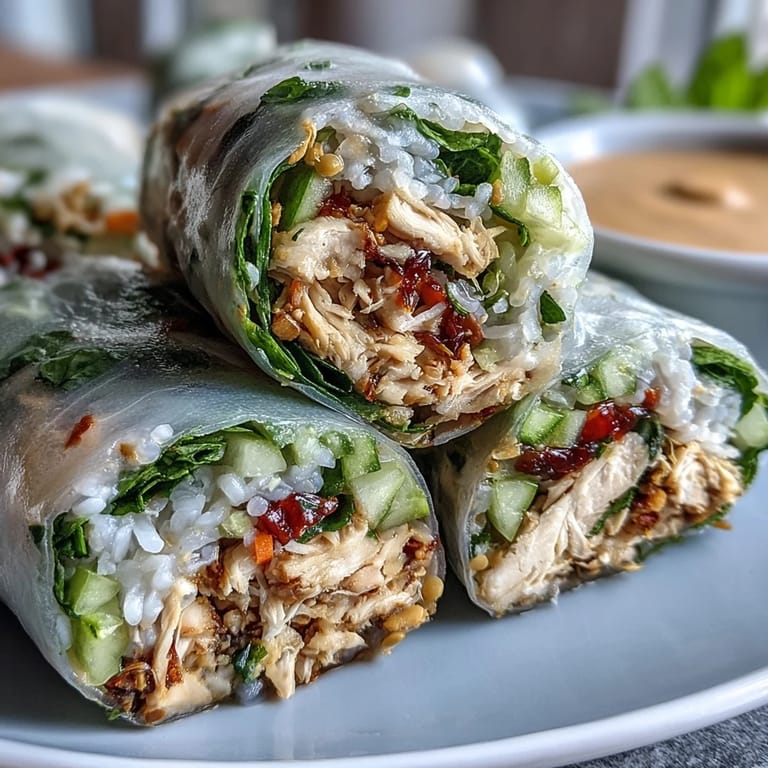
Save There's something about the sound of rice paper hitting warm water that signals the start of something fresh and intentional. My neighbor taught me these spring rolls on a humid afternoon when she brought over a stack of rice paper wrappers and said, "Trust me, once you get the hang of rolling, you'll make these constantly." She was right. What started as a careful, slightly clumsy process became almost meditative—the layers of crisp vegetables, tender chicken, and fragrant herbs coming together with each fold. Now I make them whenever I want to feel like I'm doing something a little bit special in the kitchen without spending hours there.
I made these for a small gathering last spring, and what surprised me most wasn't how beautiful they looked on the plate—it was how everyone naturally gravitated toward making their own rolls while we talked. Someone spread out the ingredients, another person filled the water dish, and suddenly it became this quiet, collaborative moment. That's when I realized these aren't really about feeding people; they're about giving them something to do with their hands while you're all together.
Ingredients
- Rice paper wrappers: These are delicate but tougher than they look—a quick 10 to 15 second dip in warm water is all they need, and they'll continue softening as you work with them, so don't overdo it or they'll tear.
- Cooked chicken breast, shredded: Rotisserie chicken works beautifully here and saves you the cooking step; the gentle shredding keeps the texture tender rather than stringy.
- Carrots, julienned: The sweetness of carrots balances the earthiness of the other vegetables, and cutting them thin means they stay crisp instead of tough.
- Cucumber, julienned: This adds a cool crispness that's essential to the whole experience; use English cucumbers if you can find them since they have fewer seeds.
- Red bell pepper, thinly sliced: The color matters as much as the flavor here, but thin slices also mean it won't overpower the delicate texture of the wrapper.
- Lettuce leaves, torn: A sturdy lettuce like romaine or butter lettuce creates a soft base layer that holds everything together without falling apart.
- Fresh mint and cilantro: These herbs are where the magic happens—they're not just garnish, they're the backbone of the flavor, so don't skimp on them.
- Green onions, sliced thin: A gentle sharpness that ties all the fresh flavors together.
- Creamy peanut butter: The foundation of your sauce; natural peanut butter works but may need a little extra stirring to incorporate smoothly.
- Soy sauce or tamari: This adds umami depth; if you're going gluten-free, tamari is your steady partner.
- Fresh lime juice: Acidity brightens everything and prevents the sauce from feeling too heavy.
- Honey or maple syrup: A touch of sweetness rounds out the salty and tangy notes without making it dessert-like.
- Sesame oil: Just a teaspoon adds a toasted, aromatic quality that makes people wonder what's in your sauce.
- Garlic and ginger: Minced small, these warm the sauce without dominating it.
- Sriracha or chili sauce: Optional, but it's there if you want a gentle heat that builds rather than burns.
Tired of Takeout? 🥡
Get 10 meals you can make faster than delivery arrives. Seriously.
One email. No spam. Unsubscribe anytime.
Instructions
- Gather and arrange everything:
- Lay out all your prepped vegetables and herbs on a platter—not because you need to be fancy, but because hunting for ingredients mid-roll is where things fall apart. A little mise en place turns this from stressful to smooth.
- Prepare your water station:
- Fill a large shallow dish with warm (not hot) water; you want to be able to hold your hand in it comfortably. Have a damp kitchen towel nearby where you'll lay each softened wrapper.
- Soften and place the wrapper:
- Submerge one rice paper in the warm water for about 10 to 15 seconds—it should feel just soft enough to bend without tearing, still with a slight resistance. Lay it flat on your damp towel and it will continue to soften.
- Layer your filling strategically:
- Start with a small handful of lettuce along the bottom third of the wrapper to create a cushion, then add a line of chicken, then your vegetables and herbs in whatever order speaks to you. The key is not overstuffing; it's easier to make two rolls than one burrito that explodes.
- Roll with intention:
- Fold the bottom edge up over your filling, then fold in both sides like you're wrapping a present, and roll tightly upward. A gentle pressure keeps everything together without squeezing out your fresh ingredients.
- Make your peanut sauce:
- In a small bowl, whisk together the peanut butter, soy sauce, lime juice, honey, and sesame oil until it starts to come together, then add the garlic, ginger, and warm water slowly. Taste as you go—this sauce is forgiving and loves being adjusted to your preference.
- Serve and enjoy:
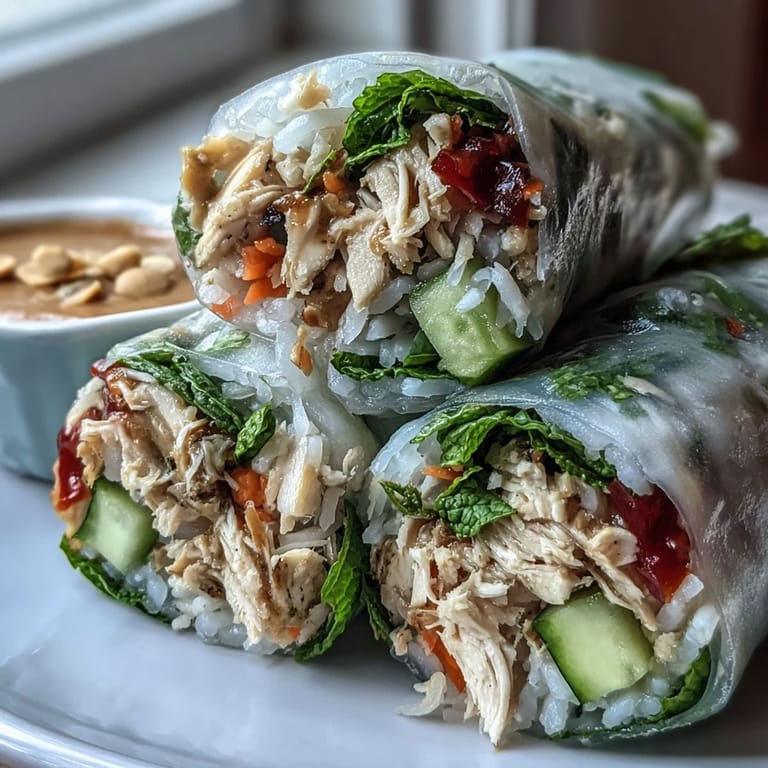
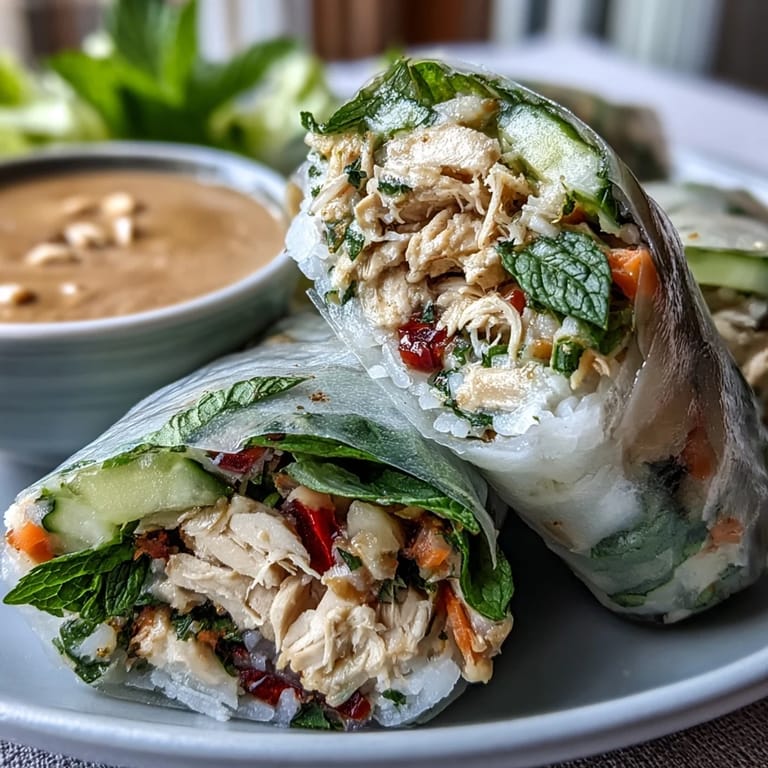
- Serve the rolls whole or slice them in half if you want to show off those colorful layers, with the sauce for dipping on the side.
 Save
Save 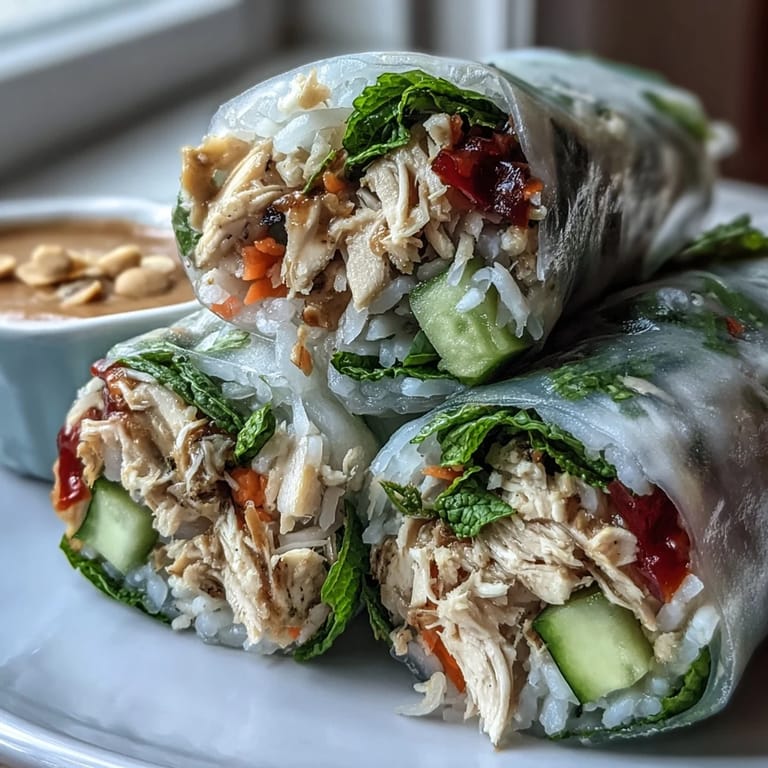 Save
Save There was an evening last summer when my youngest tried to make these herself for the first time, and her rolls were lumpy and uneven and completely perfect. She was so proud, and honestly, they tasted better than mine because they were hers. That's the real gift of this recipe—it's simple enough that anyone can do it, but impressive enough that they feel like a chef.
The Art of the Perfect Roll
The rolling itself is where confidence comes in. Your first few rolls might look a little sad, and that's completely normal—the wrapper is learning your pressure, and you're learning how much filling actually fits. By the time you're on roll number four or five, your hands know what to do and it becomes almost automatic. The texture you're after is soft but structured, flexible but not floppy.
Customizing Your Rolls
What I love most about this recipe is how it invites you to make it your own. Someone vegetarian at your table? Skip the chicken and add a handful of vermicelli noodles for substance. Want more heat? Double the Sriracha or add sliced jalapeños. Kids coming over? Leave out the cilantro and add shredded apple for a hint of sweetness. The structure stays the same, but the personality changes completely.
Pairing and Storage Wisdom
These rolls sing when served immediately, still cool from the vegetables but before the wrapper starts to firm up. The peanut sauce, though, gets better as it sits for an hour or two and the flavors meld together. If you're making this for a gathering, prep your ingredients hours ahead and do the rolling just before people arrive. The sauce can be made a day in advance and kept in the refrigerator.
- Serve the rolls with a crisp Riesling or chilled green tea to cut through the richness of the peanut sauce.
- If you want to make these vegetarian, tofu pressed and lightly pan-fried adds a subtle texture without overwhelming the other flavors.
- Rice paper wrappers typically don't contain gluten, but always check the package if that matters for your table.
 Save
Save 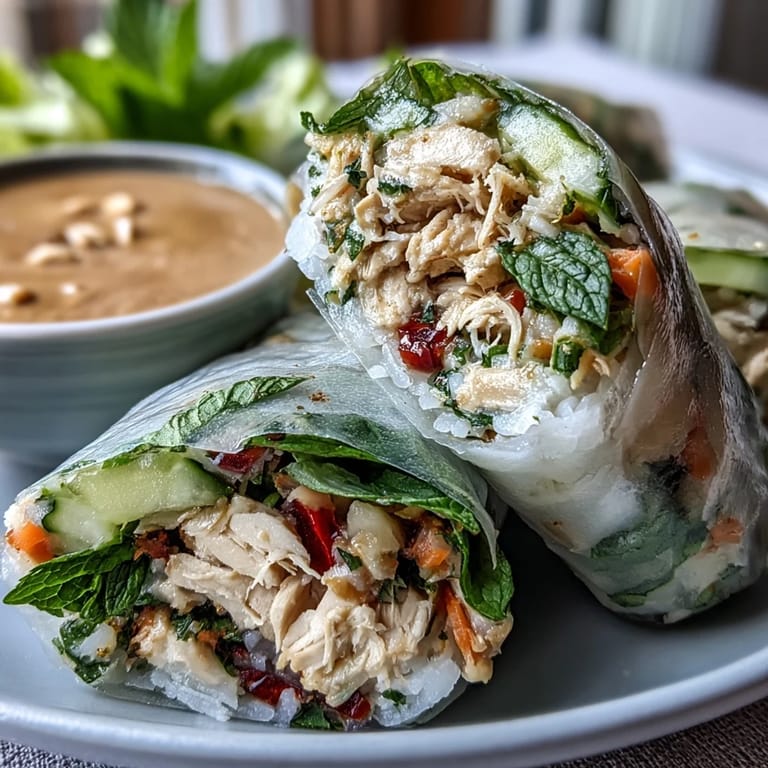 Save
Save These spring rolls taught me that sometimes the best meals are the ones where everyone participates in the making. They're not complicated, but they feel special, and that combination is worth coming back to again and again.
Recipe FAQs
- → Can I make these spring rolls ahead of time?
Prepare vegetables and sauce in advance, but assemble rolls shortly before serving. Rice paper wrappers harden when refrigerated for extended periods. Keep components separate and roll within 2 hours of eating for optimal texture.
- → What can I substitute for peanut butter?
Try almond butter, cashew butter, or sunflower seed butter for a peanut-free version. Each alternative provides similar creamy texture while maintaining the dipping sauce's rich consistency and nutty flavor profile.
- → How do I prevent rice paper from tearing?
Soak wrappers in warm water for just 10-15 seconds until pliable, not mushy. Lay on a damp towel while filling. Don't overstuff—keep fillings compact. Roll tightly but gently, folding sides before final roll.
- → Can I add noodles to these spring rolls?
Yes, thin rice vermicelli noodles work beautifully. Cook according to package directions, rinse with cold water, and drain well. Add alongside vegetables for extra heartiness and satisfying texture contrast.
- → What's the best way to store leftovers?
Store unassembled components in separate airtight containers: vegetables last 2-3 days, chicken 3-4 days. Peanut sauce keeps refrigerated for up to a week. Assemble fresh rolls when ready to eat for best results.
- → Are these spring rolls gluten-free?
Naturally gluten-free when using tamari instead of soy sauce. Most rice paper wrappers are gluten-free, but verify packaging. All vegetables, herbs, chicken, and peanut butter are naturally gluten-free ingredients.