 Save
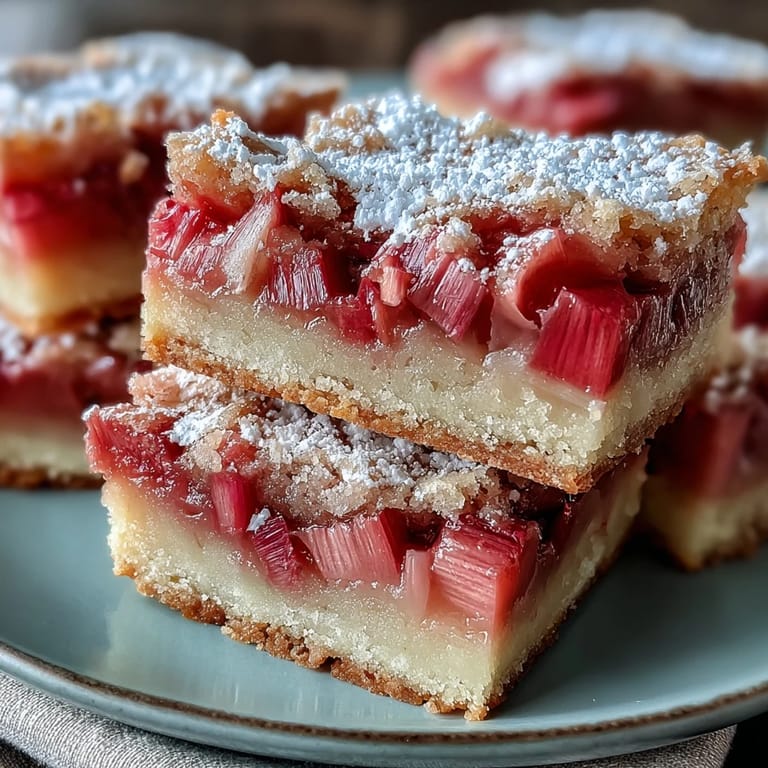
Save The first time rhubarb started appearing at the market, I was drawn in by its vividly pink stalks and sharp, grassy aroma. I'd never worked with it much before, but there was something about the combination of tart fruit and creamy custard that sounded like just what spring needed. I still remember smudges of flour on my elbows and the buttery scent of shortbread drifting through the kitchen, mixing with that unmistakable note of fresh rhubarb. My curiosity in the flavor paid off handsomely: these bars vanished before they ever had a chance to chill fully. They're equal parts rustic treat and polished dessert—surprising every time with how much joy a simple square delivers.
One breezy Sunday, I brought a tray of these bars to a neighbor's backyard lunch. As kids zipped past chasing a soccer ball, we lined up the bars on a mismatched assortment of plates, and I watched grown-ups take their first cautious bites—then immediately go back for seconds, chatting over the unexpected burst of tartness tucked under that creamy layer.
Ingredients
- Unsalted butter: Softening the butter is a must for that perfectly tender shortbread crust—it should hold a fingerprint when pressed.
- Granulated sugar: Adds just enough sweetness to let the rhubarb's acidity sing; I like to sprinkle some over the rhubarb for extra juice release.
- All-purpose flour: Sifting prevents lumps in both the crust and custard, making sure each bite is silky rather than stodgy.
- Salt: Just a pinch awakens the buttery crust and balances the custard's richness.
- Fresh rhubarb: Go for stalks that are firm and vibrant; limp or woody rhubarb loses its punch and can turn stringy.
- Eggs: Whisk until the yolks and whites disappear for a custard with an even, dreamy texture.
- Heavy cream: This is what makes the custard luscious and holds everything together during baking.
- Vanilla extract: Just a teaspoon, but it rounds out the tartness with warmth.
- Powdered sugar: Optional, but that snowy dusting is irresistible (and covers any quirky cracks on top).
Tired of Takeout? 🥡
Get 10 meals you can make faster than delivery arrives. Seriously.
One email. No spam. Unsubscribe anytime.
Instructions
- Get your pan ready:
- Preheat the oven to 350°F (175°C), grease your baking pan, and press parchment paper into place—the corners might fight back, but keep smoothing them down.
- Work the shortbread:
- Cream butter and sugar together until you feel the mixture lightening under the spoon, then mix in flour and salt until it clumps into a soft dough.
- Form and bake the crust:
- Press the dough lightly and evenly across the pan (fingertips do the trick here), then bake until edges just begin to turn golden—catch it early for a delicate crumb.
- Prep the rhubarb:
- Toss the chopped rhubarb with sugar in a bowl, watching as glossy little beads of juice begin to collect at the bottom.
- Whisk up the custard:
- In a separate bowl, bring together eggs and sugar, whisking until glossy, then add flour, cream, vanilla, and a pinch of salt, mixing until the batter smooths out and feels almost weightless.
- Assemble the layers:
- Once the crust is out, scatter the sugared rhubarb evenly, then gently pour the custard over—some rhubarb might peek through, which looks beautiful after baking.
- Bake it all together:
- Slide the pan back into the oven and bake until the custard sets and the top blushes golden at the edges, about 35–40 minutes.
- Cool and finish:
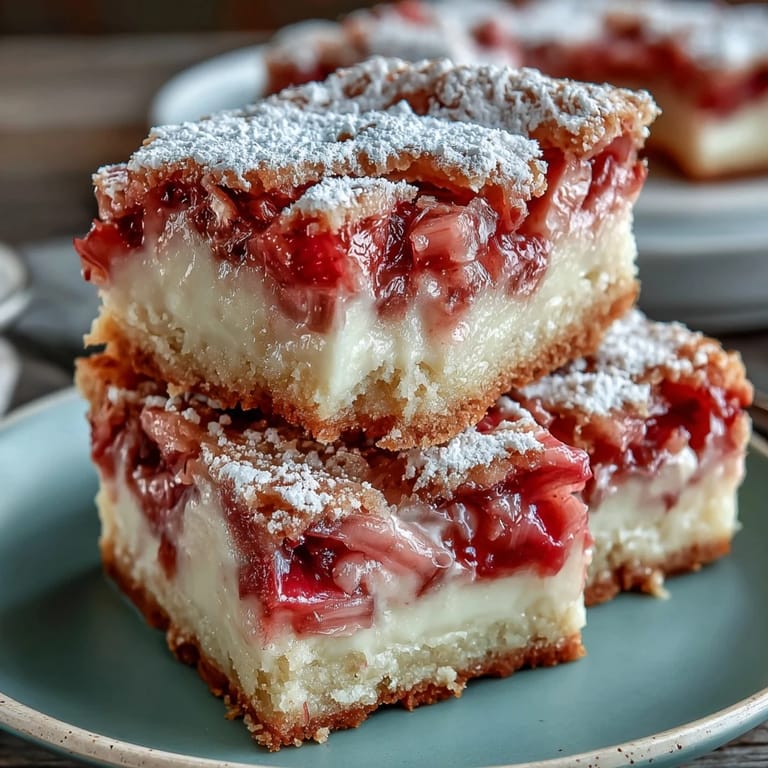
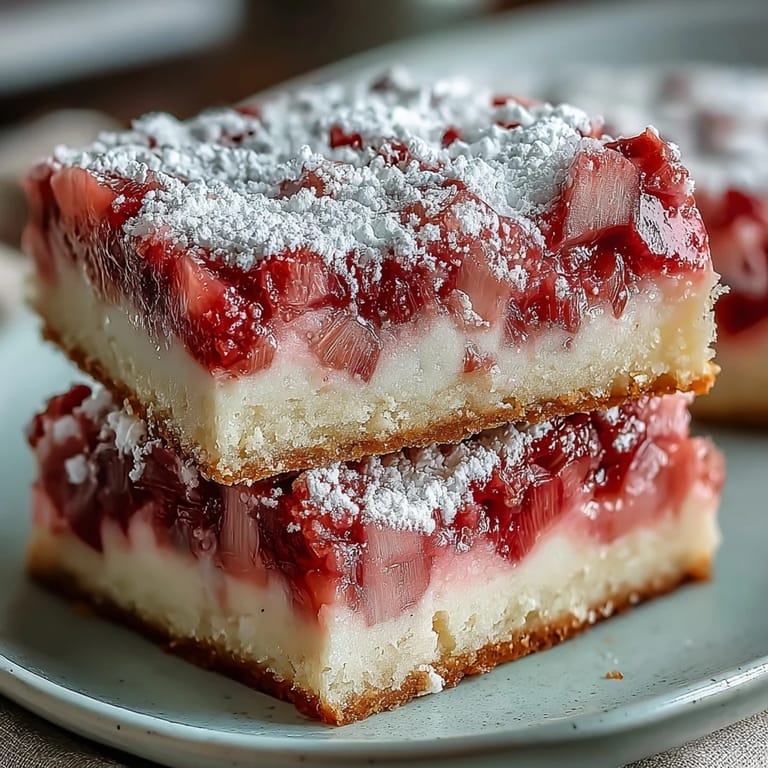
- Let the bars cool completely in the pan so the custard has time to set; dust with powdered sugar and slice into bars when ready.
 Save
Save 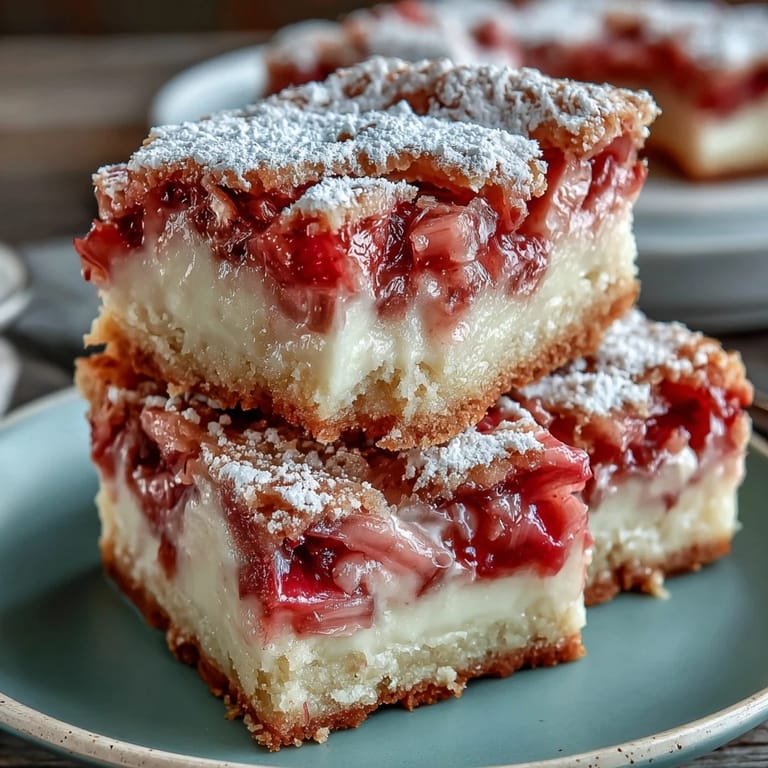 Save
Save There was a quiet, golden moment last year when my friend told me these bars tasted like the first real day of spring—when you don't just notice the sun but feel it. That's the memory I hold every time I lift a powdered-sugar-dusted square off the plate and take that first bright, creamy bite.
How to Get the Crust Just Right
I realized quickly that overworking the dough can make the shortbread tough, so I learned to handle it gently and stop mixing as soon as the flour disappears. Patting the dough with cool hands helps keep it tender and prevents it sticking at every step. Let the baked crust cool only briefly before the next layer—it should still be warm to the touch so the custard can settle in smoothly.
The Key to Silky Custard
Beating the eggs and sugar together until they're thick and light is the trick for that signature creamy custard. I use a whisk for a little arm workout and listen for the gentle hiss of bubbles as the batter comes together. The smoothness only happens if you keep whisking until no streaks of flour remain—if you rush, the filling won’t be as velvety.
Serving and Storing Suggestions
I've tried these bars both chilled and at room temperature; refrigerated, the layers set beautifully and the flavors meld overnight. For gatherings, I always cut them into small squares and wipe the knife between slices for sharp edges. If you make them ahead, keep them in an airtight container—the texture stays lovely for up to three days.
- Keep a small sieve handy for evenly dusting that final layer of powdered sugar.
- If you love some crunch, sprinkle toasted chopped nuts over the crust before baking.
- Always check your rhubarb before using—peel away any tough stringy bits for best results.
 Save
Save 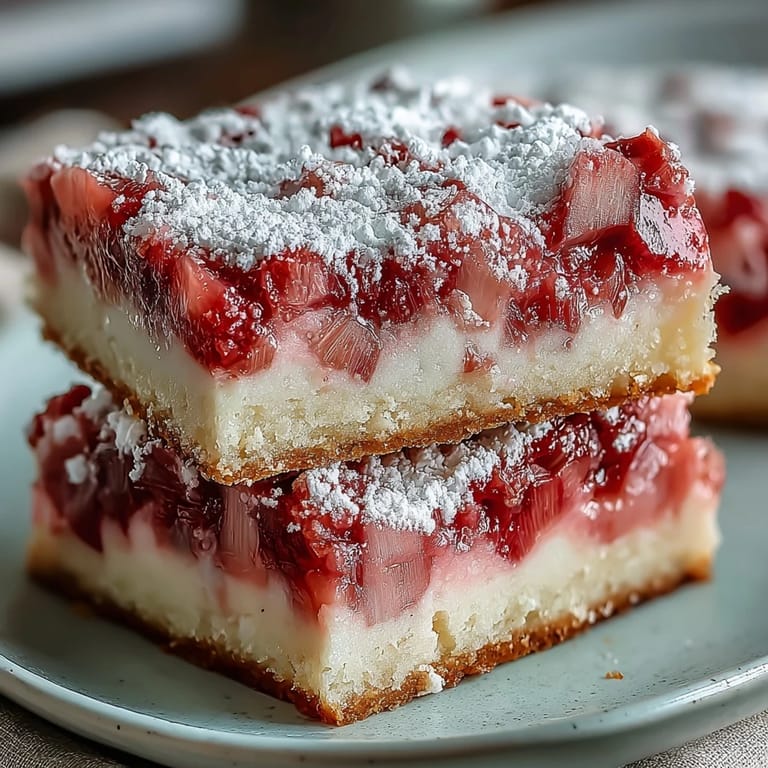 Save
Save May your kitchen fill with the buttery scents of spring, and may every bar you share bring a little burst of bright, tangy joy. These bars are a small reminder that sometimes a simple treat is all you need to lift a day.
Recipe FAQs
- → Can I use frozen rhubarb instead of fresh?
Yes. Thaw and drain excess liquid before tossing with sugar to avoid a soggy filling; briefly pat pieces dry if needed and adjust baking time slightly if the mixture is wetter.
- → How do I know the custard is set?
The custard should look just set in the center with a slight wobble; edges will be firmer and lightly golden. It will continue to firm as it cools, so avoid overbaking to keep it silky.
- → Any tips for getting clean slices?
Cool completely in the pan, then refrigerate for at least an hour before slicing. Use a sharp knife warmed under hot water and wiped dry between cuts for neater edges.
- → Can I make substitutions for the shortbread crust?
Yes. Swap half the flour for ground almonds for a nutty crust or fold in 1/2 cup chopped toasted nuts for crunch. For a quicker base, press a crumb crust of buttered biscuits if desired.
- → How should leftovers be stored?
Store in an airtight container in the refrigerator for up to 4 days. Bring to room temperature before serving, or enjoy chilled depending on preference.
- → Can I reduce the sugar for a tarter finish?
Reduce the rhubarb sugar slightly and taste before baking; you can also lower the custard sugar by a few tablespoons if you prefer a brighter, tarter profile.