 Save
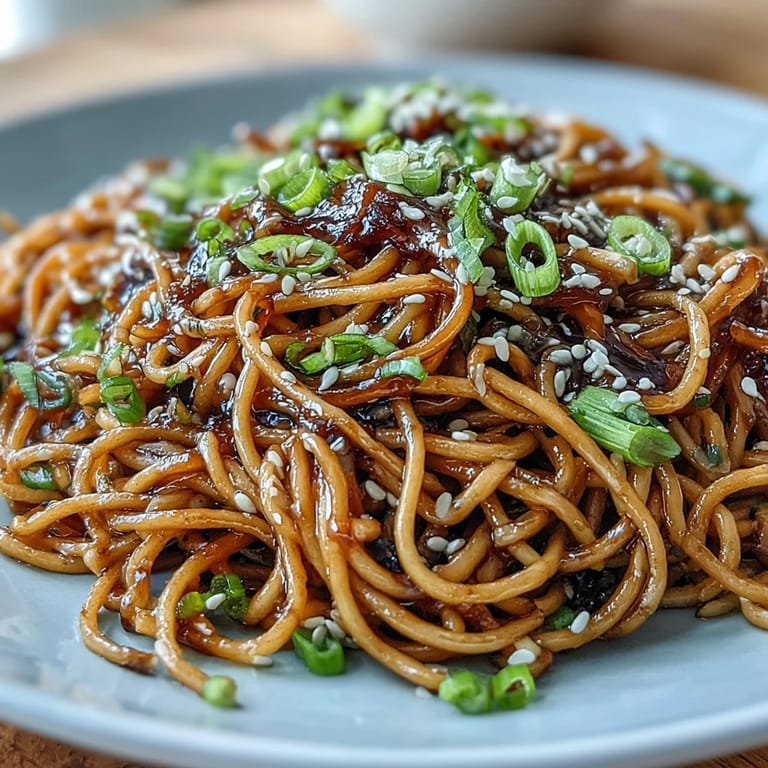
Save My neighbor Marcus showed up one evening with a takeout container of these noodles, still steaming, and insisted I taste them before they got cold. One slurp and I was hunting him down for the recipe—turns out his grandmother had simplified a Cantonese classic into something he could make on nights when he got home late from work. The ginger hits you first, then the scallions, then this savory-sweet warmth that coats every strand. I've made it dozens of times since, always with that same sense of urgency to get it to the table before it cools.
I made this for a friend who'd just moved into her first apartment and had basically nothing in her kitchen except a wok her mother insisted she take. Watching her face light up when she tasted what she'd just created with her own hands—that moment reminded me why cooking matters. She's made it at least once a week since, and last I heard, she's started keeping fresh ginger in her fridge permanently.
Ingredients
- Wheat noodles (350 g): Lo mein works beautifully, but honestly, good quality ramen or even spaghetti will do—the key is cooking them just until they still have a slight bite.
- Neutral oil (4 tbsp): This carries the aromatics without competing with them; canola or grapeseed oil won't mask the ginger and garlic the way darker oils might.
- Scallions (4, plus 1 for garnish): Always separate the white and green parts—the whites go into the hot oil first to release their sweetness, while the greens add a fresh sharpness at the end.
- Fresh ginger (2 tbsp minced): Don't use powdered or jarred; the difference is the reason people ask for your recipe. Peel it with a spoon if you're feeling lazy—it works just as well as a vegetable peeler.
- Garlic cloves (2, minced): Fresh garlic only; it should smell sharp and almost aggressive when you crush it, which means it's full of flavor.
- Red chili (1 small, sliced): This is optional but worth including if you like heat; the slices stay slightly chewy and deliver little bursts of fire.
- Soy sauce (4 tbsp): This is your umami anchor; use the regular kind, not low-sodium, because you need that deep saltiness.
- Dark soy sauce (1 tbsp optional): If you have it, add it—it deepens the color and adds a subtle molasses note without tasting sweet.
- Oyster sauce (1 tbsp): Use vegan oyster sauce if that matters to you; it contributes richness and a slight sweetness that rounds out the glaze.
- Brown sugar (1 tbsp): This balances the salt and creates a glaze rather than a plain sauce; don't skip it thinking you'll taste it too much, because you won't.
- Rice vinegar (1 tbsp): The acid lifts everything and keeps the dish from feeling heavy, even though it's comforting food.
- Toasted sesame oil (1 tsp): A small amount goes a long way; this is what makes people close their eyes and ask what that smell is.
- Water (2 tbsp): This thins the glaze so it coats the noodles evenly rather than clumping.
- Toasted sesame seeds (1 tsp for garnish): Toast them yourself if you can—they'll smell like nutty heaven and add texture that matters.
- Cilantro (optional): Fresh herbs at the end make it feel restaurant-quality, even though you made it at home.
Tired of Takeout? 🥡
Get 10 meals you can make faster than delivery arrives. Seriously.
One email. No spam. Unsubscribe anytime.
Instructions
- Cook your noodles until they're just barely done:
- Get them to that sweet spot where they still have a slight firmness when you bite them, not soft all the way through. A quick rinse under cold water stops them from cooking further and keeps them from sticking together.
- Mix your glaze while everything else waits:
- Combine the soy sauce, dark soy sauce, oyster sauce, brown sugar, rice vinegar, sesame oil, and water in a small bowl and stir until the sugar dissolves. This takes maybe two minutes and sets you up to move fast once the noodles hit the pan.
- Get your oil hot and bloom the aromatics:
- Heat the neutral oil in a large skillet or wok over medium heat until it shimmers slightly, then add the white parts of the scallions, ginger, garlic, and chili if you're using it. Stir constantly for about a minute—you want the kitchen to smell incredible but the aromatics should stay pale, not brown.
- Add the noodles and toss them into the fragrant oil:
- This is where the magic happens; the heat from the pan and the oil will start to marry everything together. Keep tossing for about a minute so the noodles are well coated and warm throughout.
- Pour in your glaze and toss until the noodles are evenly coated:
- The sauce will sizzle and the noodles should look glossy and smell irresistible. Let this cook for another 2 to 3 minutes, tossing occasionally, so the glaze gets slightly sticky.
- Finish with the fresh green scallions away from the heat:
- Remove the pan from heat first, then add the green parts of the scallions and toss gently. This preserves their brightness and prevents them from wilting into the background.
- Plate and garnish immediately:
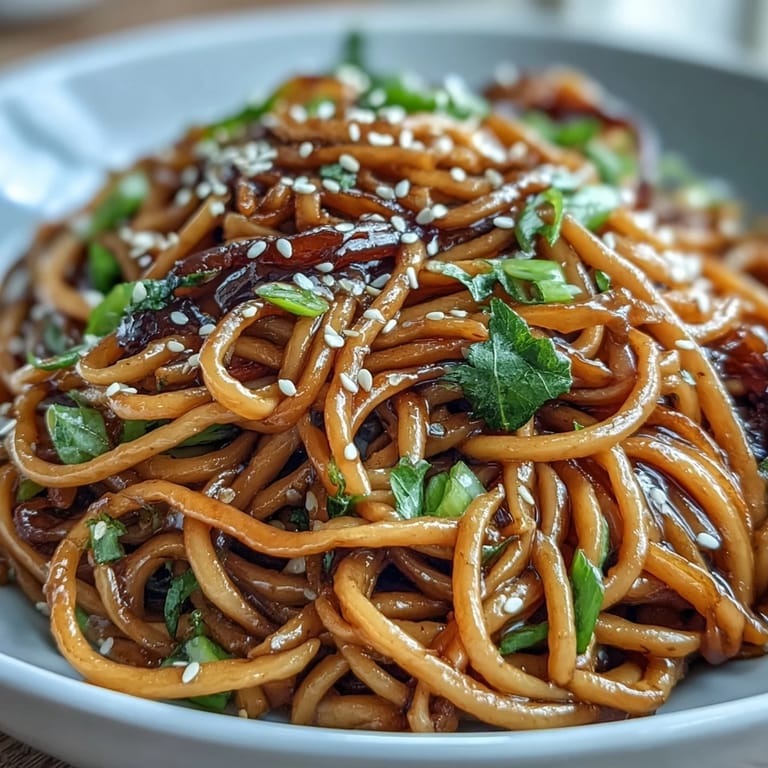
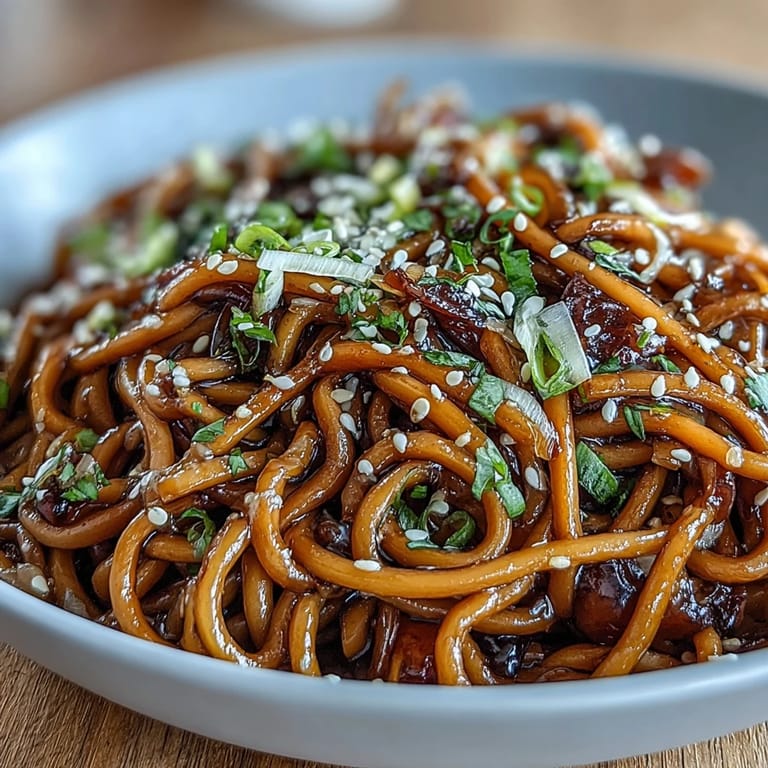
- Divide among bowls and scatter sesame seeds, additional scallion greens, and cilantro on top while it's still hot. The noodles should taste best in the first few minutes, while there's still steam rising from them.
 Save
Save I once made this for a dinner party where someone at the table mentioned they'd given up on trying to replicate the noodles from their favorite restaurant. By the third bite, they were leaning across the table toward me, asking if I'd somehow obtained the actual restaurant recipe. That's when I understood this dish's real power—it tastes like care without demanding hours of your time.
Building Layers of Flavor
The trick that changed everything for me was understanding that the glaze isn't just mixed and poured—each component pulls weight in a different direction. The soy sauce brings salt and umami, the brown sugar adds body and a whisper of sweetness, the rice vinegar keeps everything bright and prevents that heavy feeling, and the sesame oil brings a roasted depth that ties it all together. When you taste something that doesn't have all four of those elements in balance, you'll recognize exactly what's missing.
Why Fresh Ginger Matters Here
The ginger in this dish isn't background seasoning—it's a main character. Fresh ginger has this sharp, slightly peppery bite that infuses the oil and clings to every noodle strand, and no powder or jarred version can replicate that sensation. When you mince it finely and let it bloom in hot oil for just the right amount of time, it becomes almost floral, warming your mouth from the inside out without overpowering anything else.
Variations That Keep It Interesting
Once you've made this a few times and it feels easy, you'll start noticing what you can add without losing the spirit of the dish. Sautéed mushrooms add an earthy depth, shredded carrots bring sweetness and crunch, bok choy becomes silky and absorbs the glaze beautifully, and snap peas stay crisp while adding a fresh note. The base is so well-balanced that it welcomes additions rather than fighting them; it's one of those rare recipes that gets better once you make it your own. Some nights I'll toss in whatever vegetables I have on hand, and other nights I'll keep it pure and simple because the simplicity itself is the whole point. Pickled cucumbers on the side cut through the richness perfectly, and a drizzle of chili oil transforms it into something with more edge if you're in that mood.
- Mushrooms, carrots, bok choy, and snap peas all work beautifully without disrupting the core flavor.
- Pickled cucumbers or chili oil on the side let you adjust the dish to your mood.
- The base is flexible enough to accommodate almost any vegetable except those that need long cooking times.
 Save
Save This dish taught me that restaurant-quality food doesn't require complexity, just attention and good ingredients. Make it once and it becomes part of your regular rotation.
Recipe FAQs
- → What type of noodles work best?
Wheat-based noodles like lo mein, ramen, or even spaghetti hold the sauce well and provide the ideal texture for this dish.
- → Can I make this dish vegan?
Yes, substitute traditional oyster sauce with vegan oyster sauce or extra soy sauce to keep the dish plant-based.
- → How spicy is the dish?
The red chili is optional and adds a mild heat; omitting it will result in a mild, savory flavor profile.
- → What garnishes enhance the flavor?
Toasted sesame seeds, scallion greens, and fresh cilantro provide a pleasant crunch and aromatic lift to the noodles.
- → How can I add more vegetables?
Stir in sautéed mushrooms, shredded carrots, bok choy, or snap peas during cooking for added texture and nutrients.