 Save
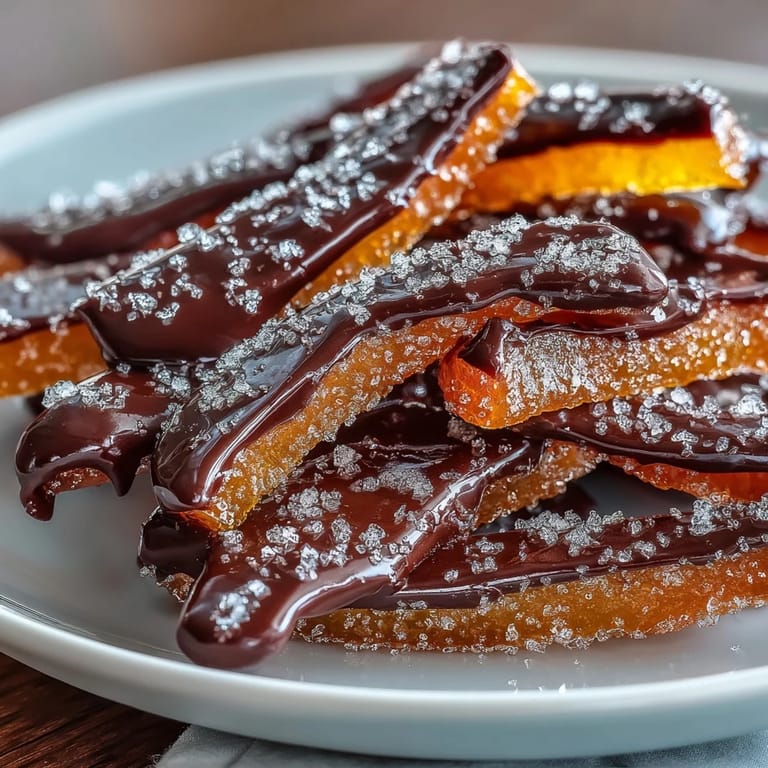
Save Few confections capture the romance of French pâtisserie quite like candied orange peel dipped in dark chocolate. These slender, jewel-bright strips begin their life as the humble rind of an organic orange—something most of us would toss without a second thought—and are transformed, through patience and a simple sugar syrup, into something truly extraordinary. Tender yet chewy, fragrant with essential citrus oils, and finished with a shell of bittersweet dark chocolate, each piece offers a perfect marriage of sweet, tart, and deeply rich flavors. Whether you tuck them into a gift box tied with ribbon or arrange them beside a small cup of espresso, these elegant confections carry the unmistakable warmth of something made entirely by hand.
Save The technique at the heart of this recipe is centuries old, born in the French confectionery tradition of transforming seasonal citrus into something precious and shelf-stable. The key lies in blanching the peels three times before they ever meet the sugar syrup—each boil drawing out more of the natural bitterness lodged in the white pith, leaving behind only the bright, aromatic character of the orange. Then comes the slow simmer in syrup, a quiet 45 to 60 minutes during which the peels gradually become translucent, almost luminous, as the sugar works its way through every fiber. Once dried and finished with a half-coat of melted 70% dark chocolate, the result is a confection that is at once rustic and refined—something you might find in the window of a Parisian chocolatier, yet completely achievable in your own kitchen.
Ingredients
Tired of Takeout? 🥡
Get 10 meals you can make faster than delivery arrives. Seriously.
One email. No spam. Unsubscribe anytime.
- Citrus
- 4 large organic oranges
- Candying Syrup
- 2 cups (400 g) granulated sugar
- 1 cup (240 ml) water
- Chocolate Coating
- 7 oz (200 g) high-quality dark chocolate (70% cocoa or higher)
- Optional
- Extra granulated sugar, for coating
Instructions
- Step 1 – Prepare the orange peels
- Wash and dry the oranges thoroughly. Using a sharp knife, score the peel into quarters and gently remove the peel, keeping as much of the white pith as possible attached.
- Step 2 – Slice the peels
- Slice the peels lengthwise into 1/4-inch (0.5 cm) wide strips.
- Step 3 – Blanch three times
- Place the strips in a saucepan, cover with cold water, and bring to a boil. Drain, then repeat this blanching process two more times to reduce bitterness.
- Step 4 – Make the candying syrup
- In a clean saucepan, combine 2 cups sugar and 1 cup water. Bring to a simmer, stirring until the sugar dissolves.
- Step 5 – Candy the peels
- Add the blanched orange peels and simmer gently over low heat for 45–60 minutes, until translucent and tender. Stir occasionally and do not let the syrup caramelize.
- Step 6 – Dry the peels
- Using tongs or a slotted spoon, transfer the candied peels to a wire rack set over parchment paper. Let them dry for at least 1 hour until they are no longer sticky to the touch.
- Step 7 – Optional sugar coating
- Toss the dried peels in extra granulated sugar for a sparkling finish.
- Step 8 – Melt the chocolate
- Melt the chocolate in a heatproof bowl over a saucepan of barely simmering water (double boiler method), stirring until smooth.
- Step 9 – Dip and set
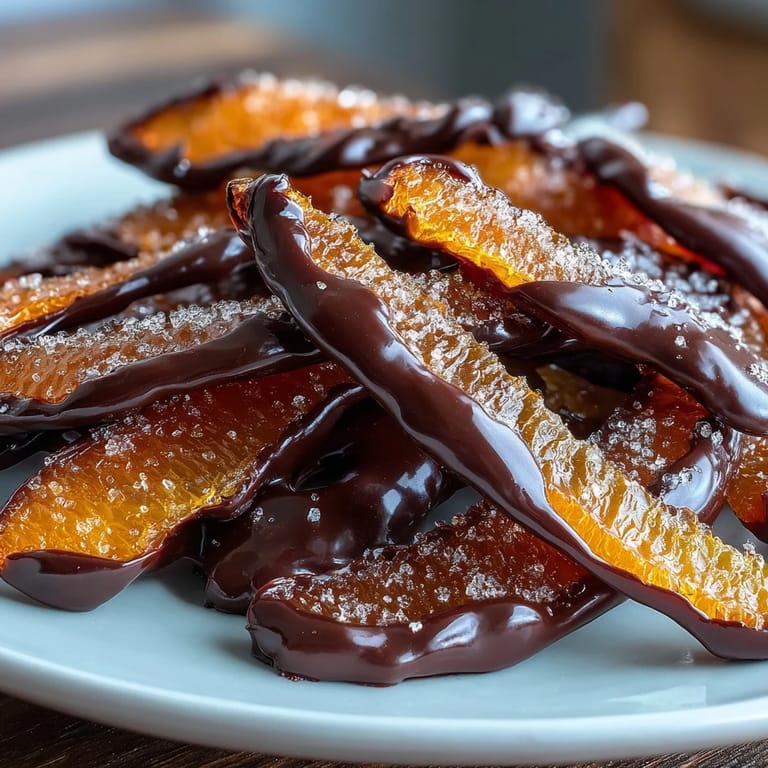
- Dip each candied peel halfway into the melted chocolate, letting excess drip off. Place on parchment paper and allow chocolate to set completely (about 30 minutes at room temperature or 10 minutes in the refrigerator).
- Step 10 – Store
- Store in an airtight container at room temperature for up to 2 weeks.
Zusatztipps für die Zubereitung
Für ein besonders aromatisches Ergebnis kann während des Kochens der Schalen im Zuckersirup ein Zimtstäbchen oder einige Nelken hinzugefügt werden—diese sollten jedoch vor dem Trocknen der Schalen entfernt werden. Es empfiehlt sich außerdem, ausschließlich Bio-Orangen zu verwenden, um das beste Aroma zu erzielen und Rückstände von Pestiziden auf der Schale zu vermeiden. Beim Schmelzen der Schokolade sollte darauf geachtet werden, dass kein Wasser in die Schüssel gelangt, da dies die Schokolade zum Stocken bringen kann. Ein ruhiges, gleichmäßiges Erhitzen über dem Wasserbad ist der Schlüssel zu einer glatten, glänzenden Glasur.
Varianten und Anpassungen
Wer keine dunkle Schokolade bevorzugt oder andere Bedürfnisse hat, kann die Zartbitterschokolade problemlos durch Milch- oder weiße Schokolade ersetzen—je nach persönlichem Geschmack und diätetischen Anforderungen. Die grundlegende Technik des Kandierens bleibt dabei unverändert. Für eine besonders festliche Optik lassen sich die noch feuchten Schokoladenenden mit gehackten Pistazien, gefriergetrocknetem Himbeerpulver oder essbarem Goldstaub bestreuen, bevor die Schokolade aushärtet.
Serviervorschläge
Kandierte Orangenschalen in dunkler Schokolade sind ein klassischer Begleiter zu einem kleinen Espresso oder einem aromatischen schwarzen Tee. Sie passen ebenso wunderbar zu einem Glas Rotwein oder einem Amaro nach dem Abendessen. Als Geschenk in einer hübschen Schachtel verpackt oder in einer kleinen Pergamintüte mit einem Etikett versehen, sind sie ein herzliches und persönliches Mitbringsel für jeden Anlass—von Weihnachten bis zum schlichten Dankeschön unter Freunden.
 Save
Save There is something quietly joyful about turning the discarded peel of a simple orange into something this beautiful. Candied orange peel dipped in dark chocolate is a recipe that rewards patience—the repeated blanching, the long slow simmer, the careful wait while the chocolate sets—and in return it offers a confection of genuine elegance. Make a full batch, keep some for yourself, and share the rest. They are the kind of homemade treat that people remember long after the last piece is gone.
Recipe FAQs
- → How can I reduce bitterness in the orange peel?
Blanch the orange peel strips by boiling them in water and repeating this two more times to soften and reduce bitterness effectively.
- → What type of chocolate works best for coating?
High-quality dark chocolate with 70% cocoa or higher provides a rich, balanced flavor that complements the citrus notes.
- → Can I add extra flavor during candying?
Yes, adding a cinnamon stick or a few cloves to the simmering syrup enhances warmth and complexity, but remove them before drying.
- → How should the candied peels be dried?
Place the candied strips on a wire rack over parchment paper and let them dry for at least one hour until no longer sticky.
- → What is the best way to melt chocolate for dipping?
Use a double boiler method, melting chocolate gently over simmering water and stirring until smooth to avoid burning.