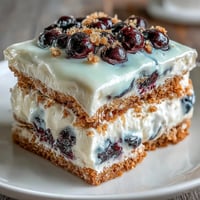
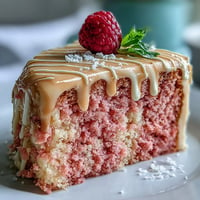
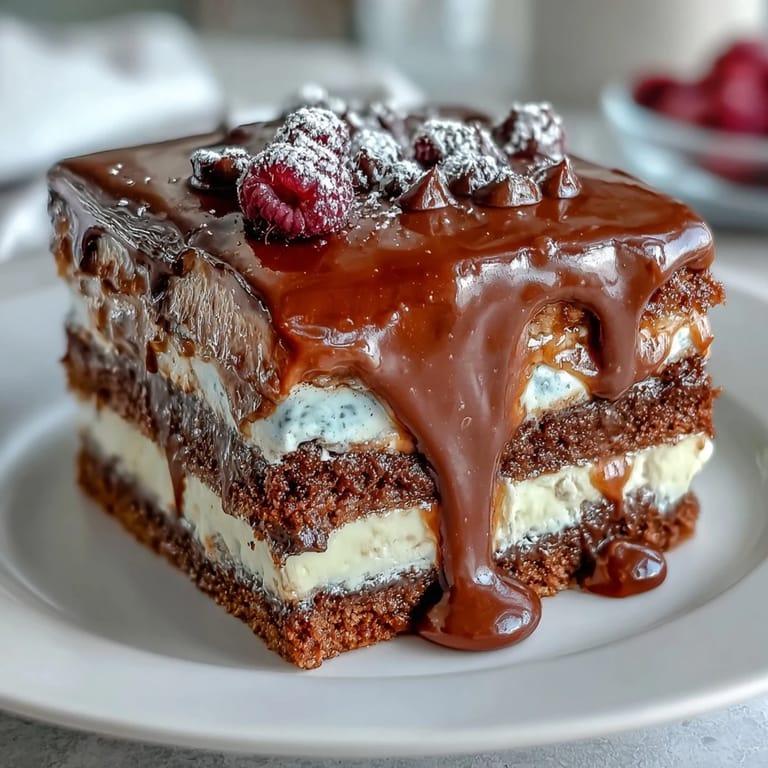
 Save
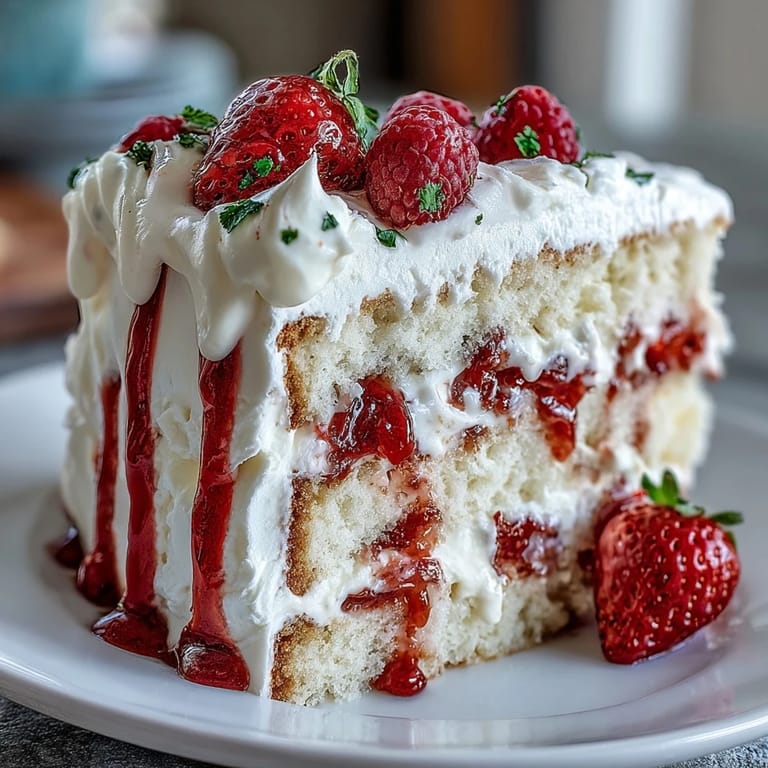
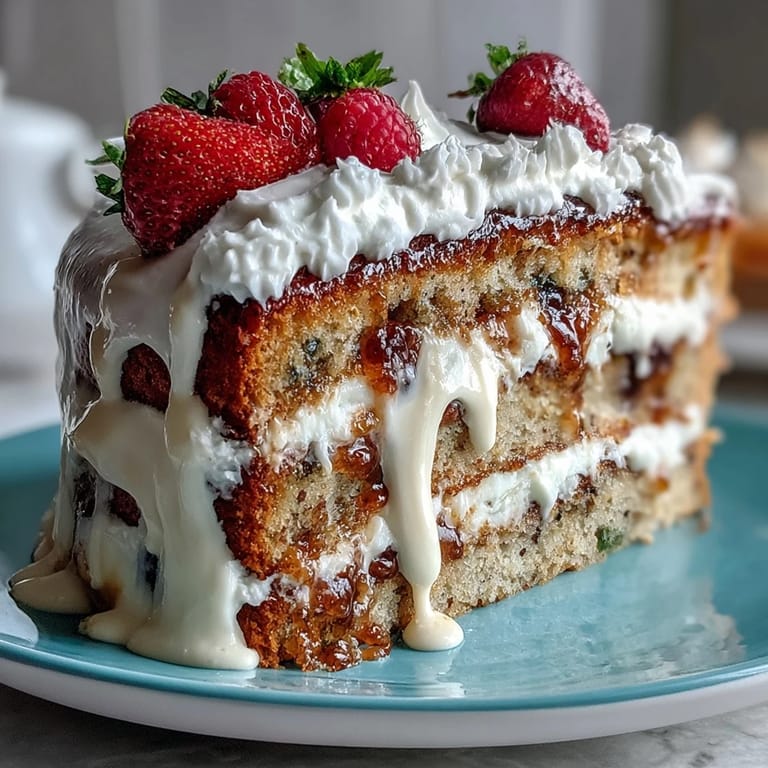
Save My sister called me three days before her birthday asking if I could make something that screamed spring, and honestly, my mind went straight to bright yellows and that tart-sweet combination that makes your mouth wake up. I'd been experimenting with lemon curd that winter, getting frustrated with how it kept breaking, but by that March afternoon I'd finally figured out the temperament of it—low heat, constant stirring, patience. When she walked into the kitchen and saw this cake with its pillowy frosting and those berries studded on top like little jewels, she just smiled and said it looked like spring had shown up on a plate.
There's something about watching people's faces when they taste homemade lemon curd for the first time—it's that moment between expecting supermarket sweetness and encountering something that actually tastes like lemons. My neighbor came over one afternoon while I was testing this, and she sat at my kitchen counter with a fork, tasting each layer separately, nodding like she was solving a puzzle. By the time we put it together, she was already planning to make it for her daughter's graduation.
Ingredients
- All-purpose flour (2 ½ cups): The foundation of your tender crumb—make sure it's measured by spooning into the cup rather than scooping, or you'll end up with a dense cake that doesn't deserve that silky frosting on top.
- Baking powder and baking soda (2 ½ tsp and ½ tsp): These work together to create lift without that metallic aftertaste you get from too much soda alone.
- Unsalted butter (1 cup, softened): Room temperature is non-negotiable here—cold butter won't incorporate properly and you'll be creaming for ten minutes with nothing to show for it.
- Granulated sugar (2 cups): This dissolves into the butter to create the structure that holds air and keeps the cake tender.
- Eggs (4 large, room temperature): Cold eggs seize up the batter and make it grainy, so take them out of the fridge while you're prepping everything else.
- Lemon zest (1 for cake, 2 for curd): Use a microplane and get only the yellow part—the white pith tastes bitter and will wreck your spring celebration.
- Fresh lemon juice (⅓ cup): Bottled juice is fine in a pinch, but fresh lemons give you that living, bright quality that transforms this from dessert into an experience.
- Egg yolks (4 for the curd): These are liquid gold for richness and that glossy finish that makes people ask for the recipe.
- Heavy cream (2 cups, chilled): The colder your cream and bowl, the faster it whips and the more stable your frosting becomes.
- Powdered sugar (½ cup): Sifting this through a fine mesh strainer prevents lumps that catch between your teeth when you frost.
Tired of Takeout? 🥡
Get 10 meals you can make faster than delivery arrives. Seriously.
One email. No spam. Unsubscribe anytime.
Instructions
- Set the stage:
- Preheat your oven to 350°F and line that 9x13-inch pan with parchment paper so it comes up the sides—you'll want handles to lift the cooled cake out later. Grease the parchment too, because nothing's worse than discovering it stuck to your cake right when you're about to flip it.
- Mix your dry team:
- Whisk flour, baking powder, baking soda, and salt together in a medium bowl until there are no streaks of white—this distributes the leavening evenly so you get uniform rise. Set it aside and don't be tempted to add it to the wet mixture all at once, or you'll develop gluten and your cake will be tough.
- Cream butter and sugar:
- In a large bowl with an electric mixer, beat butter and sugar for 3-4 minutes until it's pale and fluffy like clouds—this is where you're incorporating air that makes the cake light. You'll know it's ready when you stop the mixer and the mixture falls in soft ribbons.
- Add eggs one at a time:
- Drop in one egg, beat until incorporated (about 30 seconds), then add the next, because dumping them all in at once creates a curdled mess. After all four eggs, mix in vanilla and that lemon zest until the bowl smells like spring.
- Alternate wet and dry:
- Add about a third of the dry mixture, mix until barely combined, then add a third of the milk, stir gently, and repeat—always starting and ending with dry so the flour gets hydrated evenly. This alternating method prevents overmixing, which is the enemy of tenderness.
- Bake with confidence:
- Pour the batter into your prepared pan and smooth the top with an offset spatula, then slide it into the oven. At 28-32 minutes, a toothpick poked in the center should come out with a few moist crumbs clinging to it—not completely clean, because that means you're overdone and drying out.
- Make the lemon curd while waiting:
- In a small saucepan, whisk egg yolks, sugar, lemon juice, and zest together over medium-low heat, stirring constantly—and I mean constantly, because if you stop, the eggs will scramble. After 5-7 minutes it'll thicken into silken custard that coats the back of a spoon; remove from heat and whisk in cold butter cubes until glossy.
- Chill everything:
- Once the curd is smooth, press plastic wrap directly on the surface to prevent a skin from forming and stick it in the fridge. The cake needs to cool completely in its pan before you even think about moving it, and your cream needs to stay cold until the last minute.
- Whip the frosting:
- Pour chilled heavy cream into a cold bowl and whip with cold beaters until soft peaks form, then add powdered sugar and vanilla and keep going until stiff peaks hold their shape. If you go too far, you'll get butter—which tastes good but isn't what you want here.
- Layer with intention:
- Once the cake is completely cool, use a serrated knife to gently slice it into two even layers—take your time and let the knife do the work rather than sawing. Spread the cold lemon curd on the bottom layer like you mean it, then carefully replace the top layer and frost the whole thing with whipped cream.
- Decorate and rest:
- Scatter fresh berries, edible flowers, or lemon zest curls across the frosted top, then chill the whole cake for at least an hour so the layers set and slicing becomes clean instead of a crumbly disaster.
 Save
Save My neighbor texted me a photo three days after that birthday, showing the cake half-eaten and her daughter's friends gathered around for seconds. Sometimes a dessert is just a dessert, but this one somehow becomes a memory—something people remember not just from eating it, but from the moment they saw it.
Why Homemade Lemon Curd Changes Everything
Store-bought lemon curd tastes like bright memory, but homemade lemon curd tastes like promise. The difference is in the attention—the way your arm aches from stirring, the way you watch it transform from loose custard into something silken and substantial. I learned this over a winter of failed batches, grabbing a spoon and tasting curd that broke and curd that didn't set, until finally I understood the rhythm of it.
The Architecture of a Three-Layer Cake
Slicing a cake horizontally sounds simple until you're actually standing there with a knife, hoping you don't turn it into a disaster. The secret is using a serrated knife with a gentle sawing motion, rotating the cake rather than pushing the knife deeper, and trusting that if you go slow it'll work out. I used to ask my mom to do this part until one day she put the knife in my hand and said I'd worry less once I stopped being precious about it.
Spring Celebrations Need Brightness
There's a reason every spring dessert seems to involve lemon or berries—something about the season makes us crave acidity and brightness after months of rich, warming flavors. This cake understands that instinct, building layers of complexity instead of settling for one-note sweetness. When you serve it, you're not just offering cake; you're offering the feeling of opening a window and realizing winter's finally gone.
- Fresh berries look beautiful but also do important work cutting through the richness—they're not just decoration, they're balance.
- If you can find edible flowers like pansies or violas, they photograph like magic and taste like delicate flowers should (which is to say, not much, but beautifully).
- Lemon zest curls created with a vegetable peeler add height and a reminder that this whole cake is built on citrus logic.
 Save
Save This cake tastes like celebration and effort, like spring arrived on time and everything turned out the way you hoped. Make it once and it becomes the cake you make when something worth remembering happens.
Recipe FAQs
- → How do I ensure the lemon curd sets properly?
Cook the lemon curd over medium-low heat while constantly stirring until it thickens. Remove from heat once thickened and whisk in butter to achieve smoothness before chilling.
- → Can I use store-bought lemon curd instead?
Yes, store-bought lemon curd can be used as a convenient alternative to save preparation time without compromising flavor.
- → What is the best way to get clean cake slices?
Chill the assembled cake for at least one hour and use a serrated knife to slice gently for clean, precise layers.
- → How can I enhance the lemon flavor in the cake layers?
Brush the baked cake layers with lemon syrup before assembly to add an extra burst of citrus brightness.
- → What decorations complement this cake?
Fresh berries like strawberries and raspberries, edible flowers, or lemon zest curls enhance the cake's springtime appeal visually and flavor-wise.