 Save
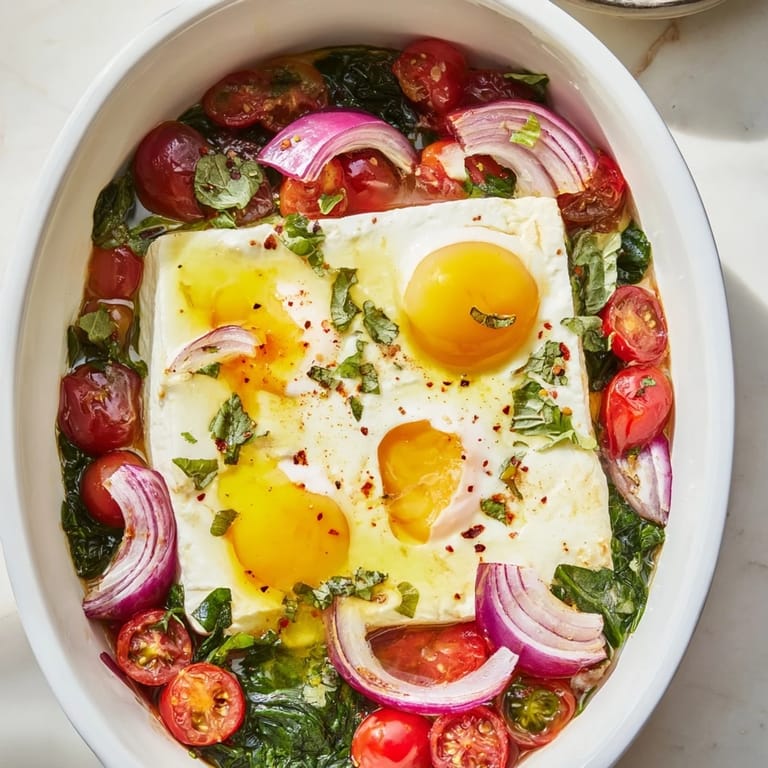
Save I discovered this dish completely by accident on a lazy Sunday morning when I had feta, eggs, and a handful of cherry tomatoes but no real plan. I threw them all into a baking dish with olive oil and hope, and somehow it became the kind of breakfast that makes you forget everything else for a moment. Now it's the first thing people ask me to make when they visit, and I love how it bridges that perfect gap between simple and impressive.
Last summer, I made this for my sister after she mentioned wanting to feel healthier, and watching her break into that first egg and watch the yolk spill into the warm feta was genuinely magical. She ate it so slowly, like she was actually savoring something, and didn't even touch her phone once. That's when I knew this wasn't just a recipe, it was something that makes people actually present.
Ingredients
- 150 g block feta cheese: Don't crumble it—a whole block holds its shape and becomes this creamy, melting centerpiece that everything else builds around.
- 200 g cherry tomatoes, halved: The halves cut side down caramelize faster and release all their sweetness, creating a sauce that tastes way more complex than it should.
- 1 small red onion, thinly sliced: Raw onion adds a gentle sharpness that balances the richness, and it softens just enough in the oven without losing its character.
- 1 clove garlic, minced: Fresh garlic perfumes the whole dish without overpowering it—one clove is all you need.
- 30 g baby spinach: This wilts into the hot vegetables at the last minute, adding earthiness and a nutritional boost that nobody will notice but everyone will feel.
- 4 large eggs: The quality matters here more than anywhere else because they're the star, so use the freshest ones you can find.
- 2 tbsp olive oil: Good olive oil isn't optional—it's the glue that holds everything together and makes it taste intentional.
- 1/2 tsp dried oregano: This herb feels like sunshine on a plate and ties everything to the Mediterranean without being too heavy-handed.
- 1/4 tsp chili flakes, optional: A whisper of heat makes the feta taste richer somehow, but only if you want it.
- Salt and freshly ground black pepper: Season generously—the feta needs it, the eggs want it, everything performs better with proper seasoning.
- 2 tbsp fresh basil or parsley, chopped: Add this right at the end so it stays bright and herbaceous instead of wilting into oblivion.
Tired of Takeout? 🥡
Get 10 meals you can make faster than delivery arrives. Seriously.
One email. No spam. Unsubscribe anytime.
Instructions
- Set Your Oven and Get Ready:
- Preheat your oven to 200°C (400°F) while you prep everything else. A hot oven is non-negotiable here—it's what makes the tomatoes burst and the feta get creamy all at once.
- Build Your Foundation:
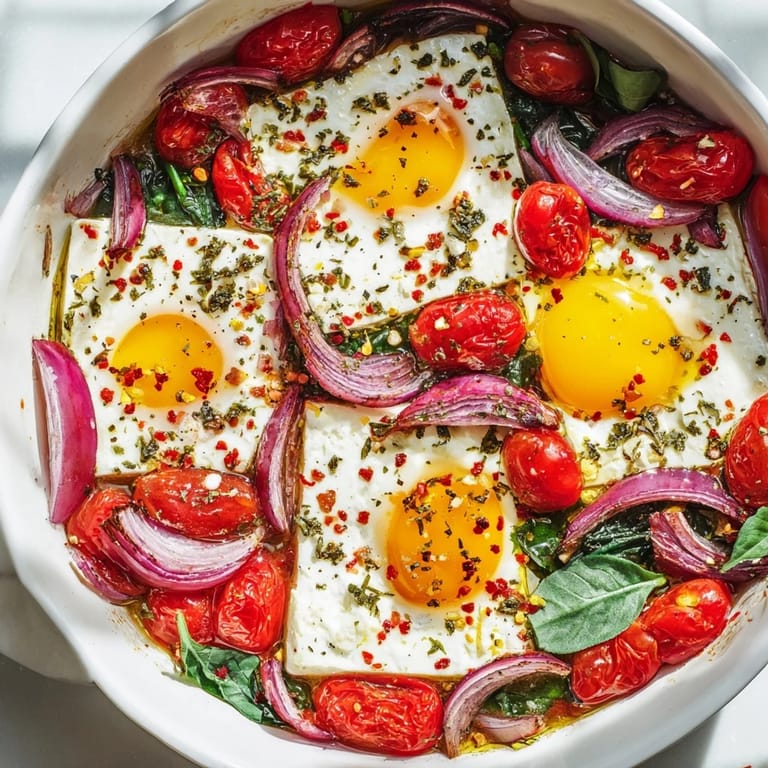
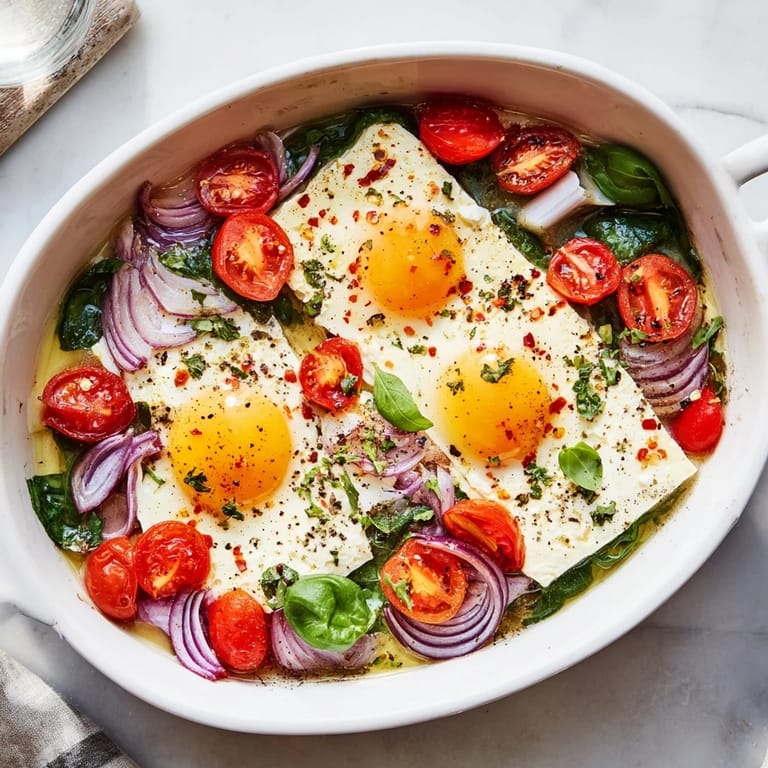
- Place the feta block in the center of your ovenproof dish like it's the main character. Surround it with halved cherry tomatoes, sliced red onion, and minced garlic in all the little pockets around it.
- Season and Oil:
- Drizzle everything generously with olive oil and sprinkle the oregano, chili flakes if you're using them, and a good pinch of salt and pepper all over. Don't be shy—this is where the flavor foundation gets built.
- First Bake:
- Slide the whole thing into the oven for 15 minutes, and don't skip checking at around 12 minutes—you want those tomatoes to burst and the feta to start softening and pooling around the edges. You'll know it's right when the kitchen smells like a Mediterranean dream.
- Add the Spinach:
- Pull the dish out, scatter the baby spinach around the feta, and stir it gently into the hot tomato mixture where it wilts in seconds into silky green pockets. This is your moment to taste and adjust seasoning if needed.
- Crack the Eggs:
- Make four little wells in the vegetables by pushing them aside gently, then carefully crack an egg into each well. The hot vegetables will cocoon each egg, and it's one of those cooking moments where everything feels intentional.
- Final Bake:
- Return to the oven for 5–8 minutes, watching closely because yolks set fast. You're aiming for whites that are just set but yolks that still jiggle slightly when you gently shake the dish—that's the sweet spot.
- Finish and Serve:
- Pull it out, scatter fresh basil or parsley over the top while everything's still steaming, and bring it straight to the table. Serve with crusty bread if you want to soak up every last bit of that feta and tomato situation.
 Save
Save I once made this for a friend who'd just gone through something hard, and she asked for the recipe before she'd even finished eating. There's something about a warm, salty, creamy dish shared straight from the oven that says I see you and I'm feeding you properly without needing any words behind it.
The Secret of Slow Cooking the Tomatoes
Those first 15 minutes before you add the eggs aren't wasted time—they're when the tomatoes break down and create their own sauce from the inside out. The feta releases its salt into the olive oil, the onions soften just enough to lose their bite, and the garlic perfumes everything without being raw or sharp. I learned this by accident the first time I added the eggs too early, and the eggs overcooked while everything else was still hard. Now I know those 15 minutes are sacred.
Customizing Without Losing the Soul
You can absolutely swap in roasted peppers, sliced olives, artichoke hearts, or sun-dried tomatoes without breaking anything. What matters is keeping the ratio roughly the same—enough feta to melt and pool, enough vegetables to create sauce, and enough eggs to make it a full meal. I once added caramelized onions instead of fresh and it became a richer, deeper version of itself, still beautiful but in a different season of the year.
Timing and Temperature Variations
Oven temperatures vary wildly, so watch your first bake more than the recipe clock. Some ovens blast hard and fast, others are gentle—yours might need 12 minutes for the tomatoes to burst or 18, and that's fine. The eggs are the timer, really, because they'll tell you when they're done by how they look, and there's no salvaging overcooked yolks. Here's what I've learned from making this probably a hundred times: it's better slightly underbaked than overdone, because you'll keep eating it while it finishes cooking on the plate.
- If your yolks set too firm, your oven is too hot or you left it in too long—reduce either variable next time and check at 5 minutes exactly.
- A runny yolk breaks as soon as you push your bread through it, creating this sauce that tastes better than any hollandaise I've ever made.
- If you like your yolks more set, add an extra 2 minutes and you'll get something closer to medium, still creamy but no longer jammy.
 Save
Save This dish is breakfast that feels like you're caring for yourself, or someone else, or both at the same time. It's Mediterranean warmth on a plate, finished in half an hour, and somehow tastes like you've been cooking all morning.
Recipe FAQs
- → What type of cheese is best for this dish?
A block of firm feta cheese works best as it softens while baking without melting completely, providing a creamy texture and tangy flavor.
- → Can I add spices to enhance the flavor?
Yes, adding chili flakes or smoked paprika brings a wonderful spicy kick, complementing the dish's Mediterranean flavors.
- → How do I achieve runny egg yolks?
Bake the eggs for 5–8 minutes after adding them to the vegetables. Keep an eye on the whites setting while maintaining yolks soft and runny.
- → Is this dish suitable for a vegetarian diet?
Yes, this includes dairy and eggs but no meat, making it suitable for lacto-ovo vegetarians.
- → What can I serve alongside for a complete meal?
Crusty bread is recommended to scoop up the baked feta and eggs, adding texture and fullness to the dish.