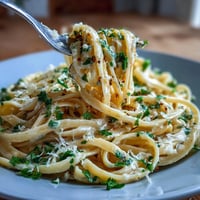
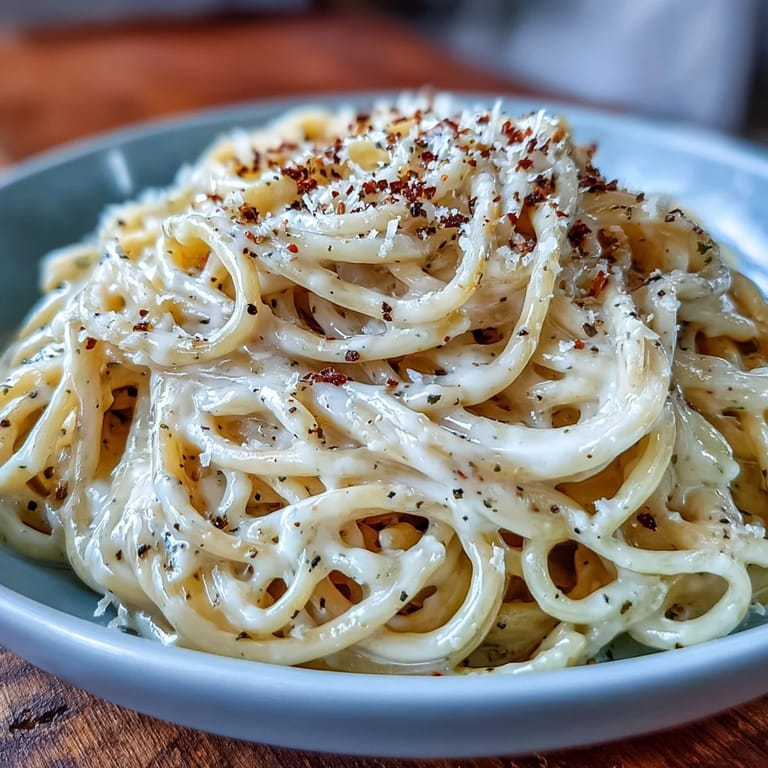
 Save
Save The steam rising from the pot fogged my glasses as I drained the spaghetti, and for a split second I panicked thinking I'd forgotten to save the pasta water. But the mug sat right there on the counter, full of that starchy gold I'd learned never to waste. My first attempt at Cacio e Pepe had been a clumpy disaster, the cheese seizing into rubbery strings instead of melting into silk. Now, years later, I move through the steps with the kind of confidence that only comes from failing, learning, and trying again.
I made this for my neighbor on a Tuesday night when she mentioned she hadn't had a proper meal in days. She stood in my kitchen, wine glass in hand, watching me toss the pasta with cheese and pepper, and when she took her first bite she closed her eyes and said it tasted like Rome. I'd never been, but I believed her. Sometimes the simplest things carry the most weight.
Ingredients
- Spaghetti or tonnarelli: Tonnarelli is the traditional choice with its square edges that grab the sauce, but spaghetti works beautifully and is easier to find.
- Pecorino Romano cheese: This is the star, so buy a good wedge and grate it yourself; the pre-shredded stuff has anti-caking agents that will ruin the creamy texture.
- Whole black peppercorns: Freshly cracked pepper is non-negotiable here, it blooms in the heat and fills your kitchen with a warmth that ground pepper just can't match.
- Kosher salt: For the pasta water, which should taste like the sea and will become the base of your sauce.
- Unsalted butter (optional): Purists skip this, but a tablespoon adds a silky richness that I've come to love on cold evenings.
Tired of Takeout? 🥡
Get 10 meals you can make faster than delivery arrives. Seriously.
One email. No spam. Unsubscribe anytime.
Instructions
- Boil the pasta:
- Bring a large pot of water to a rolling boil, salt it generously, and cook your spaghetti until it still has a little bite, about a minute shy of the package time. Before you drain it, scoop out at least one and a half cups of that cloudy, starchy water; it's the secret to a sauce that clings instead of separates.
- Toast the pepper:
- While the pasta bubbles away, heat a large dry skillet over medium heat and add your cracked peppercorns, swirling them until they smell like a spice market. This step wakes up the pepper and makes it the foundation of flavor, not just a garnish.
- Build the base:
- Pour a cup of the reserved pasta water into the skillet with the toasted pepper and lower the heat. The water should be hot but not boiling, creating a gentle environment for the cheese to melt without clumping.
- Combine pasta and pepper water:
- Add the drained pasta directly to the skillet and toss it around, letting it drink in that peppery liquid. The pasta will start to glisten and soften just a bit more as it absorbs the flavors.
- Add the cheese:
- Pull the skillet off the heat and start adding the Pecorino in small handfuls, tossing constantly with tongs or a fork to coax it into a creamy sauce. If it looks dry or grainy, add a splash more pasta water and keep tossing; the motion and the starch work together to create emulsification.
- Finish with butter (optional):
- If you're using butter, drop it in now and toss until it melts into the sauce, adding a glossy finish. This step is entirely up to you, but I find it smooths out any last rough edges.
- Serve immediately:
- Divide the pasta among warm bowls, top with extra grated Pecorino and a generous crack of black pepper. Cacio e Pepe waits for no one, so eat it while it's hot and creamy.
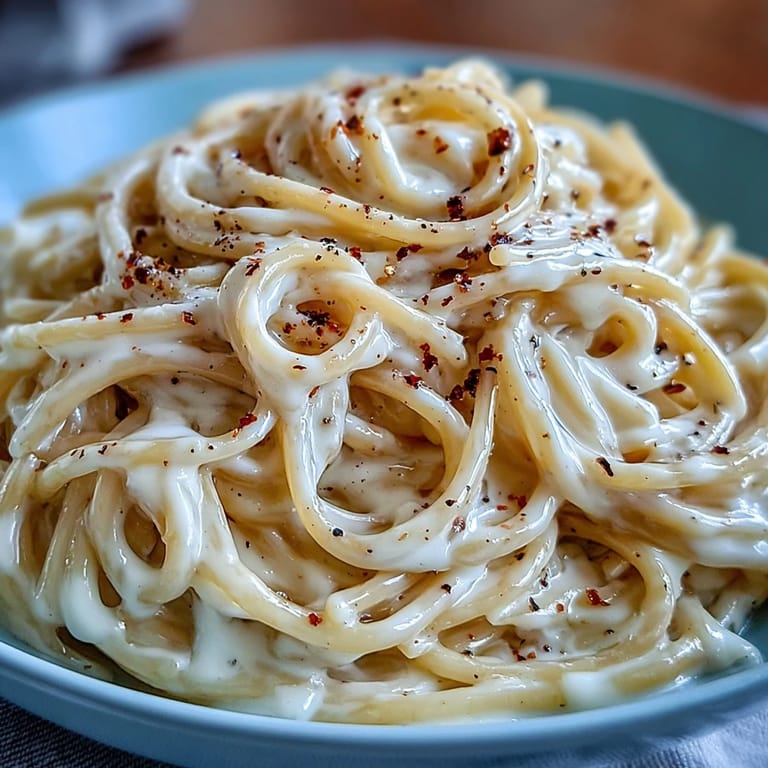 Save
Save The first time I got the sauce right, I stood over the skillet and ate half of it straight from the pan with a wooden spoon. My husband walked in, laughed, and grabbed a fork to join me. We didn't bother with plates, just stood there in the warm glow of the stove, twirling pasta and talking about nothing in particular. That's when I realized this dish isn't just about technique, it's about the moments you create around it.
Choosing Your Pasta
Tonnarelli is traditional and worth seeking out at an Italian market if you can, its thicker, square shape holds onto the sauce in a way that feels authentic. But spaghetti is more forgiving for beginners and still delivers that perfect twirl on your fork. I've also used bucatini when I'm feeling indulgent, the hollow center traps little pockets of cheesy sauce that burst with flavor. Whatever you choose, make sure it's good quality and cook it just shy of done, because it will finish cooking in the skillet.
The Pasta Water Trick
I used to dump the pasta water down the drain without a second thought until a chef friend told me I was throwing away liquid gold. That starchy water is what turns grated cheese into a cohesive, creamy sauce instead of a grainy mess. Now I keep a mug by the stove and fill it before I drain anything, and I've started using it in other pasta dishes too. It's one of those small habits that changed the way I cook, and once you start saving it, you'll wonder how you ever lived without it.
Serving and Pairing
Cacio e Pepe is best served in warm bowls with nothing more than extra cheese and pepper on top, letting the simplicity speak for itself. I like to pour a crisp, cold Frascati or Verdicchio alongside it, something bright and mineral that cuts through the richness. If you want to round out the meal, a simple arugula salad with lemon and olive oil is all you need.
- Warm your serving bowls in a low oven or with hot water so the pasta stays creamy longer.
- Grate extra Pecorino at the table so everyone can adjust to their taste.
- Leftovers don't reheat well, so this is a dish best made and eaten fresh.
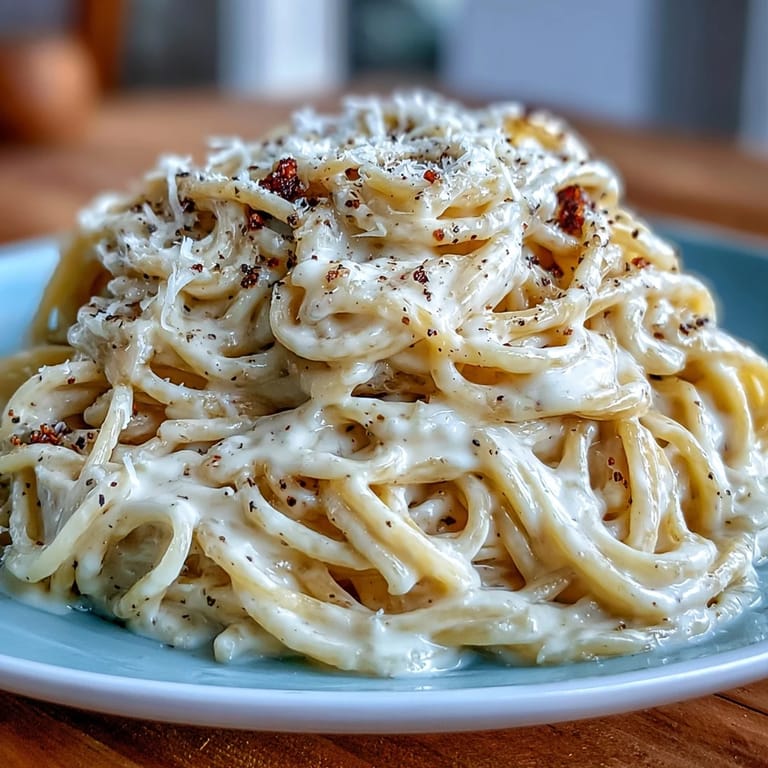 Save
Save This is the kind of recipe that feels like a hug after a long day, simple, satisfying, and somehow always exactly what you need. I hope it finds a place in your rotation the way it has in mine.
Recipe FAQs
- → What makes Cacio e Pepe sauce creamy without cream?
The creaminess comes from emulsifying finely grated Pecorino Romano cheese with hot, starchy pasta cooking water. The pasta water's starch acts as a natural thickener, creating a smooth, glossy sauce when vigorously tossed with the cheese off the heat.
- → Can I substitute Parmesan for Pecorino Romano?
While Parmesan can be used in a pinch, Pecorino Romano is essential for authentic flavor. Pecorino has a sharper, saltier, more assertive taste that defines this Roman dish. Using Parmesan will result in a milder, different flavor profile.
- → Why does my cheese clump instead of creating a smooth sauce?
Clumping occurs when cheese is added to water that's too hot or when the heat is too high. Always remove the pan from heat before adding cheese, use finely grated cheese at room temperature, and add it gradually while tossing constantly to ensure proper emulsification.
- → What type of pasta works best?
Tonnarelli, a square-shaped long pasta, is traditional in Rome. Spaghetti is the most common alternative and works beautifully. Both shapes have enough surface area to hold the peppery cheese sauce. Avoid thin pasta like angel hair, which can become mushy.
- → How important is freshly cracked black pepper?
Freshly cracked black pepper is crucial. Pre-ground pepper loses its volatile oils and aromatic compounds, resulting in flat, dusty flavor. Cracking whole peppercorns just before cooking and toasting them in the pan releases intense, fragrant oils that are essential to the dish's character.
- → Can this dish be reheated or made ahead?
Cacio e Pepe is best enjoyed immediately as the sauce can thicken and separate when cooled. If you must reheat, add a splash of hot water and toss gently over low heat. The texture won't be as silky as freshly made, so it's ideal to prepare just before serving.