 Save
Save There's something about the smell of tomatoes roasting in a hot oven that makes you forget why you ever bought soup from a can. I stumbled onto this recipe during one of those autumn days when the farmers market was bursting with the last good tomatoes of the season, and I couldn't resist buying a pile of them even though I had no real plan. The roasted garlic caught me off guard—those soft, golden cloves transformed into something almost sweet and mellow, nothing like the sharp garlic I expected. That first spoonful, with the cream swirling in, felt like a small discovery I needed to make myself.
I made this for my neighbor who had just moved in, and we ended up sitting on the porch with bowls in our laps, talking until the light started to fade. She said it tasted like comfort, and I realized that's exactly what I'd been chasing in the kitchen that day—something warm that felt like it had a story behind it.
Ingredients
- Ripe tomatoes (1.5 lbs): The backbone of this soup—get the best ones you can find, preferably at a farmers market where they still taste like tomatoes and not water.
- Garlic bulb (1 whole): Roasting mellows the garlic into something almost unrecognizable and wonderful, so don't skip it or try to use minced garlic instead.
- Yellow onion (1 large): Sweet when roasted, it adds body and a gentle depth that keeps the soup from tasting one-dimensional.
- Olive oil (2 tbsp): Use something you'd actually taste on its own—the quality matters more than you'd think in a simple recipe like this.
- Heavy cream (1/2 cup): This is where the richness lives; stir it in at the end to keep it from breaking.
- Vegetable broth (2 cups): A good broth makes all the difference; if you have homemade, use it.
- Salt and black pepper: Taste as you go; roasted vegetables need more seasoning than you'd expect.
- Sugar (1/2 tsp, optional): Add this only if the acidity of the tomatoes feels sharp—it should whisper, not shout.
- Smoked paprika (1/4 tsp, optional): A pinch adds a whisper of depth without announcing itself.
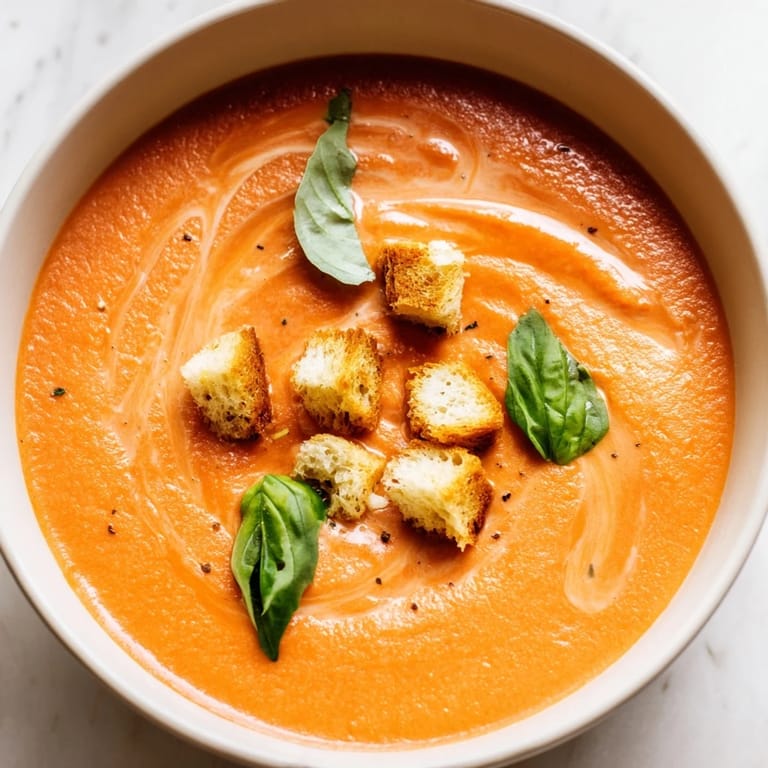
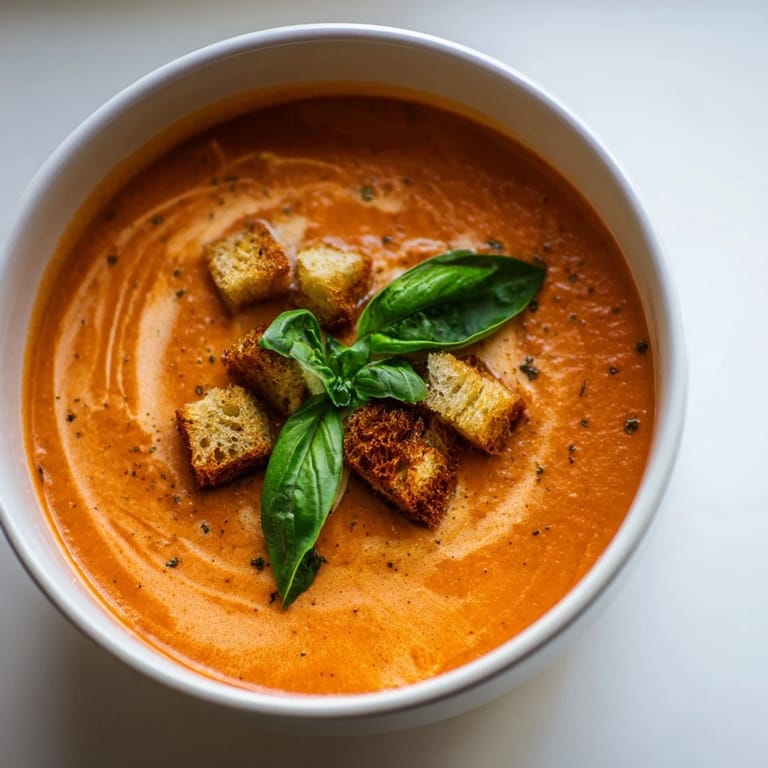
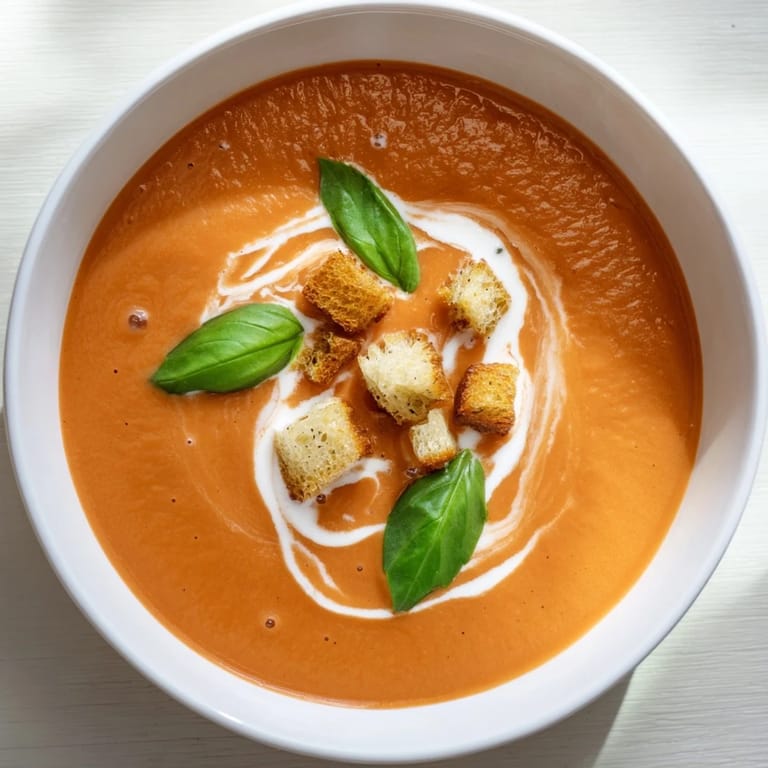
- Fresh basil and croutons for garnish: Tear the basil just before serving so it stays bright green.
Tired of Takeout? 🥡
Get 10 meals you can make faster than delivery arrives. Seriously.
One email. No spam. Unsubscribe anytime.
Instructions
- Heat your oven and prep:
- Preheat to 400°F and arrange your tomato halves cut-side up on a baking sheet. Slice the top off your garlic bulb just enough to expose the cloves, drizzle it with a little olive oil, and wrap it loosely in foil so it steams gently while it roasts.
- Season everything:
- Toss your tomato halves and onion wedges with olive oil, salt, and pepper. Don't be shy—roasted vegetables need more seasoning than raw ones.
- Let them transform:
- Roast for 35–40 minutes until the tomato edges are caramelized and the flesh has collapsed into itself, and your garlic is soft enough to squeeze out of its skin like butter. The kitchen will smell unbelievably good.
- Cool and squeeze:
- Once the pan is cool enough to touch, pop those roasted garlic cloves right out of their papery skins—they should slip out with barely any pressure.
- Blend until silky:
- Transfer everything to your blender with the vegetable broth and blend until completely smooth, working in batches if you need to. A few specks of tomato skin are fine, but you're going for velvety, not chunky.
- Finish with cream:
- Pour the blended mixture into a pot, stir in the heavy cream and smoked paprika, then taste. If the tomato acidity is too sharp, add a touch of sugar—just enough to round out the flavor.
- Gentle simmer:
- Let it warm through over medium-low heat for about 10 minutes, stirring now and then so nothing sticks to the bottom. Adjust the salt and pepper to your taste.
 Save
Save I remember serving this to my parents one evening, and my dad asked for the recipe—he'd been making the canned version for years without realizing soup could taste like this. That moment made me understand why I cook: it's not really about the food itself, but about the surprise and the small joy when someone tastes something made with actual care.
Why Roasting Changes Everything
Roasting isn't just a cooking technique; it's a flavor cheat code. Raw tomatoes are bright and acidic, but when you roast them, the water evaporates and what's left is concentrated tomato essence with natural sugars that caramelize slightly. The garlic shifts from pungent to almost sweet, like it's become a completely different ingredient. Even the onion relaxes into something almost creamy tasting. This is why the soup tastes nothing like tomato soup you might make by simmering everything at once.
Building Flavor Layers
The real magic happens when you layer flavors intentionally. You start with roasted vegetables that have depth and complexity. Then the cream adds richness and smoothness. The optional smoked paprika adds a quiet whisper of smokiness. The sugar (if needed) isn't there to make it taste sweet—it's there to balance the sharpness of the tomato acid. Each element has a job, and when they all work together, the soup tastes like it took hours, even though you're mostly just waiting for things to roast.
Serving and Storage Wisdom
This soup tastes best when it's still hot, with the basil tearing as you drop it in and the croutons staying crispy on top. It reheats beautifully the next day—sometimes even better, since the flavors deepen overnight. I usually make a double batch because it keeps in the fridge for four days and freezes well for a month.
- If you freeze it, skip the cream and stir that in after reheating so it doesn't separate.
- Serve it alongside something crusty for dipping, or pair it with a grilled cheese for the ultimate comfort food moment.
- Leftovers work as a sauce for roasted chicken or a base for other soups if you want to get creative.
 Save
Save This soup taught me that sometimes the most comforting meals come from working with what's in front of you rather than chasing some complicated recipe. It's the kind of thing you make because you want it, not because you're trying to impress anyone.
Recipe FAQs
- → What is the best way to roast garlic for this soup?
Slice the top off the garlic bulb, drizzle with olive oil, wrap in foil, and roast at 400°F for 35–40 minutes until soft and caramelized.
- → Can I substitute heavy cream with a non-dairy option?
Yes, plant-based creams like coconut or cashew cream work well to maintain richness while keeping it dairy-free.
- → How does roasting affect the tomatoes’ flavor?
Roasting intensifies the tomatoes’ natural sweetness and adds a slight caramelization, enhancing depth in the final blend.
- → Is smoked paprika necessary in this soup?
Smoked paprika adds a subtle smokiness that complements roasted garlic, but it can be omitted or adjusted to taste.
- → What are good garnishes to serve with this soup?
Fresh basil leaves and croutons or toasted bread provide freshness and crunch, elevating the soup’s texture and flavor.