 Save
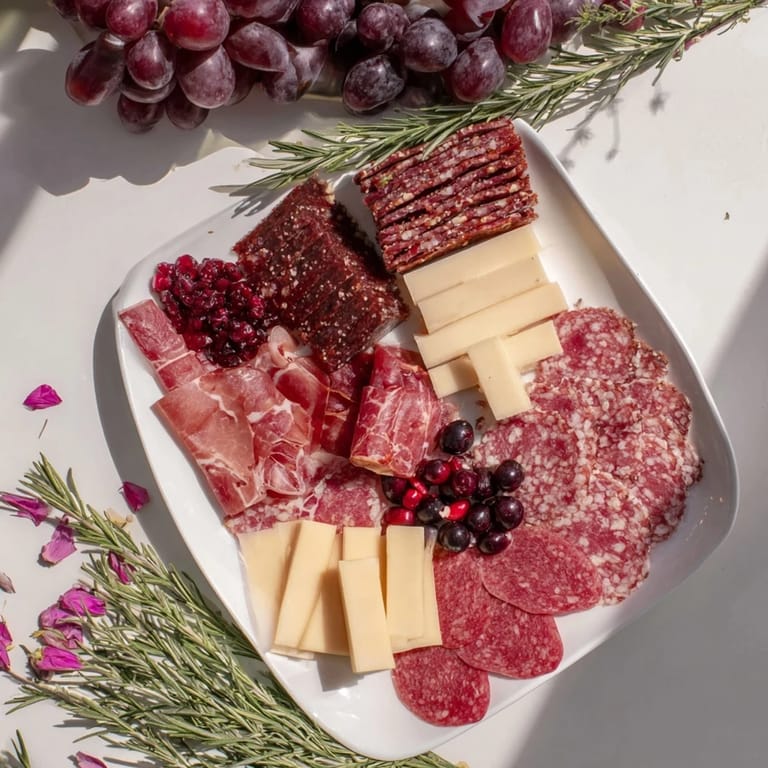
Save The first time I built a charcuterie board that actually mattered was for my sister's dinner party, and I was terrified. I'd spent the afternoon wandering through the specialty market, running my fingers over different cheeses, asking the counter person about the Drunken Goat cheese with its wine-stained rind. When I got home and started arranging everything on that triangular board, something clicked—the deep reds and burgundies all speaking to each other, the textures creating this natural conversation without a single word spoken. That's when I realized a charcuterie board isn't just food; it's an invitation to linger, to taste, to talk.
I remember my friend Marcus taking one look at the board and asking if he could just stand there for a minute before eating anything. He was photographing it, sure, but he was also genuinely moved by how intentional it all felt. That's the magic of a board done right—it becomes this moment of pause in the middle of chaos, and everyone knows it.
Ingredients
- Prosciutto: The delicate ambassador here; slice it thin enough to almost see through, and it'll melt on your tongue like a whisper.
- Bresaola: This air-dried beef brings a gentle iron note that anchors everything without shouting.
- Spicy chorizo: The wake-up call your palate needs, thinly sliced so the heat lingers just right.
- Smoked beef salami: Trust that smoke—it creates depth and keeps people coming back for one more slice.
- Drunken Goat cheese: The star of the show, soaked in red wine until it's both playful and sophisticated at once.
- Red Wine Cheddar: Cube it and watch people gravitate toward it; wine and cheddar together is a flavor that feels like home.
- Merlot BellaVitano: Slice this one thin to appreciate how the wine has changed its character and deepened its color.
- Red grapes: They're your palate cleansers and your little pops of sweetness woven through the savory moments.
- Pomegranate seeds: Don't skip this—those jewel-like arils add both crunch and a tartness that brightens everything around them.
- Red onion jam: A small jar is enough; this concentrated sweetness and sharpness ties the whole board together.
- Roasted red peppers: They're slightly sweet and silky, a gentle bridge between the meats and cheeses.
- Dried cranberries: Toss a handful in and they'll disappear first—everyone loves that tart-sweet hit.
- Baguette: Slice it thin and let it sit uncovered for an hour so it firms up; stale bread on a board is actually your friend.
- Red beet crackers: These stay crisp longer than regular crackers and their earthiness plays beautifully with wine-soaked cheese.
- Fresh rosemary sprigs: Don't just use them for looks—brush them gently over the board so their aroma reaches everyone first.
- Edible rose petals: Optional, but they turn a lovely board into something people remember.
Tired of Takeout? 🥡
Get 10 meals you can make faster than delivery arrives. Seriously.
One email. No spam. Unsubscribe anytime.
Instructions
- Prepare your canvas:
- Set your triangular board on a clear surface where it'll be the star. This isn't just a serving piece; it's the stage where flavors will perform.
- Arrange the meats with intention:
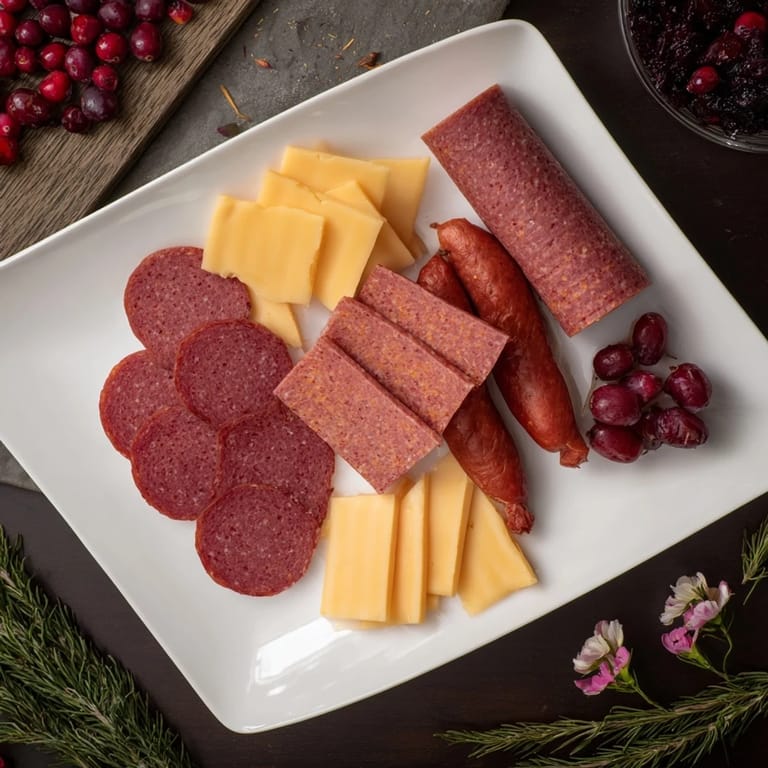
- Fold the prosciutto into loose, delicate piles; roll the bresaola into cylinders; let the chorizo catch the light with its deep red. Keep similar textures clustered together so someone can read the board like a map, each region telling its own story.
- Fan out the cheeses:
- Slice your wine-soaked cheeses thick enough to stand on their own but thin enough to disappear on the tongue. Let them breathe in their own little territories, not crowded or competing.
- Scatter the companions:
- This is where your instincts matter more than rules. Drop grapes and pomegranate seeds into the gaps, letting them nestle naturally. Place the red onion jam somewhere it'll catch someone's eye and make them curious enough to taste it.
- Layer in the roasted peppers and dried cranberries:
- Don't just dump them; weave them in so they feel like accidental discoveries rather than filler. Each placement should feel considered, even if you're moving quickly.
- Fill spaces with bread and crackers:
- Create a rhythm—alternate thick baguette slices with beet crackers, leaving enough breathing room that the board never feels panicked or overcrowded. These are the conversation starters, the vessels that let everything else shine.
- Garnish with purpose:
- Tuck rosemary sprigs into corners and between meats, letting their green bring the whole composition together. If you're using rose petals, scatter them across the top like they just landed there naturally.
- Let it rest and breathe:
- Give the board five minutes at room temperature before you bring it out. Everything settles, flavors begin talking to each other, and the whole thing becomes more than the sum of its parts.
 Save
Save The most unexpected moment with this board came when my neighbor tried it at a party and told me it reminded her of a wine bar she'd visited in Piedmont twenty years ago. She wasn't hungry for food; she was hungry for a memory, and somehow this collection of meats and cheese had the power to transport her. That's when I understood that the best boards aren't about impressing people with expense or complexity—they're about creating a moment where everyone can taste something beyond ingredients.
The Story Behind the Colors
There's a reason everything on this board is some shade of red or burgundy—it's not just aesthetic, though it is beautiful. Red wine has this way of infiltrating everything it touches, changing how cheese tastes, deepening the color of cured meat, making the whole thing feel intentional and curated. The first time I really paid attention to this was when I tasted the Drunken Goat cheese next to a regular goat cheese, and suddenly understood how profoundly wine can influence flavor. It taught me that the best boards tell a story through color and flavor, not accident.
Building Flavor Architecture
If you think of your palate as a space that needs movement and rhythm, suddenly arranging a board becomes more intuitive. You're not just placing things; you're choreographing how someone will experience taste. I learned this after watching people attack boards randomly versus watching someone methodically build a bite with a piece of meat, a cube of cheese, a grape, a cracker—watching their face as they found the exact combination that sang. That's when I realized arrangement matters not just for looks, but for how the food actually tastes in someone's mouth.
Wine Pairings and Timing
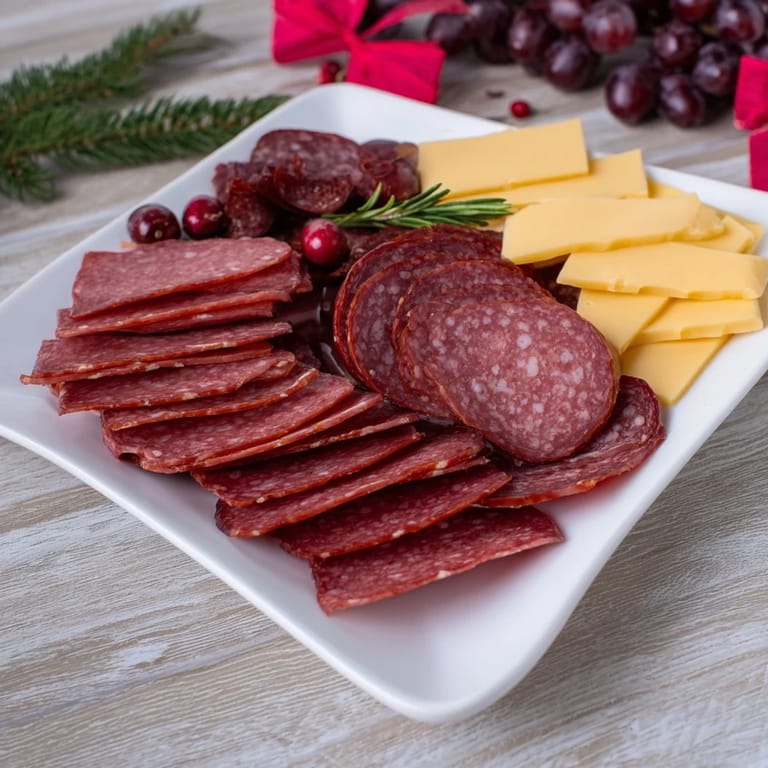
Bring a bottle of Cabernet Sauvignon or Malbec to the table, and suddenly this board isn't just appetizer—it becomes the entire event. I've learned that bold red wines don't compete with the flavors here; they actually amplify them, creating this gorgeous loop where the wine makes the cheese taste better and the cheese makes the wine taste better. Timing-wise, this is your moment to slow everything down—no rush, no agenda, just the good kind of lingering that happens when people are genuinely enjoying what's in front of them.
- Cabernet Sauvignon cuts through the fat of the cured meats and brings out the earthiness of the beet crackers.
- Malbec's fruit-forward notes play beautifully with the tart cranberries and pomegranate seeds.
- Let wine-soaked cheeses sit for ten minutes before serving so the temperature rises slightly and flavor blooms.
 Save
Save In the end, a charcuterie board is just an excuse to gather people around something beautiful and taste together. This Crimson Crest board has become my way of saying I care enough to linger.
Recipe FAQs
- → What types of meats are included in The Crimson Crest board?
The board features a selection of premium red meats including prosciutto, bresaola, spicy chorizo, and smoked beef salami, all arranged in distinct sections.
- → How are the cheeses prepared for this board?
Cheeses such as Drunken Goat, Red Wine Cheddar, and Merlot BellaVitano are sliced or cubed into bite-sized portions and fanned out in clusters adjacent to the meats.
- → What accompaniments complement the meats and cheeses?
Fresh red grapes, pomegranate seeds, dried cranberries, roasted red peppers, and red onion jam provide sweetness and tang, enhancing the flavors across the board.
- → Are there any garnishes used to enhance presentation?
Fresh rosemary sprigs add aromatic freshness while edible rose petals contribute color and visual appeal to the arrangement.
- → Can this board accommodate dietary restrictions?
Gluten-free crackers can substitute traditional ones, and additional cheeses like aged Manchego can be used. It's important to check labels for allergens like milk and wheat.
- → What wine pairs best with this selection?
Bold red wines such as Cabernet Sauvignon or Malbec complement the deep, robust flavors of the meats and wine-infused cheeses.