 Save
Save The first time I served crispy rice salmon stacks at a dinner party, I wasn't entirely sure they'd work. I'd been experimenting with leftover sushi rice in my skillet one afternoon, watching it transform into these golden, crunchy little squares, and something clicked. The combination of that brittle texture, cool avocado, and briny salmon felt like it shouldn't be that good, but it was—the kind of dish that made my guests pause mid-bite and ask for the recipe. Now I make them whenever I want something that feels fancy but doesn't require a sushi chef's precision.
I remember making these for my partner on a random Tuesday when we had good salmon in the fridge and I was tired of the usual dinner routine. He came into the kitchen just as I was frying the rice squares, and the smell—buttery, toasty, almost popcorn-like—made him hover around the stove asking questions. When we sat down to eat, he went quiet for a moment, which is his tell that something's really working. That meal shifted how I think about weeknight cooking; it doesn't have to be complicated to feel special.
Ingredients
- Sushi rice: Use proper sushi rice, not regular long-grain; it has the right starch content to hold together when fried and the grain size matters more than most people realize.
- Rice vinegar: Don't skip this or substitute with regular vinegar—it's what gives the rice its subtle tang and prevents it from tasting bland.
- Sushi-grade salmon: Buy it from a trusted fishmonger the day you plan to use it, and keep it cold until the last minute.
- Toasted sesame oil: A little goes a long way; it's the secret ingredient that makes the salmon taste like restaurant-quality sushi.
- Vegetable oil for frying: Neutral oils like canola or vegetable oil work best; olive oil will smoke and taste wrong here.
- Ripe avocado: Use one that yields slightly to pressure, not mushy—slice it just before assembling or it'll brown.
- Sriracha and spicy mayo: The heat should complement the fish, not overpower it; adjust to your preference.
- Sesame seeds and nori: These add texture and visual appeal that make the final dish feel intentional.
Tired of Takeout? 🥡
Get 10 meals you can make faster than delivery arrives. Seriously.
One email. No spam. Unsubscribe anytime.
Instructions
- Prepare and season the sushi rice:
- Rinse the sushi rice under cold running water until the water runs clear—this removes excess starch. Combine with water in a saucepan, bring to a boil, then cover and simmer on low for 15 minutes. Let it sit covered for another 10 minutes to finish cooking gently. In a small bowl, mix the rice vinegar, sugar, and salt, then gently fold this mixture into the warm rice—the warm rice helps the vinegar flavors distribute evenly without breaking the grains.
- Shape and chill the rice:
- Press the cooled rice into a parchment-lined 8-inch square pan to about half an inch thick, keeping an even layer. Chill in the fridge for 20 minutes so it firms up and holds together when you cut it.
- Season the salmon:
- While the rice chills, dice your salmon into bite-sized pieces and combine with soy sauce, toasted sesame oil, sriracha if using it, lime juice, and green onion in a bowl. Mix gently and let it sit cold until you're ready to assemble—the acid from the lime juice will start to gently cure the fish.
- Make the spicy mayo:
- Stir together mayonnaise and sriracha in a small bowl, tasting as you go; you want heat but not so much that it drowns out the salmon flavor.
- Fry the rice until golden:
- Remove the chilled rice from the pan, cut it into 2-inch squares, and heat vegetable oil in a nonstick skillet over medium-high heat. Fry each square for 2 to 3 minutes per side until it's golden brown and sounds crispy when you tap it. Drain on paper towels while still warm.
- Assemble and serve:
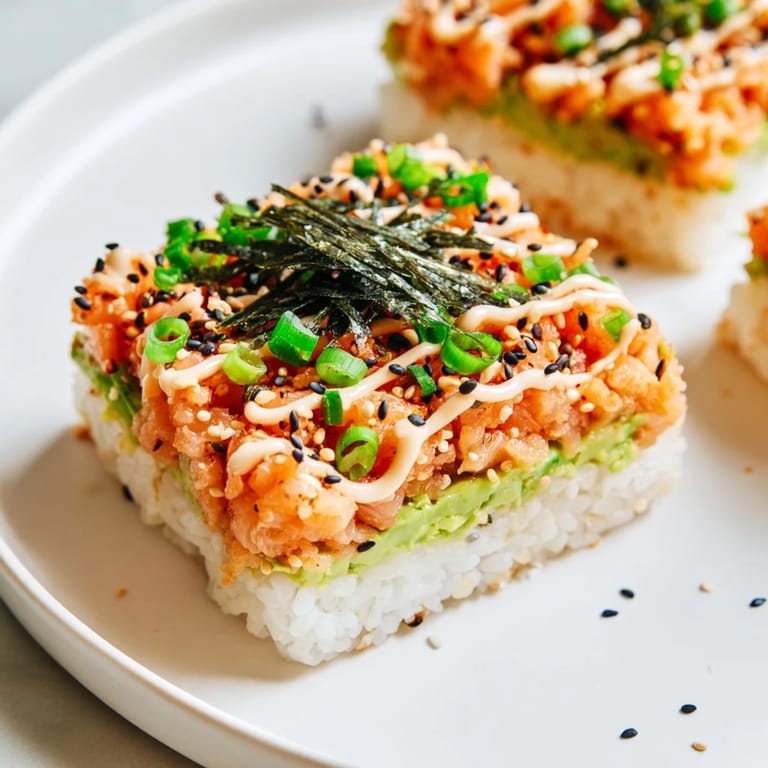
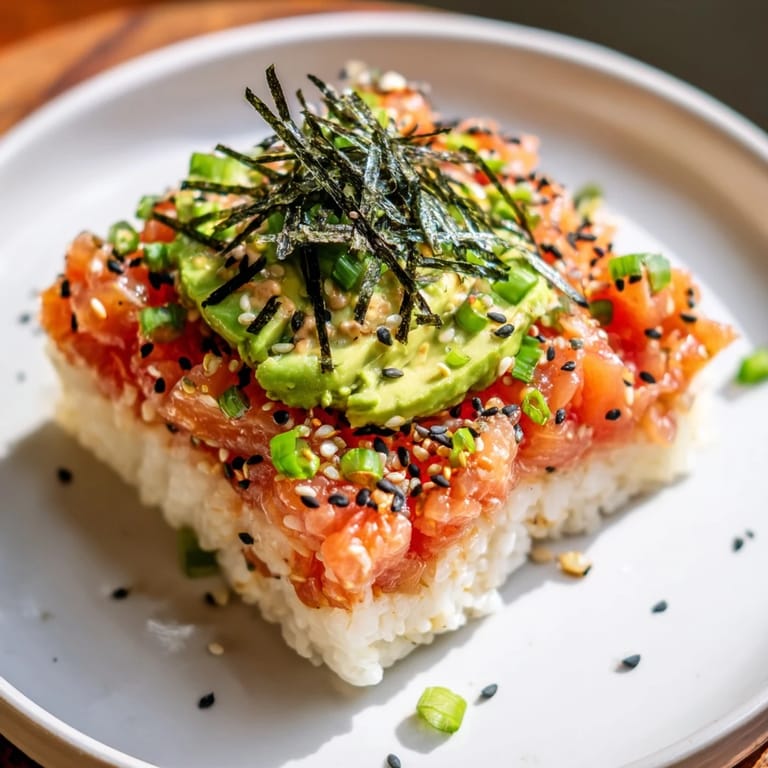
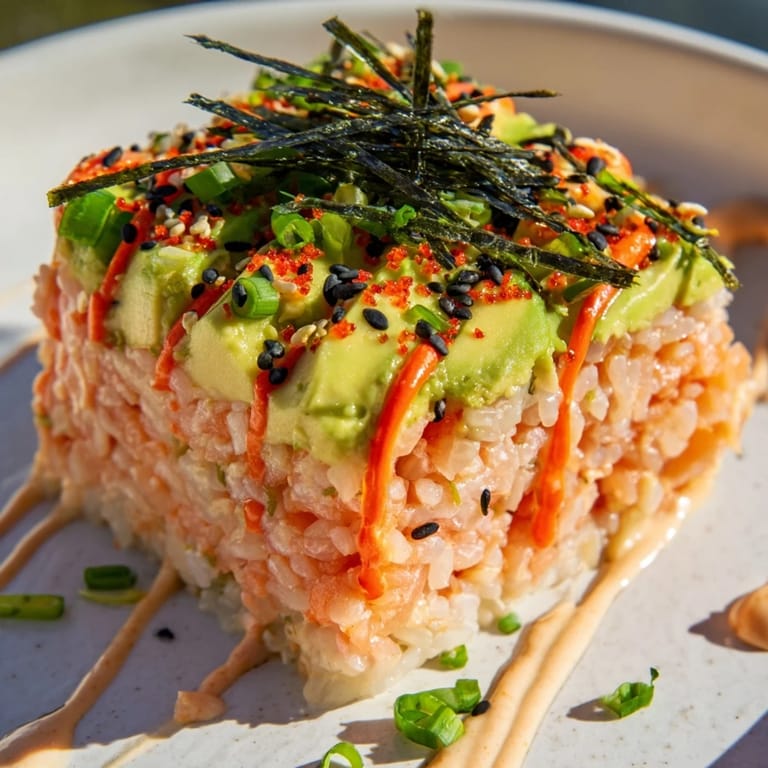
- Work quickly so the rice stays warm—top each crispy square with a slice or spoonful of avocado, a generous spoonful of the salmon mixture, a light drizzle of spicy mayo, and a sprinkle of sesame seeds, chives, and nori strips if you're using them. Serve immediately while the contrast between warm and cool, crispy and soft, is still there.
 Save
Save The real magic of this dish isn't in any single ingredient—it's in the moment when everything comes together on the plate. I learned this when a friend who usually orders takeout watched me make it and said she'd never realized food could be both beautiful and delicious without being fussy. That's when I understood why I keep coming back to it.
Why the Crispy Rice Makes All the Difference
Frying sushi rice is a technique I borrowed from sushi restaurants, where crispy rice is used as a textural contrast in rolls. The key is understanding that sushi rice, unlike regular rice, has enough starch to become genuinely crispy rather than hard. When it hits hot oil, it puffs slightly and develops a golden crust while staying slightly tender inside. It's the textural anchor that keeps this dish from being just another avocado-and-salmon assembly. The rice also stays warm longer than you'd expect, which means your cold toppings create this perfect temperature contrast with each bite.
Building Flavor Layers
I used to think the salmon seasoning was separate from everything else, but I've learned it's really the bridge between all the components. The soy sauce brings umami, the sesame oil adds depth, the lime juice cuts through the richness, and the sriracha adds a whisper of heat that makes you notice everything else. The spicy mayo serves a similar purpose—it's not just a topping, it ties the creamy avocado to the fish and the crispy rice. When you taste all four layers at once, the dish suddenly feels intentional rather than assembled.
Serving and Variations
I serve these as an appetizer when I'm having people over, but they work just as well as a light lunch with a salad on the side. You can make them ahead up to the frying step and reheat the rice squares in a warm skillet for a minute before assembling. If you're nervous about serving raw salmon, swap it for high-quality canned salmon or cooked salmon flaked into pieces—the dish works beautifully either way.
- Add pickled ginger or thin cucumber slices between the rice and avocado for extra brightness and crunch.
- Use cooked shrimp instead of salmon if you want a different protein, adjusting the seasonings to suit.
- Serve with a crisp white wine or chilled sake to echo the Japanese-inspired flavors.
 Save
Save This dish reminds me that some of the most memorable meals aren't the ones that require technical mastery—they're the ones where good ingredients, simple technique, and a little care come together. If you make this once, you'll find yourself making it again.
Recipe FAQs
- → How do I achieve crispy rice cubes?
After cooking and seasoning the sushi rice, press it firmly into a pan and chill to set. Cut into squares and fry in hot vegetable oil for 2–3 minutes per side until golden and crisp.
- → Can I substitute the raw salmon?
Yes, cooked or canned salmon works well if you prefer to avoid raw fish, maintaining flavor and texture balance.
- → What sauces complement the salmon stack?
A spicy mayo made from mayonnaise and sriracha adds creaminess and heat, paired with soy sauce and lime for a zesty finish.
- → How to keep the avocado from browning?
Use ripe, fresh avocado and apply a light squeeze of lime juice to delay browning and maintain color and freshness.
- → What are some recommended accompaniments?
Pickled ginger, thin cucumber slices, or a crisp white wine or chilled sake complement the dish’s fresh, layered flavors.