 Save
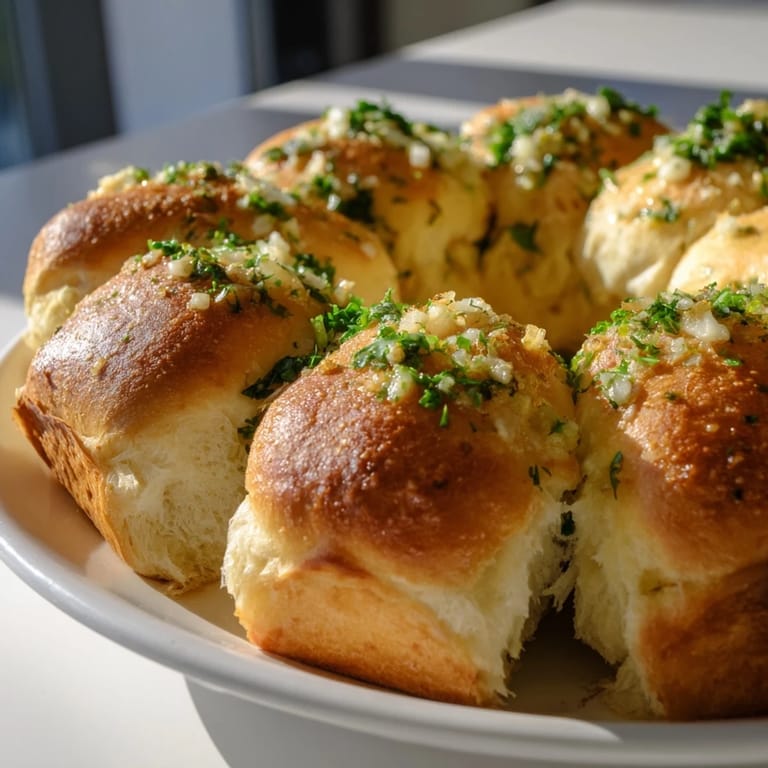
Save My neighbor Sarah showed up one evening with a pan of these garlic butter rolls, still warm from her oven, and I understood immediately why she'd been secretly perfecting them for months. The way they pulled apart, each piece glossy and fragrant, felt like she'd handed me a small edible secret. I pestered her for the recipe that night, and now whenever I make them, I'm struck by how something so simple—just dough and garlic butter—becomes the kind of thing people reach for without thinking, then can't stop eating.
I made these for my daughter's book club last spring, and they disappeared so fast I genuinely thought someone was pulling them from the cooling rack while I wasn't looking. One guest asked for the recipe right there, fork still in hand, with melted butter at the corner of her mouth. That's when I knew I'd stumbled onto something worth keeping in steady rotation.
Ingredients
- All-purpose flour (3 cups): The foundation that'll give you rolls with a tender crumb and just enough structure to hold the garlic butter without falling apart.
- Instant yeast (2¼ tsp): Don't skip the warmth check on your milk—too hot and you'll kill it, too cool and the dough barely rises, a lesson I learned the hard way.
- Warm milk (1 cup): This is what makes the dough soft and pillowy, so warm it to around 110°F by feel—hot as a comfortable bath.
- Unsalted butter (2 tbsp melted for dough, 6 tbsp for garlic mixture): Unsalted gives you control over the salt level and lets the garlic shine without competing flavors.
- Sugar and salt (1 tsp each): The sugar wakes up the yeast and adds a subtle sweetness that balances the savory garlic beautifully.
- Garlic (4 cloves, finely minced): Mince it small so every piece of dough gets flecks of flavor, and don't use pre-minced garlic—it tastes like metal by comparison.
- Fresh parsley (2 tbsp chopped): This gives brightness and keeps the rolls from tasting one-dimensional; dried parsley is a pale shadow, so fresh is worth the trip.
- Parmesan cheese (2 tbsp, optional): If you use it, grate it fresh and add it just before baking so it crisps rather than melts into oblivion.
Tired of Takeout? 🥡
Get 10 meals you can make faster than delivery arrives. Seriously.
One email. No spam. Unsubscribe anytime.
Instructions
- Mix and awaken:
- Combine your dry ingredients in a large bowl—flour, yeast, sugar, salt—like you're gathering everyone for a meeting. Pour in the warm milk and melted butter, then stir until a shaggy, rough dough pulls together; it should feel slightly sticky but not like cake batter.
- Knead into smoothness:
- Work the dough on a lightly floured surface for 7 to 8 minutes, folding it over itself repeatedly until it transforms from rough to silky. You'll feel when it's ready—it'll spring back when you poke it, and your hands will come away mostly clean. If using a stand mixer, let the dough hook do this for about 5 minutes instead.
- Rise in warmth:
- Place the dough in a greased bowl, cover it with plastic wrap or a damp towel, and find a warm spot—an oven with the light on, or a sunny windowsill works beautifully. Let it sit for about an hour until it's roughly doubled in size; you'll know it's ready when a gentle poke leaves a small dent that doesn't spring back immediately.
- Prepare the garlic magic:
- While the dough rises, whisk together melted butter, finely minced garlic, chopped fresh parsley, salt, and pepper in a small bowl. Taste it—you want the garlic to be noticeable but not harsh, and the parsley should add a whisper of green brightness. Let it sit so the flavors mingle.
- Shape and coat:
- Once risen, punch down the dough gently (yes, it's satisfying), then divide it into 12 roughly equal pieces using a bench scraper or knife. Roll each piece between your palms into a smooth ball, working quickly so they don't dry out. Dip each ball into the garlic butter, turning it gently so every surface gets coated, then place it into your greased 9-inch cake pan or skillet, nestling them close but not touching.
- Second rise:
- Drizzle any remaining garlic butter over the top of the rolls, cover loosely with plastic wrap, and let them rise again for 20 to 30 minutes in that same warm spot. They should puff up and start touching each other—that's when you know they're ready for the oven.
- Bake to golden:
- Preheat your oven to 350°F while the rolls finish their second rise. If you're using Parmesan, sprinkle it over the rolls now so it has time to toast and crisp. Bake for 22 to 25 minutes until they're a deep golden brown and smell absolutely incredible—a toothpick inserted into the center of one should come out clean.
- Rest and serve:
- Let them cool for just 5 minutes in the pan so the bottoms set, then bring them to the table while they're still warm and the butter is still glossy. Watch them disappear, one person pulling apart a roll and immediately reaching for another.
 Save
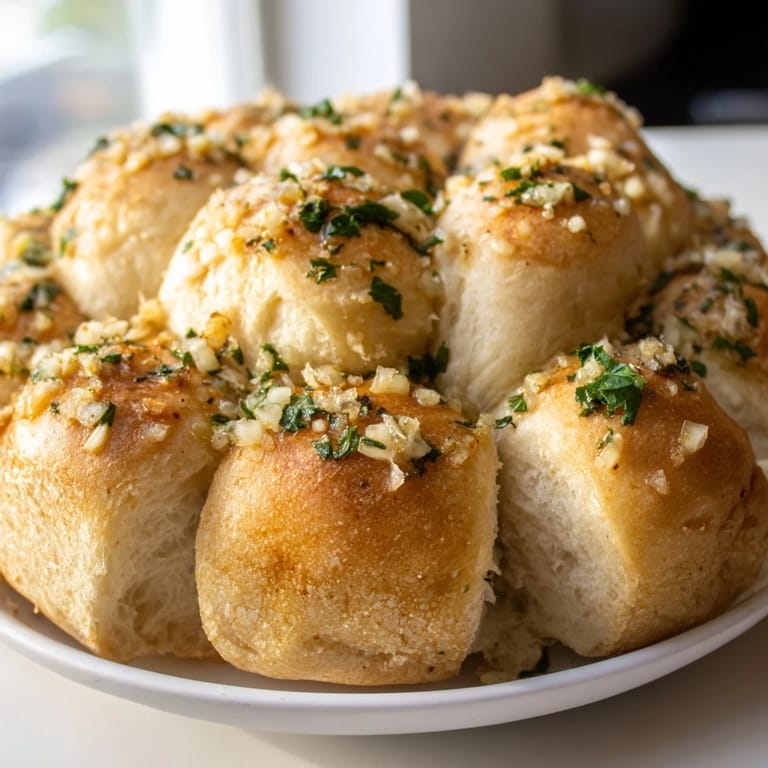
Save There's a moment, about halfway through baking, when the smell hits you so intensely that everyone in your home stops what they're doing and gravitates toward the kitchen. That's when you know you've made something worth making. My son once said these smelled like a hug, which I think might be the highest compliment a food can receive.
Timing and Make-Ahead Magic
The beauty of this recipe is that it doesn't demand your undivided attention at any single moment. You can shape the rolls the night before, cover them tightly in plastic wrap, and refrigerate them until you're ready to bake—they'll take about 40 minutes to come to room temperature and rise, or you can bake them straight from cold and add just 5 or 6 minutes to the bake time. I've done both, and honestly, the cold-start method sometimes gives you even more tender rolls because the slow rise develops flavor more deeply.
Variations and Flavor Twists
Once you've mastered the base version, the fun begins. I've added red pepper flakes to the garlic butter for a subtle heat that builds as you eat—my spice-loving friends go absolutely wild for this version. A friend tucked tiny cubes of fresh mozzarella into the center of her rolls before baking, and they turned into almost pizza-like pockets of melted cheese. Another time, I stirred in fresh basil and a touch of lemon zest instead of parsley, and they became something unexpected but equally wonderful.
Serving Suggestions and Pairings
These rolls are humble enough to sit beside pasta, but confident enough to stand on their own. I've served them with creamy tomato soup, where they soak up spoonfuls of that silky broth like they were born to do it. They're equally at home on a dinner table or passed around at a casual gathering, and I've found that people eat them more freely when they're warm and pull apart naturally—it feels less formal somehow, more like sharing.
- Pull them apart and serve them alongside marinara sauce for dipping, turning dinner into something restaurant-quality without the reservation.
- Slice them in half and use them as vehicles for herb-infused olive oil or whipped feta if you want to elevate a casual dinner party.
- Make a double batch and freeze the baked rolls in an airtight container for up to three weeks—they reheat perfectly in a 300°F oven for about 10 minutes, tasting nearly as fresh as the day you made them.
 Save
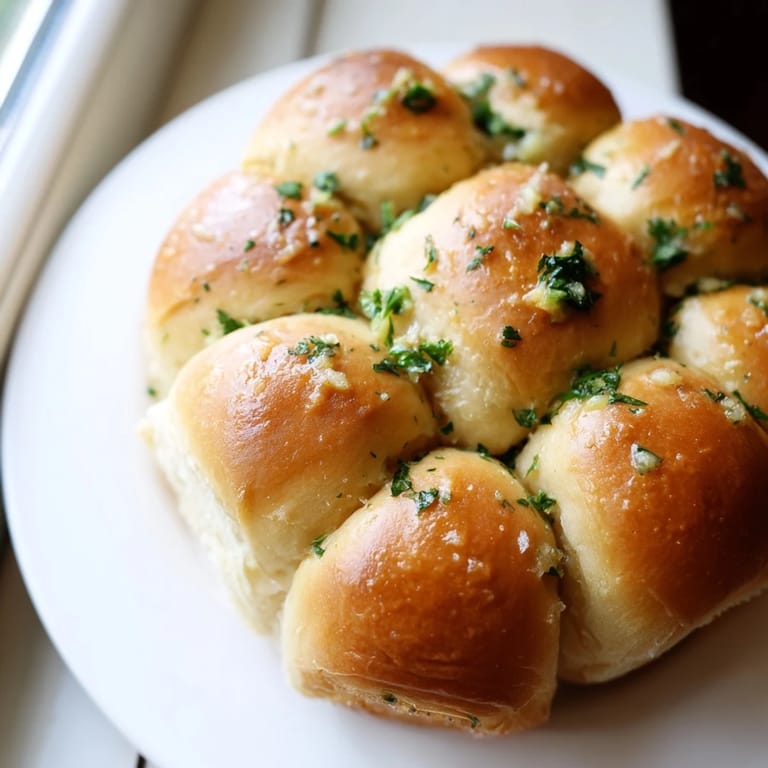
Save These rolls have a way of turning an ordinary meal into something people remember and talk about. There's something about food that comes apart with your hands, that releases garlic and butter and warmth, that connects us to the people we're eating with.
Recipe FAQs
- → Can I prepare this dough ahead of time?
Yes, you can prepare the dough the night before. After the first rise, punch it down, cover tightly, and refrigerate. Let it come to room temperature for 30 minutes before shaping and coating with garlic butter.
- → What's the best way to store leftovers?
Store cooled rolls in an airtight container at room temperature for up to 2 days or refrigerate for up to 5 days. Warm them gently in the oven at 300°F for 10 minutes before serving.
- → How can I make these rolls spicier?
Add a pinch of chili flakes or cayenne pepper to the garlic butter mixture. You can adjust the heat level to your preference by adding ⅛ to ¼ teaspoon depending on your spice tolerance.
- → Can I use instant mashed potatoes in the dough?
Yes, instant mashed potatoes make the dough extra soft and tender. Substitute ¼ cup of the flour with instant potato flakes mixed into the dough for a richer texture.
- → What milk temperature is ideal for activating yeast?
Warm milk between 110°F and 115°F (43°C to 46°C) is ideal. Use a kitchen thermometer to ensure accuracy—milk that's too hot kills the yeast, while too-cold milk won't activate it properly.
- → Can I add cheese inside the rolls?
Absolutely. Tuck small cubes of mozzarella, cheddar, or fontina into the center of each dough ball before coating with garlic butter for a delicious cheesy center.