 Save
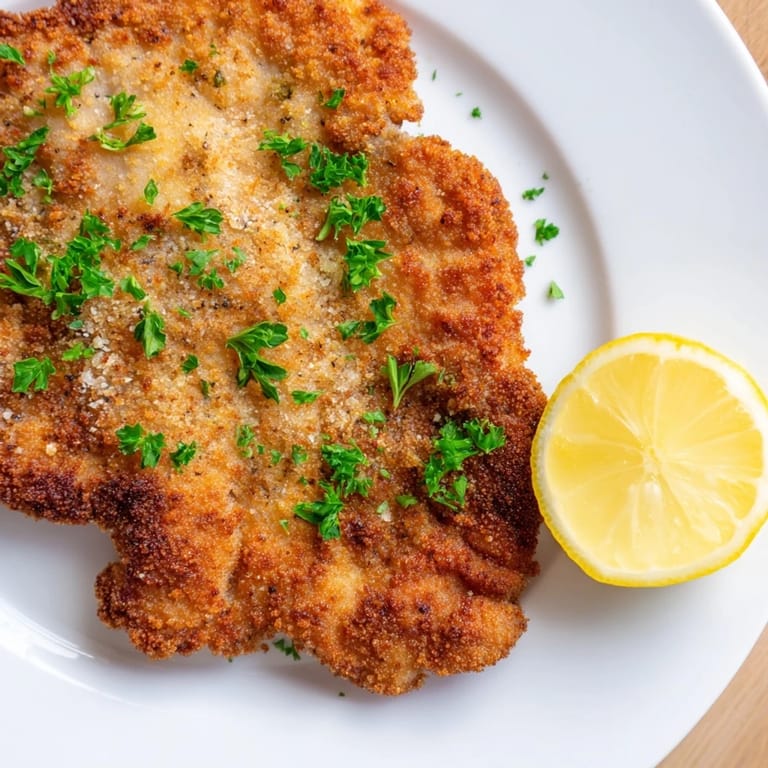
Save I was standing in a Stuttgart kitchen, watching my friend's grandmother tap breadcrumbs onto pork with the side of her knife, when I realized I'd been doing schnitzel wrong for years. She didn't press the coating in—she let it rest, loose and airy, so the heat could puff it into those signature golden bubbles. That one gesture changed everything. Now, every time I hear that sizzle hit the pan, I think of her smiling over the stove, telling me in broken English that schnitzel should never be squashed.
The first time I made this for my neighbors, I panicked halfway through because I ran out of oil. I switched to clarified butter, and the kitchen filled with this nutty, almost sweet aroma that made everyone wander in before I'd even plated it. We ended up eating at the counter, passing lemon wedges and cold beer, laughing about how the best meals are never the ones you plan. That night, schnitzel stopped being just a recipe and became the thing I make when I want people to feel at home.
Ingredients
- Boneless pork chops or chicken breasts: Pounding them thin is non-negotiable—it keeps the meat tender and ensures the inside cooks before the crust burns.
- All-purpose flour: This first layer dries the surface so the egg actually has something to grip onto.
- Eggs and milk: The milk thins the egg just enough to coat evenly without clumping, creating a smooth glue for the breadcrumbs.
- Fine dry breadcrumbs: Use the packaged kind, not panko—they're finer and create that classic, delicate crust.
- Vegetable oil or clarified butter: Clarified butter adds a deeper flavor, but oil works perfectly if you want to keep it simple and avoid any milk solids burning.
- Salt and freshly ground black pepper: Season generously before breading, because you can't fix it once the crust is on.
- Lemon wedges: The acid is essential—it cuts through the richness and wakes up every bite.
Tired of Takeout? 🥡
Get 10 meals you can make faster than delivery arrives. Seriously.
One email. No spam. Unsubscribe anytime.
Instructions
- Pound the Meat Thin:
- Place each piece between plastic wrap and tap it gently with a mallet or rolling pin until it's about 1/4 inch thick. You want it even, not torn, so take your time and work from the center outward.
- Season Well:
- Sprinkle both sides with salt and pepper right before you start breading. This is your only chance to season the meat itself, so don't be shy.
- Set Up Your Breading Station:
- Line up three shallow plates: flour in the first, beaten eggs mixed with milk in the second, breadcrumbs in the third. Keep one hand for dry ingredients and one for wet to avoid gluey fingers.
- Coat Each Cutlet:
- Dredge in flour and shake off the excess, dip into the egg until fully covered, then lay it in the breadcrumbs. Gently press the crumbs on with your fingertips, but don't compact them—loose is better.
- Fry Until Golden:
- Heat the oil or butter over medium-high until it shimmers, then add the cutlets without crowding the pan. Fry for 2 to 3 minutes per side until the crust turns deep gold and the meat is cooked through.
- Drain and Serve Hot:
- Transfer the schnitzels to a paper towel-lined plate for just a few seconds to blot excess oil. Serve immediately with lemon wedges and a sprinkle of parsley if you like.
 Save
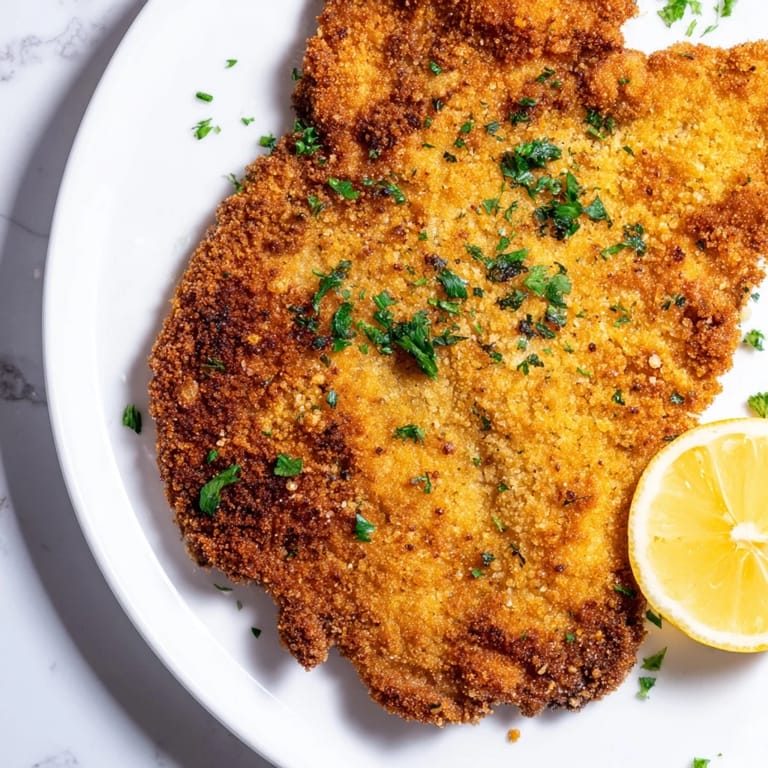
Save There's a moment right after you flip the schnitzel when the edges start to puff and separate from the meat, forming those little air pockets that make the crust so impossibly light. The first time I saw it happen, I called my husband over just to watch. We stood there, spatula in hand, grinning like we'd discovered something magic. It's still my favorite part—proof that patience and a gentle hand can turn something simple into something extraordinary.
What to Serve with Schnitzel
Potato salad is the traditional choice, especially the German kind dressed in vinegar and oil instead of mayo, with little bits of onion and fresh dill. Cucumber salad works beautifully too, cool and tangy, cutting through the richness of the fried crust. If you want something more filling, go for crispy fries or buttered parsley potatoes. I've also served it over arugula with a squeeze of lemon, and it felt lighter without losing any of the comfort.
How to Store and Reheat
Schnitzel is always best fresh, but if you have leftovers, let them cool completely before storing in an airtight container in the fridge for up to two days. To reheat, skip the microwave—it turns the crust soggy. Instead, place the cutlets on a wire rack over a baking sheet and warm them in a 375-degree oven for about 8 minutes, flipping halfway through. The crust won't be quite as crisp as the first time, but it's still miles better than anything reheated in a microwave.
Common Mistakes and How to Avoid Them
The biggest mistake is using meat that's too thick—it won't cook through before the outside burns, leaving you with a gorgeous crust and raw center. Another common issue is overcrowding the pan, which drops the oil temperature and steams the schnitzel instead of frying it. If you're making more than two, work in batches and keep the finished ones warm in a low oven. Finally, don't let the breaded cutlets sit too long before frying, or the coating gets gummy and slides off in the pan.
- Always use a thermometer or test with a breadcrumb to check oil temperature before adding the meat.
- Let the breaded cutlets rest on a rack for 5 minutes before frying so the coating sets and sticks better.
- If the crust browns too fast, lower the heat slightly—you want a steady sizzle, not a roaring fry.
 Save
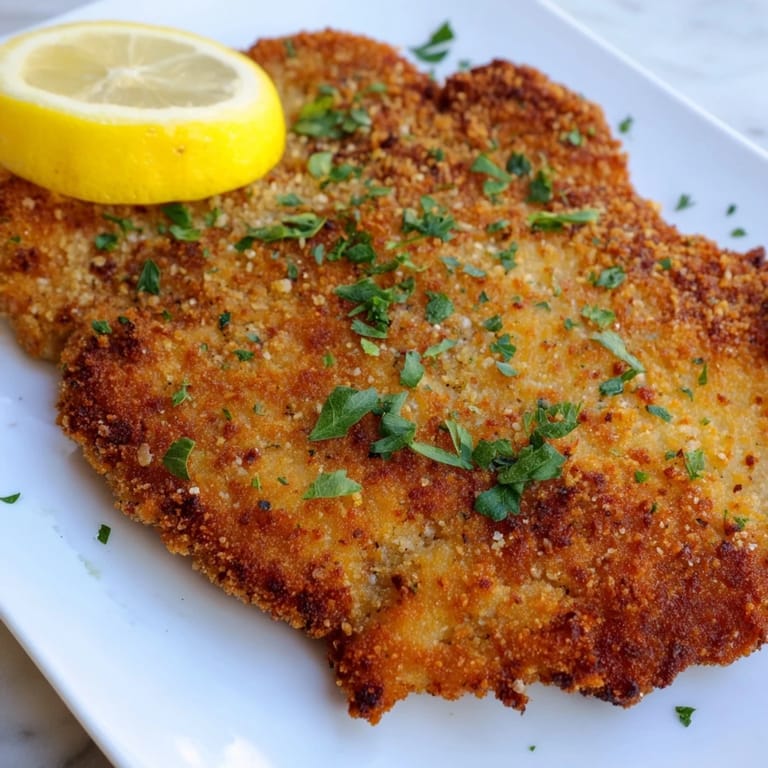
Save There's something deeply satisfying about pulling off a perfect schnitzel—the way the crust crackles under your fork, the way it makes a whole table go quiet for the first few bites. It's the kind of recipe that rewards you for paying attention, and forgives you if you don't take it too seriously.
Recipe FAQs
- → What type of meat is best for schnitzel?
Use boneless pork chops or chicken breasts pounded thin for tender, even cooking.
- → How do I get the breading crispy?
Coat lightly and avoid pressing breadcrumbs too firmly; frying in hot oil ensures a golden crust.
- → Can I substitute clarified butter with another fat?
Vegetable oil works well and preserves the crispy texture during frying.
- → How thick should the meat be pounded?
About a quarter-inch (6 mm) for quick, even cooking and tenderness.
- → What sides complement this dish traditionally?
Potato salad, cucumber salad, or fries pair perfectly with the schnitzel’s crispy finish.
- → Is lemon important for serving?
Lemon wedges add a bright, fresh contrast enhancing the fried cutlet’s flavor.