 Save
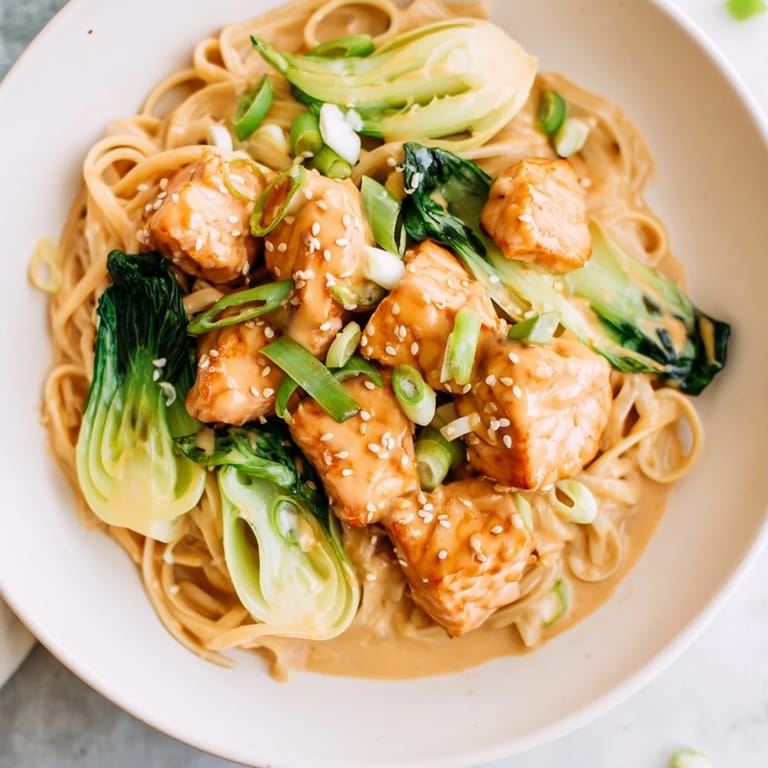
Save I discovered this dish on a quiet Tuesday night when I had salmon thawing on the counter and a half-jar of white miso in the fridge that I couldn't quite bring myself to throw away. The combination seemed almost accidental at first, like pairing two worlds that had no business meeting. Then I tasted it, and suddenly the umami from the miso wrapped around the delicate salmon in a way that felt inevitable, like it had always been meant to taste this way.
I made this for my partner during the first week we moved into our tiny apartment with barely a functioning kitchen, and somehow that pasta turned into this moment where everything felt like it was going to work out. The apartment still smelled like moving boxes and hope, and the salmon was seared just right, and we ate it standing up because we hadn't unpacked the chairs yet, but it didn't matter because the food was enough.
Ingredients
- Salmon fillets (400g, cut into bite-sized pieces): Look for pieces that are roughly the same size so they cook evenly—salmon is forgiving, but uniform pieces help you avoid the frustration of some being overdone while others are still pale.
- Linguine or spaghetti (300g): The thinner pasta works better here because it holds the creamy sauce without overwhelming the delicate fish.
- Baby bok choy (2 heads, chopped): The slight bitterness balances the richness of the cream and butter, and it stays crisp if you time it right.
- Garlic (2 cloves, minced): Mince it fine so it dissolves into the sauce rather than sitting in chunks.
- Scallions (2, sliced): Save these for the end—they add a sharp brightness that cuts through all that richness.
- Unsalted butter (60g): Unsalted matters here because you're controlling the salt story with the miso and soy sauce.
- White miso paste (2 tbsp): This is the secret ingredient that makes people lean back and wonder what you did to make it taste so layered.
- Soy sauce (2 tbsp): Double-check the label if you're gluten-sensitive, because some brands sneak wheat in.
- Mirin (2 tbsp): It adds sweetness that feels almost imperceptible until it's gone, then you miss it.
- Heavy cream (100ml): This smooths everything out and makes the sauce cling to the pasta instead of running off.
- Sesame oil (1 tsp): Just a teaspoon—it's assertive and you want it as a whisper, not a shout.
- Black pepper (½ tsp, freshly ground): Freshly ground changes everything; pre-ground tastes like dust by comparison.
- Toasted sesame seeds and lemon wedges (optional garnish): These aren't really optional if you want the dish to taste finished.
Tired of Takeout? 🥡
Get 10 meals you can make faster than delivery arrives. Seriously.
One email. No spam. Unsubscribe anytime.
Instructions
- Start the pasta:
- Get a large pot of salted water going—it should taste like the sea, not a salt shaker. Once it's boiling hard, add your pasta and stir it immediately so it doesn't clump together. Cook according to the package until al dente, which means it should have just a tiny bit of resistance when you bite it. Before you drain it, grab a measuring cup and reserve ½ cup of the starchy water; you'll need this magic elixir later to make the sauce silky.
- Sear the salmon:
- While the pasta is going, heat 1 tbsp of butter and the sesame oil together in a large skillet over medium heat until the butter froths and the oil shimmers. Add your minced garlic and let it get fragrant—about 1 minute, but don't let it brown or it turns bitter. Gently add the salmon pieces and cook them for 2 to 3 minutes per side until they're just cooked through; the edges should look opaque and the inside should still be a little blushing. This is the moment where gentle matters—be patient and let them sit rather than constantly moving them around.
- Build the miso butter sauce:
- Remove the salmon and set it aside on a plate. In the same skillet, add the remaining butter and let it melt completely. Whisk the miso paste into the warm butter until there are no lumps—this takes a little elbow grease but it's worth it because the lumps don't dissolve later. Add the soy sauce and mirin and stir until everything is smooth and glossy, then pour in the heavy cream and black pepper. This is when your kitchen will smell incredible, like umami made visible.
- Finish the vegetables and combine:
- Add the chopped bok choy to the sauce and let it wilt for 2 to 3 minutes, stirring gently. Return the salmon to the skillet and toss it to coat in all that silky sauce. Add the drained pasta and toss everything together, then gradually add your reserved pasta water—start with a splash and add more if you need it, because you want the sauce to coat the pasta without pooling at the bottom of the pan. Taste it and adjust the seasoning if your soul tells you to.
- Plate and serve:
- Do it immediately while everything is still hot and the pasta is at its best. Divide among four bowls and scatter scallions and sesame seeds over the top, with a lemon wedge on the side if you want that brightness waiting.
 Save
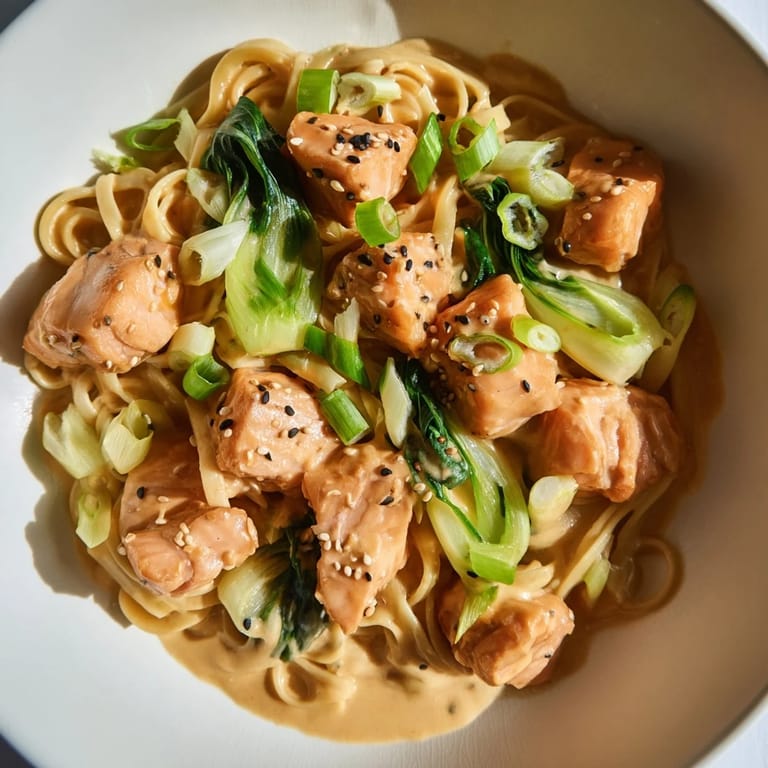
Save There's something about sitting at a table with people you love, eating something you made yourself, and watching their faces light up when they taste it for the first time. This pasta does that. It makes you feel like you've accomplished something that matters, even though you were just in the kitchen for half an hour doing things that mostly just require paying attention.
The Magic of Miso in Unexpected Places
I used to think miso belonged only in soups and dressings until I started experimenting with it in butter sauces, and it completely changed how I think about seasoning. Miso is fermented umami in a jar, and when you dissolve it into butter with a little cream, it becomes this incredible background note that makes people wonder what you did differently. It's not about making something taste Asian or Italian—it's about adding a dimension of depth that makes the salmon taste more like itself, somehow, which is the whole point of cooking well.
Timing and Temperature Matter More Than You'd Think
I learned this the hard way by overcooking salmon in my early cooking days, and now I'm almost paranoid about it. Medium heat is your friend here, not high—high heat dries out the salmon and makes the cream separate into greasy puddles. Medium heat lets everything happen gently, which is also why you should bring your salmon to room temperature for 5 minutes before cooking; it cooks more evenly that way. The whole dish comes together in the last few minutes, so have everything prepped and standing by before you start.
Variations and Playing Around
Once you understand how this dish works, you'll start seeing variations everywhere. Spinach works beautifully instead of bok choy if that's what you have, though you'll want to add it right at the end or it turns into a mushy afterthought. Some nights I add a pinch of chili flakes for heat, or swap the mirin for a touch of honey if I'm out of it. The architecture of the dish is strong enough to handle small changes without falling apart, which is when you know you've got something worth making again and again.
- Gluten-free pasta and tamari swap in seamlessly if you need them to—just check your miso paste label too, since some brands hide wheat there.
- A squeeze of fresh lemon at the table brightens everything and cuts the richness, so don't skip it even if you think you might.
- This pairs perfectly with a crisp Sauvignon Blanc, which tastes even better when you're eating something you made yourself.
 Save
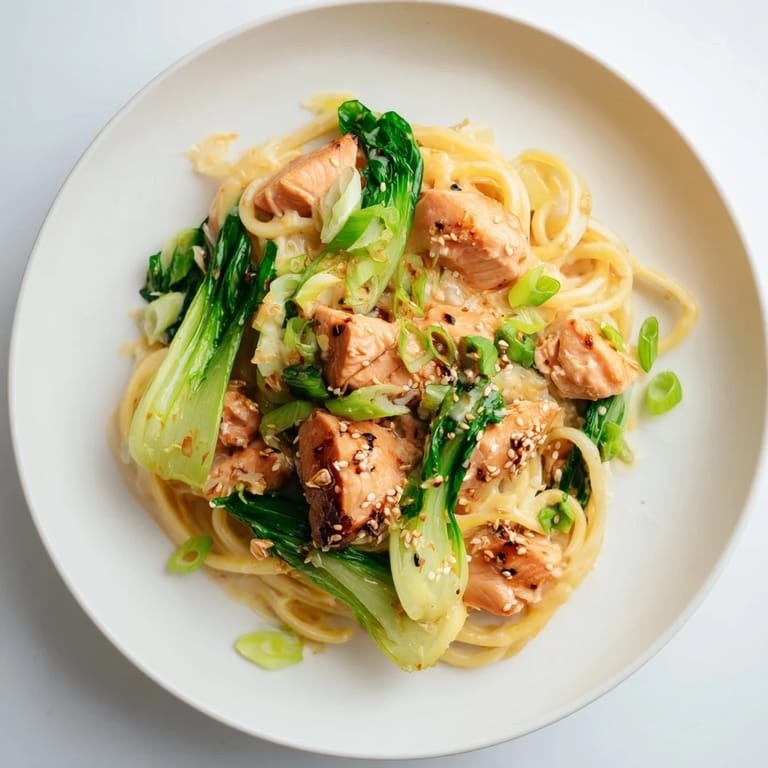
Save Make this when you want to feel like you've cooked something impressive but don't have all day to spend in the kitchen. It's the kind of dinner that tastes like you care, because you do.
Recipe FAQs
- → How should the salmon be cooked to maintain tenderness?
Cook salmon gently over medium heat for 2–3 minutes per side until just cooked through to keep it tender and moist.
- → Can I substitute bok choy with another vegetable?
Yes, spinach can be used as an alternative if bok choy is unavailable, offering a similar mild flavor and texture.
- → What pasta types work best with this sauce?
Long strands like linguine or spaghetti are ideal as they hold the creamy miso butter sauce well without overpowering the salmon.
- → How can I adjust the sauce thickness if needed?
Add reserved pasta water gradually while tossing to achieve a silky, smooth sauce consistency.
- → Are there any recommended garnishes for extra flavor?
Try sliced scallions, toasted sesame seeds, and lemon wedges to add freshness, crunch, and subtle acidity.
- → Is this dish suitable for gluten-free diets?
Yes, using gluten-free pasta and tamari in place of soy sauce makes the dish gluten-free friendly.