 Save
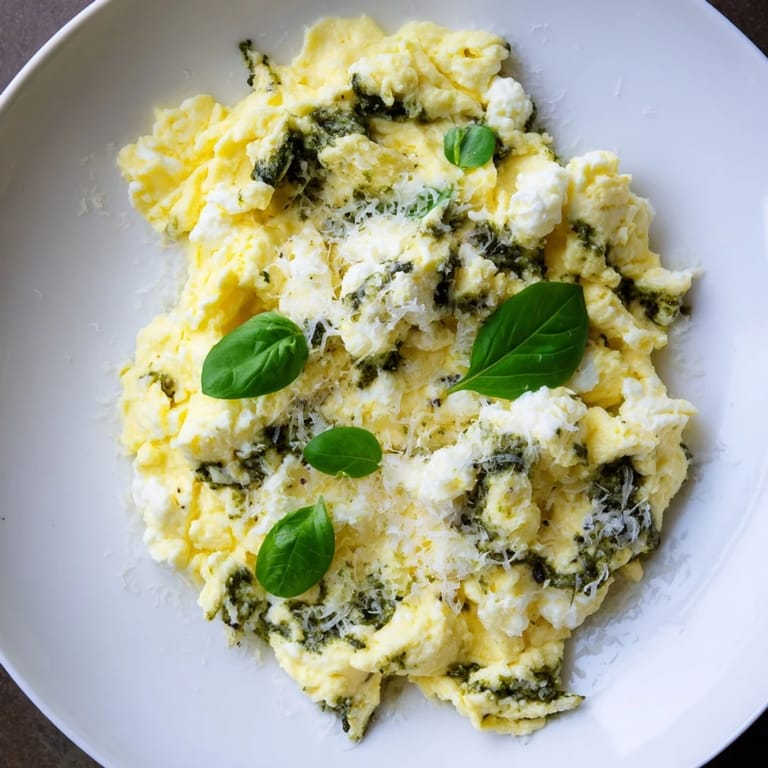
Save There's something about the moment when you first taste eggs that aren't trying too hard to be fancy—just eggs that happen to be extraordinary because someone cared about each ingredient. I stumbled onto this combination on a Tuesday morning when I had leftover pesto in the jar and cottage cheese that needed using, and I realized I'd been cooking scrambled eggs the same way for years without considering what they could become. The basil aroma hitting the hot pan changed everything, and suddenly breakfast felt like something worth slowing down for.
I made this for my friend who'd been sleeping on scrambled eggs as a breakfast option, convinced they were boring. Watching her take the first bite and pause—actually pause—before saying it tasted like spring in a skillet was the kind of small kitchen victory that sticks with you. She's made it every Sunday since.
Ingredients
- Eggs: Four large ones give you enough body to fold everything into without the scramble becoming rubbery; don't skimp or oversell the quantity.
- Milk or cream: A small splash transforms the texture into something silkier, but honestly it's the kind of optional that's only optional if you're in a hurry.
- Cottage cheese: Full-fat if you want pure comfort, low-fat if you're watching yourself; either way it needs to be cold from the fridge so it doesn't melt into invisibility.
- Basil pesto: Store-bought works fine because you're not trying to prove anything at breakfast time, but if you have homemade hiding in the freezer, use it.
- Salt and pepper: Fresh ground pepper actually matters here more than you'd think because it's one of the few seasonings playing solo.
- Garnish: Fresh basil leaves, extra pesto, and Parmesan are the kind of flourish that makes people think you went to culinary school, when really you just grabbed what was in reach.
Tired of Takeout? 🥡
Get 10 meals you can make faster than delivery arrives. Seriously.
One email. No spam. Unsubscribe anytime.
Instructions
- Whisk your base:
- Crack the eggs into a bowl with the milk and seasonings, whisking until the whole thing is pale and uniform. You're building the foundation here, so don't rush it.
- Warm the pesto:
- Heat your nonstick skillet to medium-low, add the pesto, and let it sit there for about 30 seconds—that's when the basil's green smell fills your kitchen and you know something good is about to happen.
- Start the eggs:
- Pour in your whisked mixture and let it breathe for 10 to 15 seconds without touching it, then push gently from the edges toward the center with your spatula. This isn't a race; you're coaxing, not scrambling.
- Fold in the cottage cheese:
- When the eggs are still slightly creamy and loose, add the cottage cheese and fold everything together with a soft hand. The warmth of the pan will just kiss the cheese into tenderness without breaking it apart.
- Exit gracefully:
- Turn off the heat while the eggs still look slightly underdone because they'll keep cooking from residual warmth and that's the only way to get them truly creamy.
- Plate and crown:
- Serve immediately onto warm plates, top with a small spoonful of extra pesto, some fresh basil, and Parmesan shavings if the mood strikes.
 Save
Save I'll never forget cooking this for my partner on his birthday morning, watching him sit at the kitchen counter with a cup of coffee, and realizing that breakfast could be the best meal of the day if you bothered to think about it. That's when this recipe stopped being just breakfast and became something we reach for when we need a small, delicious moment of care in the middle of a busy week.
The Quiet Power of Cottage Cheese
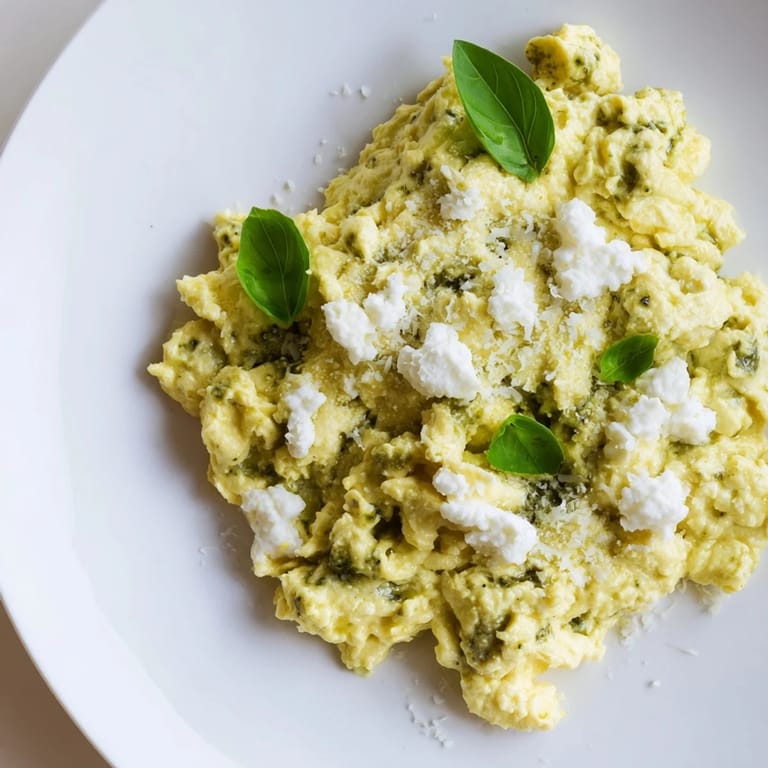
Cottage cheese gets overlooked in savory cooking, which is strange because it's essentially curd and cream with no ego. When you fold it into warm eggs, it creates these little pockets of richness that make each bite interesting without making the dish heavy. I used to think it only belonged in lasagna or desserts, but that was before I understood that the best ingredients are often the ones doing their job so quietly you almost don't notice them working.
Why This Works as Breakfast, Lunch, or Dinner
The protein in this dish—from the eggs and cottage cheese combined—keeps you full and satisfied in a way that plain toast never will. I've made it at 8 a.m. when I woke up hungry, at 1 p.m. as a light lunch, and at 6 p.m. when dinner felt like it needed to be simple and nourishing. The speed of it means you can serve it whenever the craving hits, and the freshness of the basil never feels out of place no matter what the clock says.
Variations and Small Experiments
The beauty of this recipe is that it's more like a technique than a rule, which means you can lean into what you have on hand and what you're in the mood for. I've added sautéed spinach when I wanted earthiness, swapped the basil pesto for sun-dried tomato when summer felt too far away, and even tried ricotta instead of cottage cheese when someone in the house preferred a slightly smoother texture. Try it once as written, then trust your instincts to play with it.
- Sun-dried tomato pesto brings warmth and a subtle tang that makes everything feel Mediterranean.
- A small handful of sautéed spinach adds color and minerals without changing the soul of the dish.
- Ricotta trades the little curds for creaminess, which is a completely different but equally lovely direction to take.
 Save
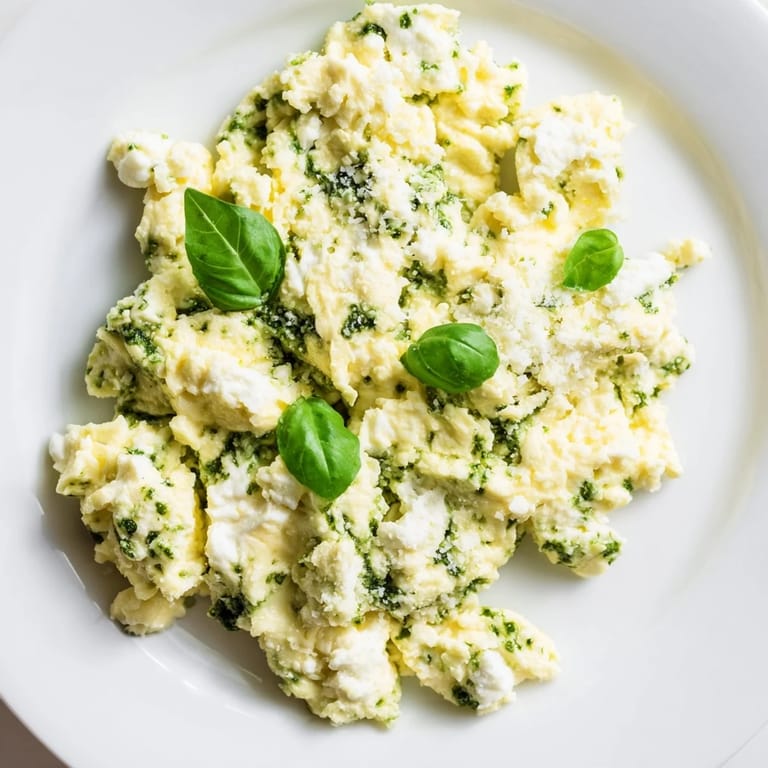
Save This recipe has become my answer to the question of what to cook when I want something fast but not rushed, nourishing but not heavy, and familiar but never boring. Make it once and it becomes the kind of thing you'll come back to again and again.
Recipe FAQs
- → Can I use different herbs instead of basil pesto?
Yes, sun-dried tomato pesto or sautéed spinach can add unique flavors alongside the creamy cheese and eggs.
- → What type of cheese works best in this dish?
Full-fat or low-fat cottage cheese both work well; ricotta can be used as an alternative for a creamier texture.
- → How can I make the scrambled eggs extra creamy?
Adding a splash of milk or cream before whisking the eggs helps achieve a softer, creamier scramble.
- → What is the best heat level for cooking these eggs?
Cook over medium-low heat to gently set the eggs while preserving their soft texture and allowing the cheese to warm through.
- → Can this dish accommodate dietary restrictions?
This option is vegetarian and gluten-free; consider low-fat dairy choices for a lighter meal.