 Save
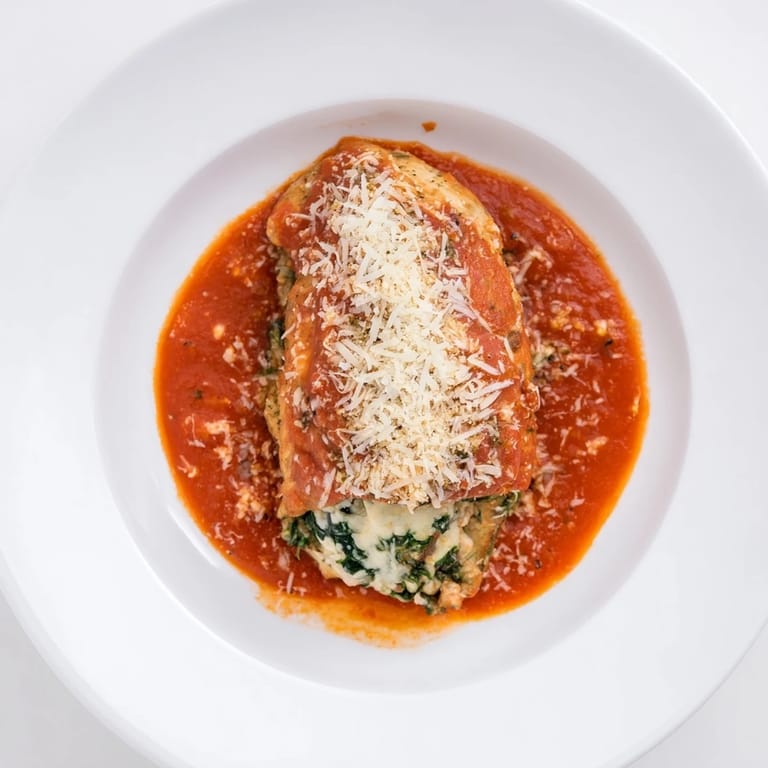
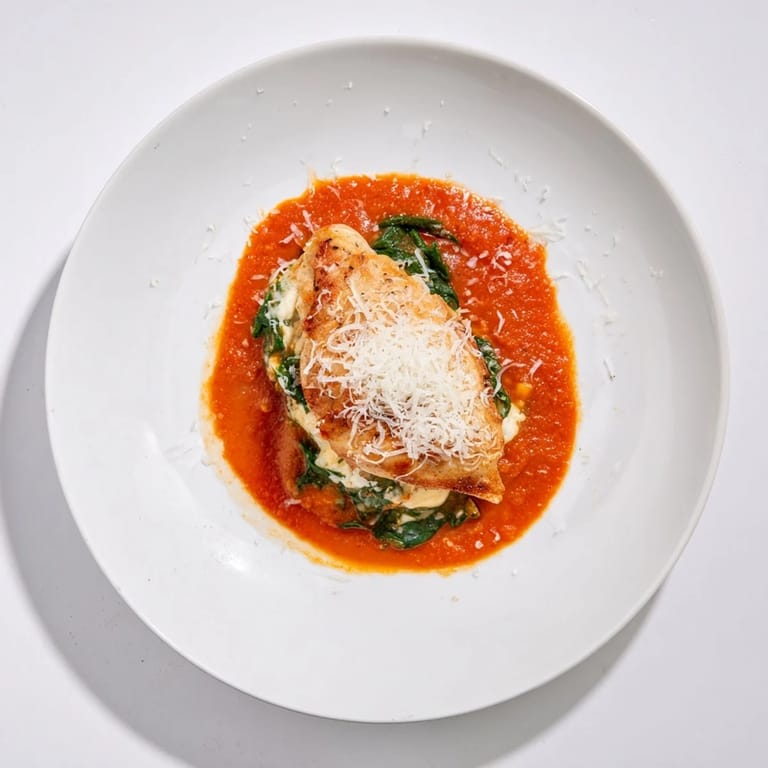
Save My neighbor brought this to a potluck last spring, and I watched her plate disappear in minutes while mine sat untouched. I cornered her in the kitchen and demanded the recipe. She laughed and told me it was just chicken, ricotta, and spinach, but the way she said it made me realize I'd been overthinking dinner for years. I made it the following Tuesday and my husband asked if we were celebrating something.
The first time I made this, I panicked because the chicken pocket tore and filling oozed everywhere. I shoved it in the oven anyway, covered it with extra sauce, and pretended it was rustic. My kids ate every bite and asked for seconds. Sometimes the messiest cooking moments teach you that perfection is overrated and that tomato sauce forgives almost anything.
Ingredients
- Boneless, skinless chicken breasts: Choose breasts that are similar in size so they cook evenly, and pound them gently if one is much thicker than the others.
- Ricotta cheese: Whole milk ricotta gives the creamiest filling, but part-skim works if you want to lighten it up without sacrificing too much texture.
- Fresh baby spinach: Chop it finely so it blends into the filling smoothly and doesn't create big green pockets that fall out when you slice the chicken.
- Parmesan cheese: Freshly grated melts into the filling better than pre-shredded, and the nutty flavor is more pronounced.
- Garlic cloves: Mince them finely so they distribute evenly and don't leave you with a sharp garlic bite in one spot.
- Lemon zest: This brightens the richness of the ricotta and keeps the filling from tasting flat or heavy.
- Crushed tomatoes: Use good quality canned tomatoes because they form the base of your sauce and watery ones will make everything bland.
- Olive oil: A fruity extra virgin works well for sautéing the onions and adds a subtle depth to the sauce.
- Dried oregano: Italian seasoning also works, but oregano alone gives a cleaner, more authentic taste.
- Sugar: Just a half teaspoon balances the acidity of the tomatoes without making the sauce taste sweet.
Tired of Takeout? 🥡
Get 10 meals you can make faster than delivery arrives. Seriously.
One email. No spam. Unsubscribe anytime.
Instructions
- Preheat and Prep:
- Set your oven to 375°F (190°C) so it's ready when the chicken is seared. Gather your tools and ingredients so you're not scrambling mid-recipe.
- Mix the Filling:
- Combine ricotta, chopped spinach, Parmesan, minced garlic, Italian herbs, lemon zest, salt, and pepper in a bowl, stirring until everything is evenly distributed and creamy. Taste it now and adjust seasoning because this is your chance to fix it before it goes into the chicken.
- Create the Pockets:
- Use a sharp knife to slice horizontally into the thickest part of each chicken breast, creating a deep pocket but leaving the edges intact so the filling stays inside. Season both sides generously with salt and pepper because underseasoned chicken is sad chicken.
- Stuff the Chicken:
- Spoon the ricotta mixture into each pocket, packing it in gently but not overstuffing, and secure with toothpicks if the opening is wide or the filling wants to escape. Don't stress if a little oozes out during cooking.
- Sear the Chicken:
- Heat olive oil in an oven-safe skillet over medium-high heat and sear each stuffed breast for 2 to 3 minutes per side until golden brown. This step locks in flavor and gives the chicken a beautiful crust.
- Build the Sauce:
- In the same skillet, add a bit more olive oil and sauté the chopped onion until soft and translucent, then add garlic and cook just until fragrant. Stir in crushed tomatoes, oregano, sugar, salt, and pepper, letting it simmer for about 5 minutes to thicken slightly.
- Bake:
- Nestle the seared chicken breasts into the tomato sauce, spooning some over the tops, and transfer the skillet to the oven. Bake uncovered for 20 to 25 minutes until the chicken reaches an internal temperature of 165°F (74°C) and the sauce is bubbling around the edges.
- Finish and Serve:
- Remove toothpicks carefully, sprinkle with extra Parmesan or torn fresh basil if you have it, and serve hot with crusty bread or pasta. Let the chicken rest for a minute or two so the juices settle before slicing.
 Save
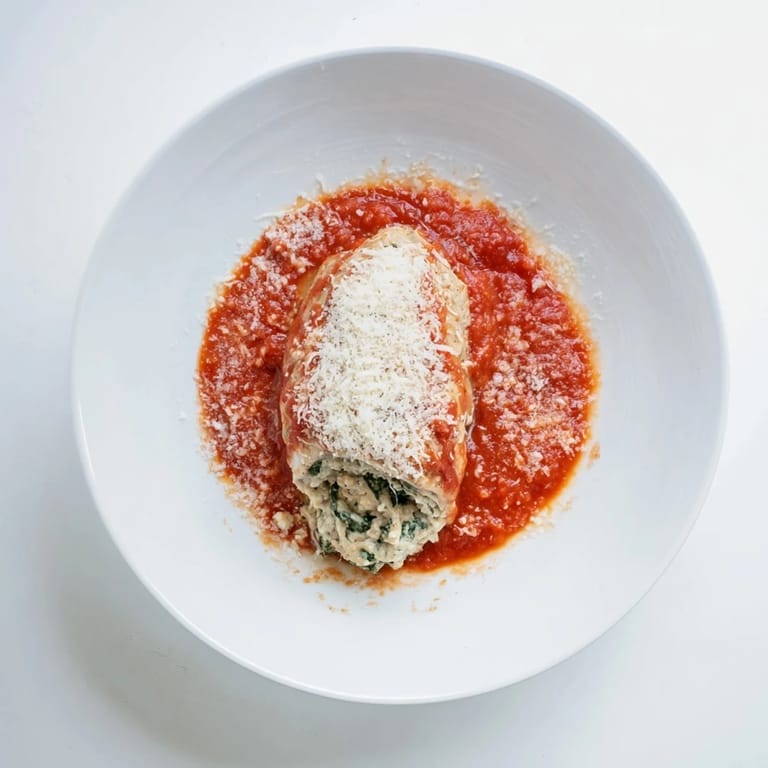
Save I served this to my book club last month and three people texted me the next day asking for the recipe. One of them said her teenager, who normally refuses anything green, ate two pieces and asked what was in it. That's when I realized this dish has a quiet magic that sneaks vegetables past picky eaters and makes weeknight dinners feel like occasions worth gathering around.
Making It Your Own
If you want a little heat, add a pinch of red pepper flakes to the tomato sauce when you add the oregano. I've also swapped the spinach for finely chopped kale when that's what I had on hand, and it worked beautifully with a slightly earthier flavor. You can use part-skim ricotta to lighten things up, though the filling won't be quite as luscious and creamy.
Serving Suggestions
This pairs beautifully with a simple side of roasted vegetables or a crisp green salad dressed lightly with lemon and olive oil. I love serving it over pasta so the tomato sauce doesn't go to waste, or with a hunk of crusty bread for mopping up every last bit. A crisp Pinot Grigio or a light-bodied red like Chianti complements the richness without overpowering the delicate flavors.
Storage and Reheating
Leftovers keep well in an airtight container in the fridge for up to three days, and the flavors deepen as they sit. Reheat gently in a covered skillet with a splash of water or broth to keep the chicken moist, or microwave individual portions covered with a damp paper towel. I've even sliced cold leftovers and tucked them into a sandwich with arugula and a smear of pesto, and it was fantastic.
- Don't freeze the stuffed chicken because the ricotta texture turns grainy and watery when thawed.
- If you want to prep ahead, stuff the raw chicken and refrigerate it up to 8 hours before searing and baking.
- Store any extra tomato sauce separately and use it for pasta or as a pizza base later in the week.
 Save
Save This recipe taught me that comfort food doesn't have to be complicated or time-consuming, just thoughtfully made with ingredients that work together. I hope it becomes a regular in your rotation the way it has in mine.
Recipe FAQs
- → How do I prevent the chicken from drying out?
Ensure your chicken breasts are pounded to even thickness before stuffing. Don't overcook—remove from the oven when internal temperature reaches 165°F (74°C). The tomato sauce also helps keep the chicken moist during baking.
- → Can I prepare this ahead of time?
Yes, you can stuff the chicken breasts 4-6 hours ahead and refrigerate. Add an extra 5-10 minutes to the baking time if cooking from cold. Alternatively, assemble the tomato sauce the day before and reheat before baking.
- → What can I substitute for ricotta cheese?
Mascarpone, cottage cheese (drained), or a mixture of cream cheese and sour cream work well. For a lighter version, use part-skim ricotta or Greek yogurt mixed with a little cream cheese for creaminess.
- → Is this dish freezer-friendly?
Yes, you can freeze the assembled, unbaked dish for up to 3 months. Thaw overnight in the refrigerator and follow baking instructions, adding 5-10 extra minutes for cooking time.
- → What vegetables can I add to the sauce?
Bell peppers, mushrooms, zucchini, and sun-dried tomatoes are excellent additions. Sauté them with the onion and garlic before adding the tomatoes to infuse the sauce with their flavors.
- → How do I know when the chicken is fully cooked?
Use an instant-read thermometer to check the thickest part reaches 165°F (74°C). Alternatively, pierce with a knife—juices should run clear with no pink. The chicken should feel firm to the touch.