 Save
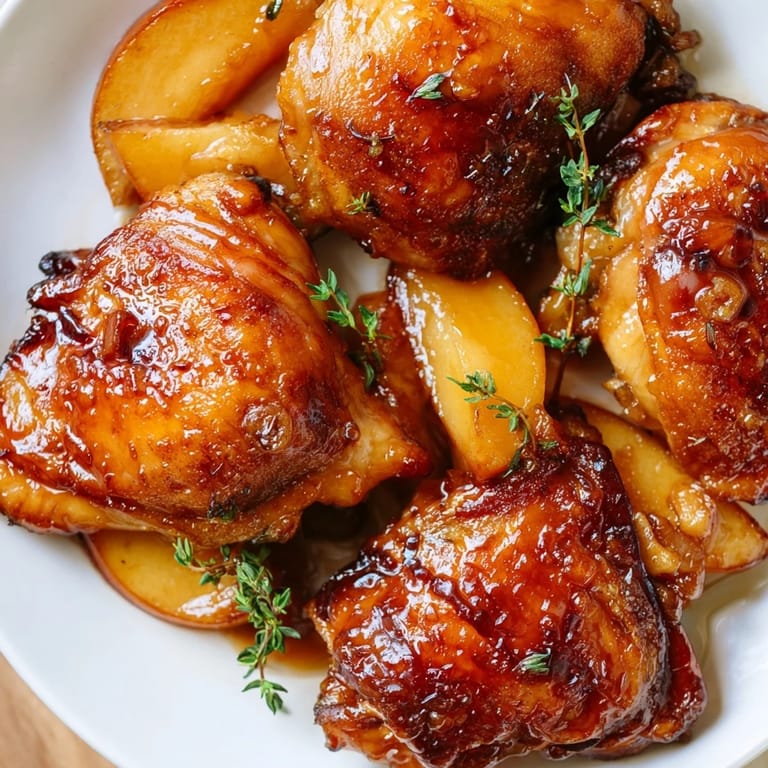
Save There's something about the smell of maple and apples caramelizing in the oven that stops me mid-afternoon. Years ago, I grabbed chicken thighs and whatever was in the pantry—syrup, apple cider, a jar of Dijon—and threw them together on a whim. The result was so unexpectedly good that it became the dish I reach for when I want something that feels special but doesn't demand much fussing. The glaze turns glossy and sticky as it bakes, the apples soften into little pockets of sweetness, and the chicken skin gets this beautiful golden burnish that tastes as good as it looks.
I made this for my sister's birthday dinner last October when she mentioned wanting something comforting but not heavy. The kitchen filled with this warm, caramel-like aroma about halfway through baking, and she kept wandering in asking if it was ready yet. When we finally sat down, watching her take that first bite and close her eyes—that's when I knew this recipe had become something I'd make again and again.
Ingredients
- Bone-in, skin-on chicken thighs (8 pieces, about 2.5 lbs): The bone keeps the meat incredibly moist, and the skin crisps up beautifully under that sticky glaze—don't skip it or use breasts, the whole point is that juicy, forgiving texture.
- Pure maple syrup (1/3 cup): Real maple syrup matters here; the imitation stuff burns too quickly and tastes metallic compared to the depth you get from the real thing.
- Apple cider or unsweetened apple juice (1/3 cup): This balances the maple's sweetness and adds a subtle tartness that keeps the dish from cloying.
- Apple cider vinegar (2 tbsp): The secret weapon that sharpens everything and helps the glaze reduce into something sticky rather than watery.
- Dijon mustard (2 tbsp): It mellows as it bakes and adds a subtle spice that you don't taste directly but absolutely feel.
- Olive oil (2 tbsp): Helps the glaze coat everything evenly and keeps the skin from drying out.
- Garlic (2 cloves, minced): Just enough to whisper in the background without overpowering the fruit flavors.
- Fresh thyme leaves (1 tsp, or 1/2 tsp dried): Thyme and apples have this natural affinity; it's worth using fresh if you have it, but dried works perfectly fine.
- Smoked paprika (1/2 tsp): Adds a subtle depth and color without making the dish taste smoky.
- Salt and pepper (1/2 tsp salt, 1/4 tsp black pepper): Start with these amounts, but taste the glaze and adjust—you're the final judge.
- Medium apples, cored and sliced (2 apples): Honeycrisp or Gala work best because they hold their shape while baking; softer varieties like McIntosh fall apart.
- Fresh thyme sprigs (optional garnish): A small handful looks lovely and gives people something to reach for if they want that herbal note.
Tired of Takeout? 🥡
Get 10 meals you can make faster than delivery arrives. Seriously.
One email. No spam. Unsubscribe anytime.
Instructions
- Get your oven ready:
- Preheat to 400°F and line a large baking dish with parchment paper or give it a light coating of oil. This step takes two minutes but saves you from scrubbing burned-on glaze for twenty.
- Dry and season the chicken:
- Pat each thigh dry with paper towels—this is the small thing that makes a difference between golden and steamed-looking skin. Give them a light sprinkle of salt and pepper on both sides.
- Make the glaze:
- In a bowl, whisk together the maple syrup, apple cider, vinegar, mustard, oil, garlic, thyme, paprika, salt, and pepper until smooth. Taste it—it should make your mouth water a little, hitting sweet and tangy at the same time.
- Arrange everything in the dish:
- Lay the chicken thighs skin-side up and tuck the apple wedges in around them where there's space. Pour the glaze evenly over the top, and use a brush or spoon to coat the chicken once more.
- Bake and baste:
- Slide it into the oven for 30 to 35 minutes, basting once or twice with the pan juices about halfway through. The chicken is done when the skin is deep golden, the glaze has reduced and turned sticky, and an instant-read thermometer reads 165°F in the thickest part of a thigh.
- Optional broil for extra caramel:
- If you want that dark, caramelized finish, turn on the broiler for a final 2 to 3 minutes, watching the whole time so it doesn't burn. This step is personal preference, but it does add a nice contrast.
- Rest and serve:
- Let the chicken sit for 5 minutes before plating—this lets the juices settle back into the meat. Spoon those pan juices over everything, add a thyme sprig if you're feeling fancy, and serve.
 Save
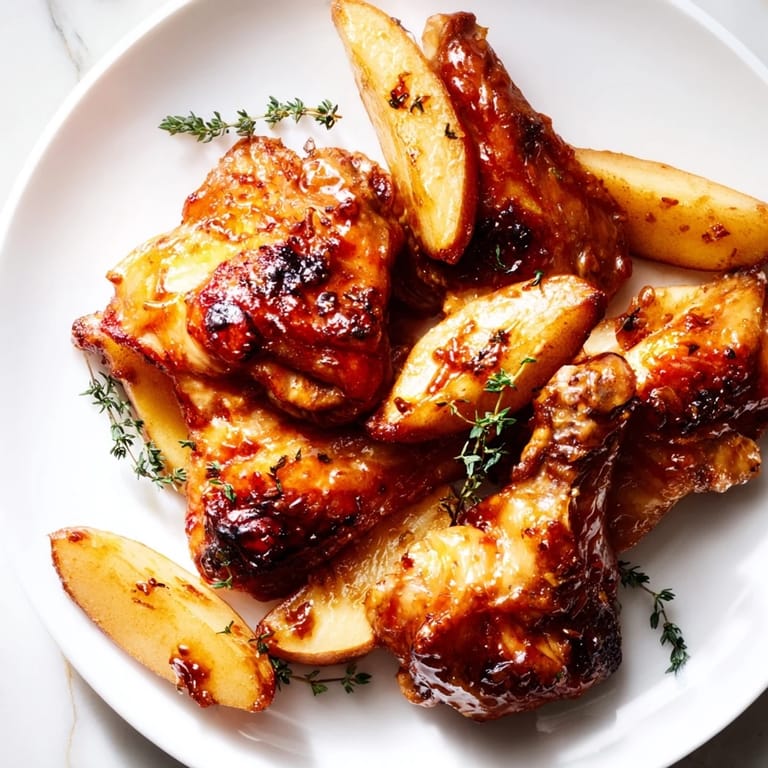
Save There was a night when my neighbor smelled this cooking and stopped by just as we were sitting down to eat. I had extra on the counter, so I plated some up for him, and he came back the next week asking for the recipe. That's when I realized this dish does something beyond just being delicious—it makes people want to gather around it.
Why Apples and Chicken Just Work Together
The apple cider vinegar in the glaze cuts through the richness of the chicken skin, while the maple syrup and fresh fruit add sweetness that tastes like autumn even if you're cooking in July. The apples themselves soften as they bake, turning into little pockets of caramel-like sweetness that catch the glaze. There's a reason this combination has been around for centuries—it's almost impossible to get wrong because the flavors genuinely complement each other instead of just sitting beside each other on the plate.
The Magic of Bone-in Thighs
Chicken thighs are the forgiving friend of the poultry world. They have enough fat running through them that they stay moist even if you're slightly careless with timing, and that bone does something wonderful for the flavor—it adds a savory depth that boneless meat just can't match. The skin gets to crisp up while the meat underneath stays tender, and when you bite through that contrast, you understand why restaurants charge extra for thighs.
Small Moments That Add Up
The glaze is what makes this dish feel special, but it's made of things you probably already have. The real trick is whisking it together properly and tasting it before it goes in the oven—this takes thirty seconds and gives you a chance to adjust if you need more acid or sweetness. Some nights I add a tiny pinch of chipotle powder for something smokier, or use cider instead of juice if I'm thinking about a different vibe altogether.
- If you can't find fresh thyme, dried thyme works just as well—the heat mellows the dried leaves so you get the same flavor profile.
- Leftover chicken (if there is any) tastes even better the next day as the glaze continues to coat the meat while it sits in the fridge.
- This pairs beautifully with mashed potatoes, roasted root vegetables, or even just a simple green salad to cut through the richness.
 Save
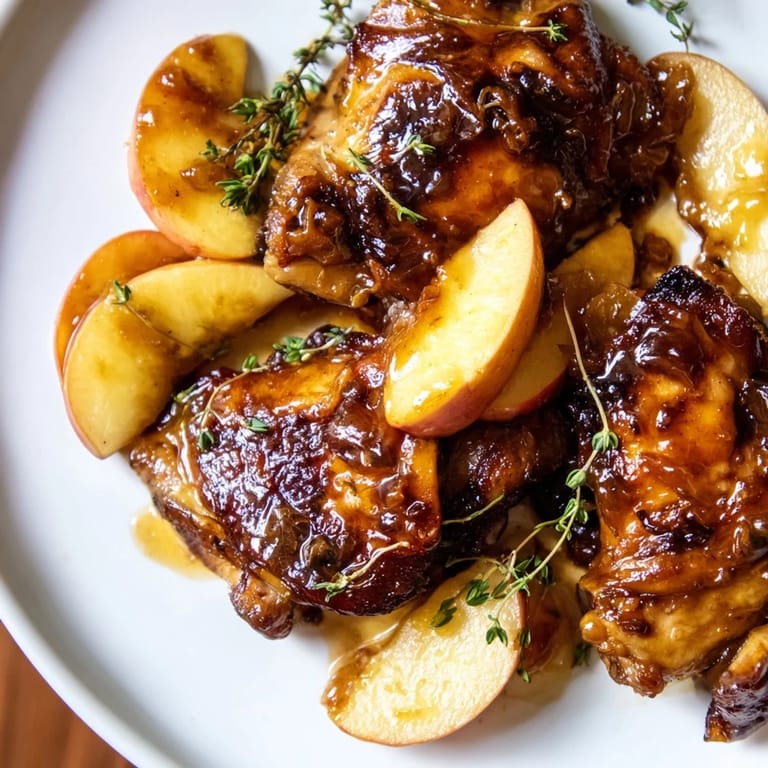
Save This is the kind of recipe that becomes part of your regular rotation without you planning for it to. Serve it with something simple, pour a glass of cider or a crisp Riesling, and watch people come back for seconds not because they feel obligated, but because they genuinely want more.
Recipe FAQs
- → What type of chicken is best for this dish?
Bone-in, skin-on chicken thighs are preferred for juicy, flavorful results, but boneless, skinless thighs work too with adjusted cooking time.
- → Can I substitute the apples in the glaze?
Yes, firm apples like Honeycrisp or Gala work well, providing sweetness and texture without overpowering the glaze.
- → How do I achieve the sticky glaze texture?
Baste the chicken once or twice during baking and optionally broil briefly at the end to caramelize and thicken the glaze for a sticky finish.
- → What side dishes complement this main dish?
Serve alongside roasted vegetables, mashed potatoes, or rice for a balanced and comforting meal.
- → Can this dish be prepared gluten-free and dairy-free?
Yes, the ingredients used are naturally gluten-free and dairy-free, suitable for these dietary preferences.