 Save
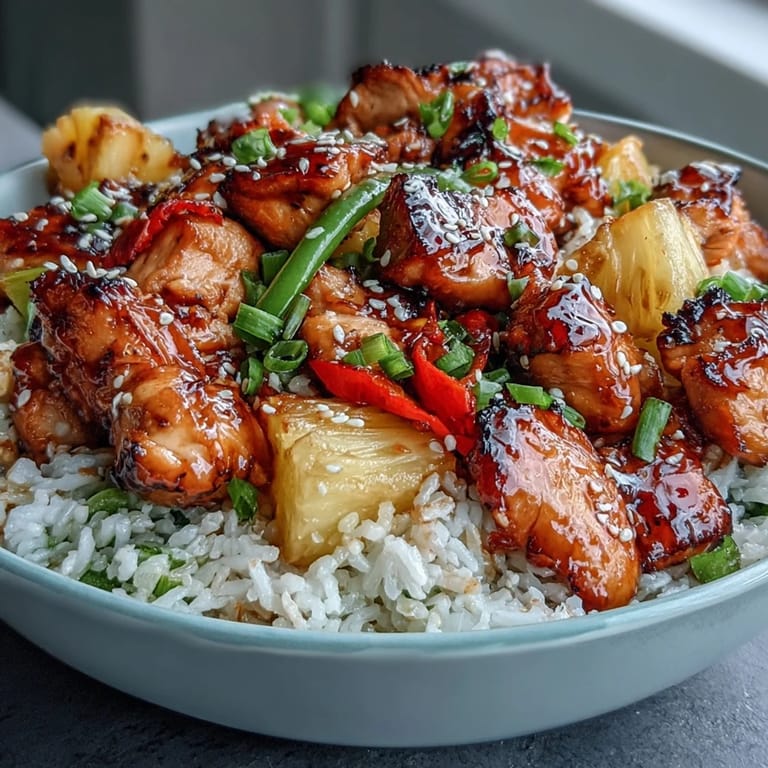
Save My neighbor brought over a container of these bowls one evening when I was too tired to cook, and I remember standing in my kitchen, watching the steam rise from the rice while the smell of ginger and soy sauce filled the apartment. That first bite—the way the sweet pineapple juice clung to the tender chicken, the slight char on the bell peppers—made me realize tropical doesn't have to mean complicated. Now whenever I need something that feels both exciting and manageable, this is what I reach for.
I made these for friends who were skeptical about pineapple on savory chicken, and watching their faces when they tasted it was worth every minute of prep. By the second bowl, they were asking for seconds and requesting the recipe, which honestly felt like the best compliment a home cook can get.
Ingredients
- Boneless, skinless chicken thighs or breasts: Thighs stay more forgiving and flavorful if you accidentally overcook them, though breasts work fine if you prefer leaner meat and watch them closely.
- Soy sauce: The backbone of the sauce, so don't skip it or swap it for something with wildly different salt levels.
- Pineapple juice: Fresh is better than canned if you can find it, but canned works when that's what you have on hand.
- Brown sugar and honey: Together they create the right depth of sweetness without making the sauce cloying or one-dimensional.
- Rice vinegar: This brightness cuts through the richness and stops the glaze from feeling heavy.
- Fresh ginger and garlic: Minced small means they dissolve into the sauce and perfume every bite rather than chunk up.
- Cornstarch slurry: The secret to a silky, clinging glaze that doesn't taste starchy if you stir it in smoothly.
- Jasmine rice: Its subtle floral note pairs beautifully with the tropical elements, though any short-grain white rice will absorb the sauce nicely.
- Fresh pineapple: Buy it already diced if you're short on time, or cut it yourself and you'll understand why it tastes so much better than canned.
- Snap peas and red bell pepper: Their crunch keeps the bowl from feeling mushy and their color makes it look vibrant on the plate.
- Sesame seeds: A final sprinkle adds nuttiness and a little textural surprise that makes you slow down and taste each bite.
Tired of Takeout? 🥡
Get 10 meals you can make faster than delivery arrives. Seriously.
One email. No spam. Unsubscribe anytime.
Instructions
- Rinse and cook your rice:
- Run the grains under cold water in a fine-mesh strainer, swirling them with your fingers until the water turns from cloudy white to clear—this removes surface starch and keeps the rice from clumping. Combine the rinsed rice with fresh water in a saucepan, bring it to a boil over medium-high heat, then immediately cover and drop the heat to low for exactly 15 minutes.
- Sear the chicken until golden:
- While the rice steams, pat your chicken pieces dry with paper towels so they actually brown instead of steam, then heat oil in a large skillet over medium-high heat until it shimmers slightly. Season generously with salt and pepper and let each piece sit for a full minute before you stir—this browning is where the deep, savory flavor comes from.
- Cook the vegetables until just tender:
- In that same skillet, toss the bell pepper and snap peas with the residual oil and heat, stirring every 30 seconds or so until they brighten in color and soften slightly but still have a little snap when you bite them. This quick cook preserves their crispness and keeps the whole bowl from turning into mush.
- Build your teriyaki sauce:
- Combine soy sauce, pineapple juice, brown sugar, honey, rice vinegar, minced garlic, and grated ginger in a small saucepan and bring to a gentle simmer, stirring occasionally until the sugar fully dissolves and everything looks unified rather than grainy. You'll notice the kitchen suddenly smells like a restaurant kitchen, which is always the moment you know you're on the right track.
- Thicken the sauce with a cornstarch slurry:
- Mix cornstarch and cold water in a small cup, whisking until completely smooth with no lumps, then slowly pour it into your simmering sauce while stirring constantly in one direction for about one minute. Stop as soon as the sauce coats the back of a spoon—if you overcook it, it can taste pasty instead of silky.
- Bring everything together:
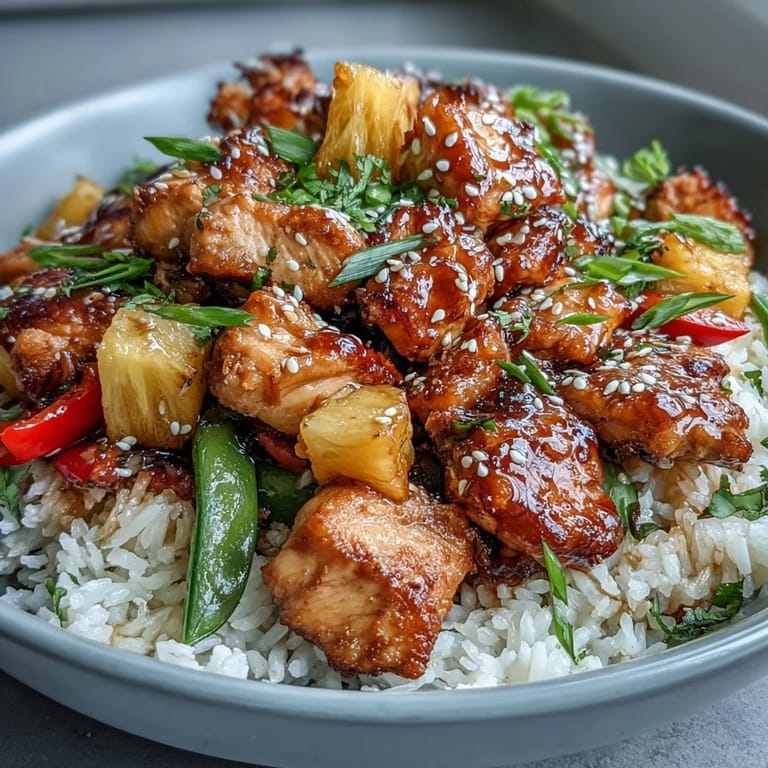
- Return the chicken and cooked vegetables to your skillet, pour in the glossy teriyaki sauce, and toss gently so everything is coated and warm. Scatter in your diced pineapple, give it a gentle stir, and let it heat through for just a couple of minutes—you want the pineapple warm but not softened.
- Plate and garnish with intention:
- Divide fluffy rice among bowls, then spoon the glazed chicken, vegetables, and sauce over the top in a way that looks generous. Finish each bowl with a pinch of sesame seeds, a scattering of sliced spring onions, and a whisper of fresh cilantro if you have it.
 Save
Save My partner made this last month when I came home stressed from work, and the moment I walked through the door, the aroma of caramelized teriyaki hit me and something in my shoulders just unclenched. Food that tastes this good and requires this little fuss has a way of turning an ordinary evening into something worth remembering.
Why Fresh Pineapple Makes All the Difference
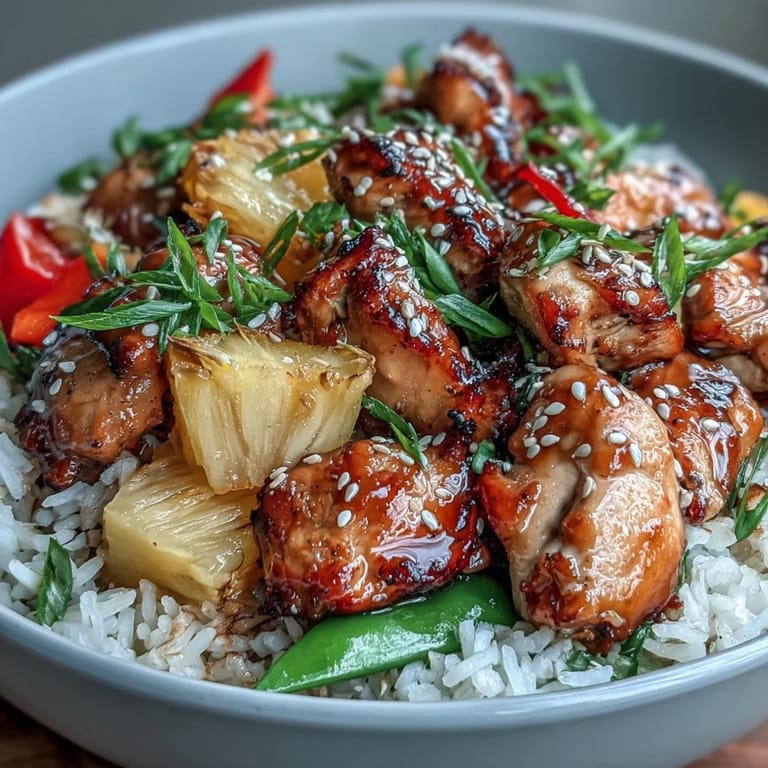
The difference between canned pineapple and fresh is immediate the moment you bite into a warm bowl—fresh pineapple stays bright and slightly fibrous while canned turns almost mushy from the heat and the sauce. If you're buying a whole pineapple and feeling intimidated by cutting it, most grocery stores will cut it for you right at the counter, and pre-diced pineapple is also totally fine when you're in a time crunch. What matters is that you add it right at the end so the texture stays intact.
The Secret to Silky Teriyaki Sauce
The reason this sauce clings to every grain of rice and every piece of chicken instead of pooling at the bottom of the bowl is that cornstarch slurry—but it only works if you whisk it completely smooth before it touches heat. I learned this the hard way by dumping lumpy cornstarch directly into the sauce, which created little gelatinous bits that nobody wanted to eat. Mix cornstarch and cold water in a separate cup, whisk it until it's absolutely uniform, then slowly pour it into your simmering sauce while stirring, and you'll get that glossy restaurant-quality finish.
Ways to Make This Bowl Your Own
This recipe is a template more than a rulebook, and the best meals come from respecting what you love while adjusting what you don't. You can substitute mushrooms and tofu for a vegetarian version that's honestly just as satisfying, or add shredded carrots and edamame for extra crunch and color if you feel like the bowl needs more volume. The sesame seeds can be swapped for crushed cashews if you prefer, and a squeeze of lime juice right before eating brightens everything up if you find it needs a little more zing.
- Swap the chicken for firm tofu cubes or extra vegetables if you're cooking vegetarian, and the cooking time stays exactly the same.
- Make the teriyaki sauce a day ahead and store it in the fridge—it actually tastes better the next day once the flavors have time to get to know each other.
- Cook extra rice because leftover bowls taste great cold from the fridge, making them perfect for lunch the next day.
 Save
Save This bowl works equally well on a busy Tuesday night when you need something fast or when you want to impress people without spending hours in the kitchen. Once you've made it once, you'll find yourself coming back to it again and again.
Recipe FAQs
- → What type of chicken works best for this bowl?
Boneless, skinless chicken thighs or breasts cut into bite-sized pieces cook quickly and stay tender when glazed with teriyaki sauce.
- → Can I substitute the pineapple juice in the sauce?
Pineapple juice adds tropical sweetness and acidity; fresh orange juice can be a mild substitute though flavor will differ slightly.
- → How do I ensure the rice is fluffy and not sticky?
Rinse the rice under cold water until clear, simmer gently covered, then fluff with a fork after resting off heat for best texture.
- → What vegetables complement the teriyaki chicken in this bowl?
Bell peppers and snap peas are ideal for crunch and color, but snow peas or shredded carrots also blend well with the sauce.
- → Is there a way to thicken the teriyaki sauce properly?
Mix cornstarch with cold water to create a slurry and stir it into the simmering sauce. Cook until thickened, about one minute.
- → Can I prepare this dish ahead of time?
Yes, you can cook chicken and sauce in advance and reheat gently. Assemble with freshly cooked rice and vegetables for best freshness.