 Save
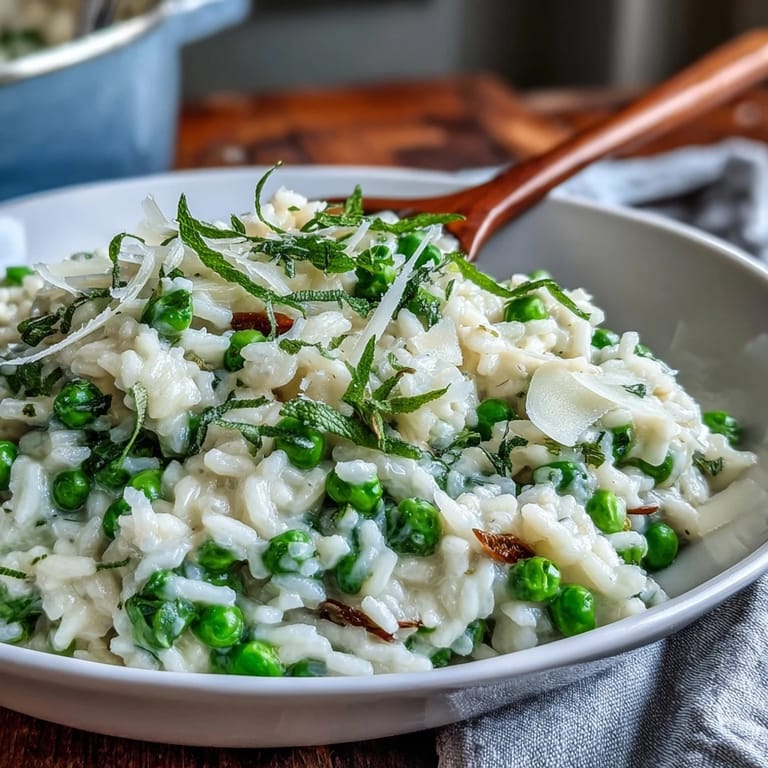
Save When the air first begins to soften and the markets fill up with baskets of bright green peas, I can never resist the pull of making a pot of risotto. My kitchen comes alive with the snap of fresh pea pods and the sharp perfume of lemon zest, a happy reminder that winter's gloom has finally loosened its grip. The last time I made this Spring Pea Risotto, birds chattered outside my window while I shuffled around in my socks, plotting dinner with a silly sense of anticipation. There's a kind of secret joy in stirring risotto—watching the rice go from pearly grains to something luxuriously creamy, especially with so many green flecks peeking through. Somehow, this dish always ends up feeling like the edible version of spring's first sunny afternoon.
I once made this risotto for a couple of friends who landed at my place after an impromptu Sunday walk that ended in the rain. Our shoes formed puddles by the front door, and someone put on an old jazz album while I started chopping shallots without even changing out of my coat. The risotto warmed us from the inside out, every bite bright and comforting enough that nobody noticed how thoroughly drenched we really were. That afternoon, laughter and steam seemed to rise from the stove in equal measure. Sometimes, good food has a way of rescuing the mood before you even notice it was needed.
Ingredients
- Spring peas: Sweet and tender peas pop with flavor in every bite, and I find fresh or frozen both work—just pat frozen peas dry to keep the risotto from getting watery.
- Shallot: Its mellow, subtly sweet profile melts right into the rice, giving a distinctly gentle background flavor.
- Garlic: Minced finely, it wakes up the pot in the very first step; I always use fresh, never pre-chopped, for a less harsh taste.
- Fresh mint: The secret, I think, is to chop it right before stirring in at the end—otherwise it darkens and loses its fresh zing.
- Lemon zest: Adds a burst of sunshine, brightening up the entire dish; a microplane makes all the difference for fluffy zest with no bitter pith.
- Arborio rice: Short-grain is non-negotiable here—it releases just the right amount of starch for that classic creaminess.
- Vegetable broth: Warm it first and keep it nearby; cold broth stalls the cooking and can make your risotto gluey.
- Dry white wine: This gives depth and a gentle tang—don’t worry about fancy bottles, just pick something crisp you’d drink a glass of.
- Olive oil: Use a fruity, everyday oil, nothing too peppery, to coax the flavors out of the aromatics.
- Unsalted butter: For extra silkiness, stir it in off the heat—you’ll taste the difference.
- Aged Parmesan: The nuttier and saltier, the better; I grate it myself for snowy piles that melt perfectly.
- Kosher salt and black pepper: A pinch has a big impact, especially at the finish—taste as you go, not just at the end.
Tired of Takeout? 🥡
Get 10 meals you can make faster than delivery arrives. Seriously.
One email. No spam. Unsubscribe anytime.
Instructions
- Warm the broth:
- Pour the vegetable broth into a saucepan and keep it over low heat—you’ll want it steaming but not boiling as you add it to the rice.
- Sauté aromatics:
- Drizzle olive oil into a wide skillet set over medium heat, then toss in the shallots and garlic; stir gently until translucent, catching hints of sweetness in the steam.
- Toast the rice:
- Stir in the Arborio rice and watch the grains get glossy, listening for the faint sizzle that means they’re soaking up the oil.
- Add the wine:
- Pour in the white wine and stir as it bubbles away, infusing the rice with a floral, tangy aroma.
- Start the broth stirring:
- Add a ladleful of hot broth, stirring patiently and letting each addition mostly disappear before the next, hearing the gentle slosh each time.
- Introduce the peas:
- After about fifteen minutes and as the rice swells, stir in the peas—they’ll turn the risotto a cheerful green almost immediately.
- Finish the risotto:
- Keep adding broth and stirring until the mixture is creamy and the rice is just tender, about twenty to twenty-five minutes all told.
- Stir in the freshness:
- Remove the pan from the heat, then work in the butter, Parmesan, mint, and lemon zest, stirring until glossy and fragrant, then check the seasoning with a pinch of salt and pepper.
- Serve and garnish:
- Ladle into warm bowls and, if you like, shower with extra Parmesan and a few torn mint leaves just before carrying it to the table.
 Save
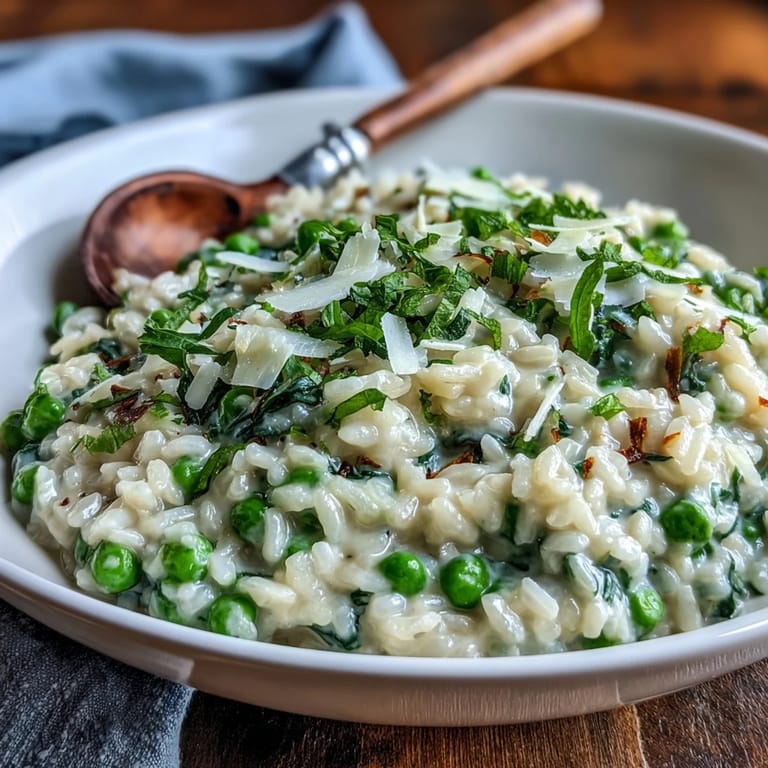
Save One late spring, my neighbor poked her head in just as I was standing over the pot, wooden spoon in hand, completely entranced by the risotto’s transformation. She joined me at the counter, sipping something cold while we swapped workday stories, and before we knew it, the kitchen felt like its own little escape. Sharing that meal by the window, surrounded by the scent of mint and lemon, it dawned on me that some recipes are secretly designed to turn everyday evenings into occasions.
Let’s Talk Creaminess
I used to think true creaminess required a generous pour of actual cream, but the first time I had risotto in Italy, I watched the chef stubbornly use only rice, broth, and strong stirring arms. That’s the magic—the starch released as you stir makes the texture luxurious without drowning the flavors. If you want an extra rich finish (and nobody’s judging), a tablespoon of heavy cream folded in at the end is never out of place, but honestly, it’s already so silkily satisfying with just butter and cheese.
Ways to Make It Yours
Sometimes I swap in sugar snap peas or toss in asparagus tips if that’s what’s taking over my fridge. Pecorino brings an earthier, sharper flavor if you feel like veering from Parmesan, and swapping basil for mint gives the dish an entirely new personality. That’s half the fun—following your mood and the season to see what ends up in the pot.
What to Serve With Spring Pea Risotto
This dish makes a delicate meal on its own, but I love sliding a simple green salad alongside for fresh crunch. If you’re in a celebratory mood, add crisp white wine and a crusty hunk of sourdough, and you’ve got something special that asks for little else. When the bowl is empty, it always feels like you’ve captured spring in one sitting.
- Keep leftovers tightly covered; they rewarm gently with a splash of broth.
- A zippy grating of lemon over each plate brightens everything further.
- Don’t skip the garnish—a few fresh mint leaves go a long way for looks and taste.
 Save
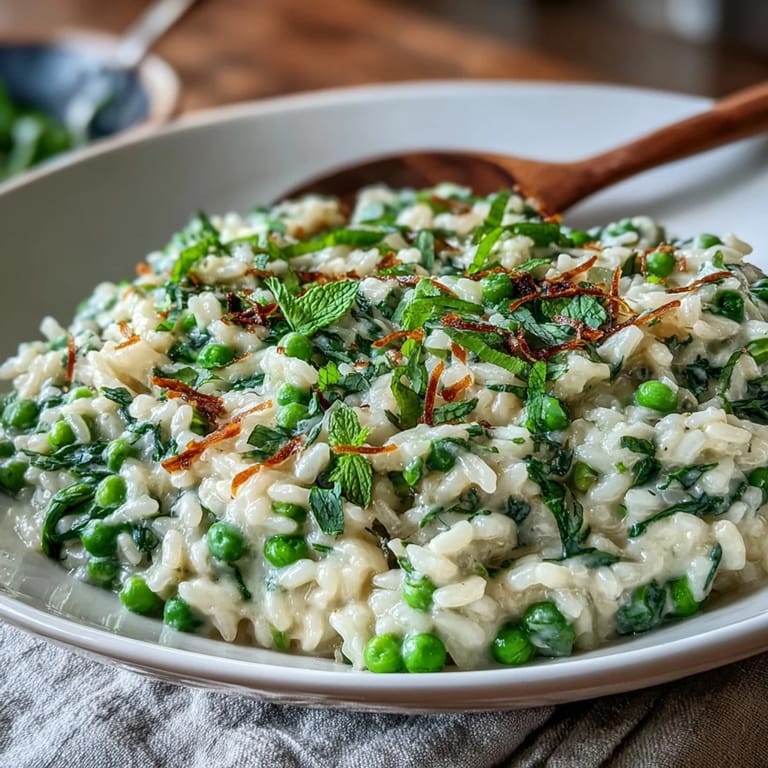
Save May you find as much sunshine and simple joy in this risotto as I have—every spoonful brings you a little closer to spring. If you’re feeding friends, expect there to be nothing left but empty plates and smiles.
Recipe FAQs
- → Can I use frozen peas instead of fresh?
Yes. Add frozen peas directly from the bag about halfway through cooking so they heat through without turning mushy. If thawed, add them later and stir gently to maintain texture.
- → How do I make the risotto extra creamy?
Constant stirring while adding warm broth helps release the rice starch. Finish off the heat with cold butter and finely grated aged Parmesan, and optionally a splash of cream for added silkiness.
- → What can I substitute for the white wine?
Use an equal amount of warm vegetable broth or a splash of lemon juice plus broth to retain acidity. Avoid cold liquid—keep it warm to maintain a steady cooking temperature.
- → When should I add the peas and mint?
Stir frozen or fresh peas in about 12–15 minutes into cooking so they stay vibrant. Fold in chopped mint off the heat along with butter and cheese to preserve its fragrance.
- → What cheese alternatives work well?
Pecorino Romano can replace Parmesan for a sharper note. For a milder finish, use a mix of aged cheeses; grate finely so it melts smoothly into the risotto.
- → How do I know when the rice is done?
The rice should be creamy but still have a slight bite—al dente. Taste a grain near the end of cooking; it should be tender at the center without being mushy.