 Save
Save The first time I attempted to marry a croissant with a cookie, my kitchen smelled like an argument between a French bakery and a chocolate chip fantasy. I'd been standing in front of my open recipe books at midnight, unable to choose between laminating dough or baking cookies, when it hit me: why choose? A crookie was born from that small moment of kitchen indecision, and now I can't imagine settling for just one.
I remember bringing these to my brother's apartment on a Saturday morning, still warm from my oven, wrapped in brown paper. He took one bite and went silent in that way people do when something unexpectedly hits all the right notes. That's when I knew this wasn't just a recipe, it was a memory waiting to happen for whoever makes it.
Ingredients
- All-purpose flour (250 g for dough, 120 g for cookie layer): The foundation that holds everything together; weigh it if you can, as it makes lamination more predictable.
- Instant yeast (7 g): This gentle rise keeps the dough tender rather than tough, which is the whole point of a crookie.
- Cold unsalted butter (150 g): The lamination butter must stay cold or you'll lose those beautiful layers; chill your rolling pin too if your kitchen runs warm.
- Melted unsalted butter (25 g for dough): This enriches the base dough and helps it come together smoothly.
- Whole milk (120 ml, lukewarm): Temperature matters here; too hot kills the yeast, too cold and it won't activate.
- Brown sugar and granulated sugar (60 g and 40 g): The brown sugar brings moisture and depth to the cookie layer, while the white sugar helps with spread.
- Egg yolk (1): Yolks make the cookie dough richer and more forgiving than whole eggs.
- Dark chocolate chips (100 g): Choose chips you'd actually eat on their own; they're the reward in every bite.
- Baking soda (1/2 tsp): This reacts with the acidic brown sugar to create lift and chew.
- Vanilla extract (1 tsp): A small amount that whispers rather than shouts, tying the flavors together.
- Salt (1/4 tsp each layer): Both doughs need salt to balance sweetness and enhance flavor.
Tired of Takeout? 🥡
Get 10 meals you can make faster than delivery arrives. Seriously.
One email. No spam. Unsubscribe anytime.
Instructions
- Mix the dough base:
- Combine flour, sugar, salt, and yeast in a bowl, then add your lukewarm milk, melted butter, and egg. Mix until shaggy, then knead for 5 minutes until smooth and slightly elastic. You'll feel when it shifts from sticky to silky.
- Chill the foundation:
- Shape your dough into a rectangle, cover it, and let it rest in the fridge for 30 minutes. This pause lets the gluten relax and makes rolling easier later.
- Prepare the lamination butter:
- Roll your cold butter between two pieces of parchment until it forms a perfect 15x15 cm square. The butter should be cold enough to hold its shape but flexible enough to fold; if it cracks, let it soften slightly at room temperature for a minute.
- Create the butter lock:
- Roll your chilled dough to 30x15 cm, place the butter square in the center, then fold the dough over from both sides like you're wrapping a gift. Seal the edges by pressing gently with your rolling pin so the butter doesn't escape during rolling.
- Build the layers:
- Roll the dough out to 45x20 cm, then fold it into thirds like a business letter. This is your first turn. Chill for 30 minutes, then repeat this rolling and folding process two more times, chilling 30 minutes between each turn. Each fold doubles the layers, so three turns give you those ethereal, crackling layers croissants are famous for.
- Final chill:
- After the last fold, refrigerate the dough for at least 1 hour; overnight is even better if you're planning ahead.
- Make the cookie dough:
- Beat softened butter with brown and granulated sugars until the mixture looks fluffy and pale, about 2 minutes. Add the egg yolk and vanilla, mixing until combined. Gently fold in your flour, baking soda, and salt until just combined, being careful not to overwork it, then fold in your chocolate chips. Set this aside to chill alongside the laminated dough.
- Roll and assemble:
- Once everything is chilled, roll your laminated dough to about 30x25 cm and roughly 6 mm thick. Spread or dollop the cookie dough evenly over the surface, leaving a 1 cm border so nothing leaks out when you roll. Roll tightly from the long side, using a bench scraper or knife to help if the dough sticks.
- Slice with intention:
- Using a sharp knife, slice your roll into 8 equal pieces. A serrated knife or dental floss actually works beautifully here; press down rather than sawing to keep the layers intact.
- Proof with patience:
- Place your slices on parchment-lined baking sheets, cover them loosely with plastic wrap or a towel, and let them sit at room temperature for 1 hour. You'll see them puff slightly as the yeast does its final work.
- Bake until golden:
- Preheat your oven to 190°C (375°F) and bake for 18 to 20 minutes, until the tops are deep golden brown and the insides are set but still slightly soft. Trust your nose; when they smell like caramelized butter and chocolate, they're done.
- Cool before biting:
- Let them cool on a wire rack for a few minutes. This allows the layers to firm up slightly, so they shatter rather than crumble when you bite into them.
 Save
Save I learned these lessons the hard way, watching butter smear into dough like a tie-dye disaster, or biting into what I'd hoped would be shatteringly crisp but tasted dense instead. But that's how cooking teaches you; it whispers through mistakes until you finally hear it.
Why Lamination Matters
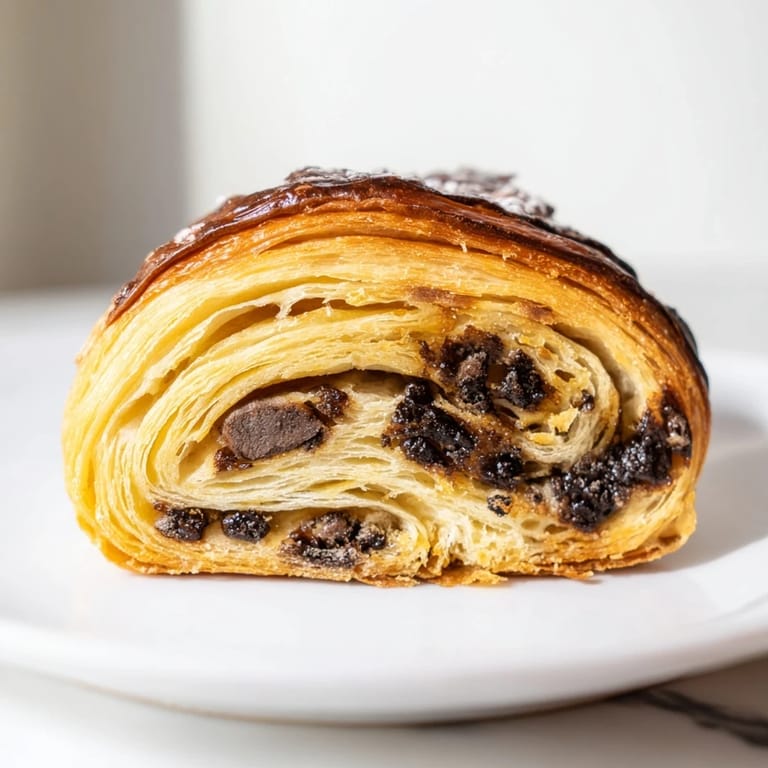
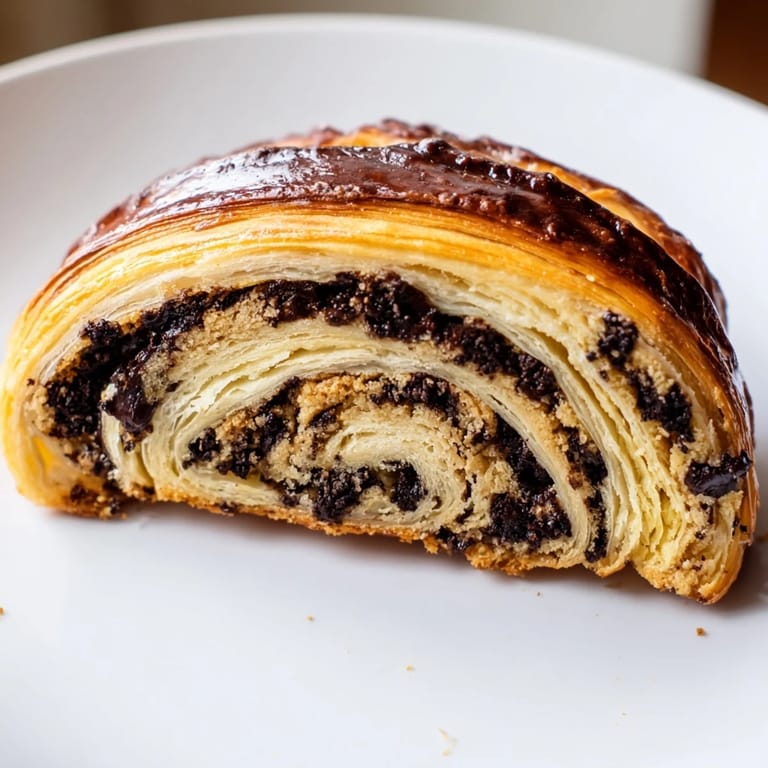
Lamination isn't just a fancy technique; it's the whole reason a croissant tastes the way it does. When you fold butter into dough repeatedly, you're creating hundreds of thin, separated layers. Heat makes the water in the butter turn to steam, pushing those layers apart and creating the flaky, shattering texture that makes you close your eyes when you bite into something truly good. Without lamination, you'd just have a sweet cookie with bread texture, which isn't terrible, but it's not a crookie.
The Sweet Spot Between Butter and Chocolate
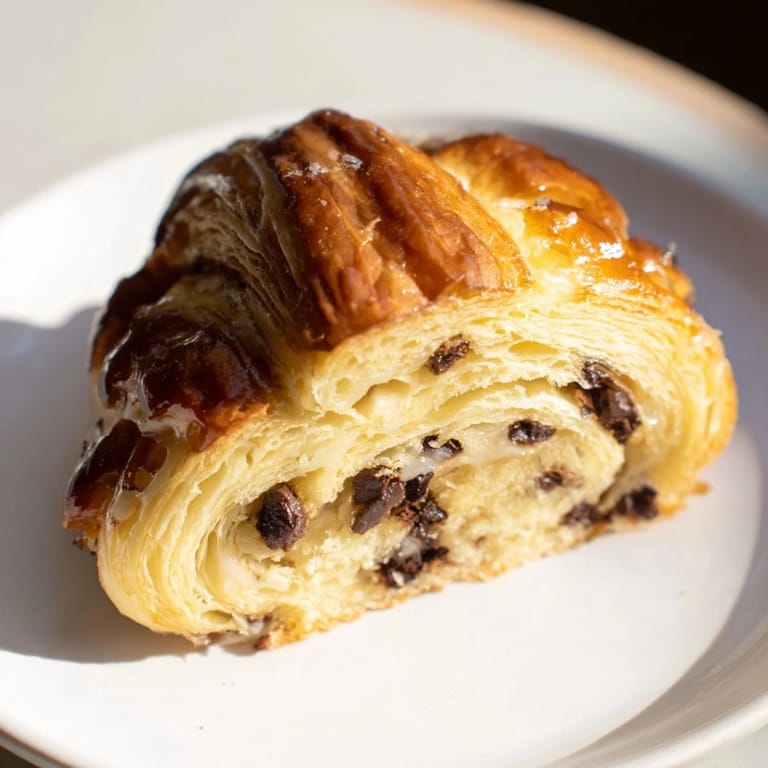
The magic of this recipe lives in the balance. Croissants are buttery elegance; cookies are chocolate indulgence. The crookie sits in the middle, where that buttery crackle gives way to soft, chewy cookie beneath. The chocolate chips soften slightly against the warm, laminated dough, creating pockets of melted richness. It's not trying to be a perfect croissant or a perfect cookie; it's trying to be something that makes you feel both nostalgic and delighted at the same time.
Ways to Make Them Your Own
Once you've made a batch, you might find yourself experimenting. I've tried dark chocolate with sea salt, brown butter with hazelnuts, even matcha chocolate chips with white chocolate shards. Each variation teaches you something about flavors and textures. The beautiful thing about crookies is that they're forgiving enough for play.
- Try swapping dark chocolate for white chocolate, or mixing in chopped nuts like almonds or pistachios for crunch.
- Brush the tops with egg wash before baking for extra shine and a more bakery-like appearance.
- Crookies keep well in an airtight container for a few days, and reheating them gently in a low oven brings back that fresh-from-the-bakery magic.
 Save
Save Making crookies is like having a quiet conversation with butter and chocolate, where both sides get heard. When you pull them from the oven and see that golden top with chocolate peeking through the layers, you'll know it was worth the gentle folds and patient chilling.
Recipe FAQs
- → What is laminated dough and why is it used here?
Laminated dough features layers of butter folded into the dough multiple times, creating flakiness and buttery texture. It's essential for the flaky structure in this treat.
- → How does the chocolate chip layer affect texture?
The chocolate chip layer adds gooey richness and a soft contrast to the flaky dough, enriching each bite with sweetness and depth.
- → Can I add nuts to this treat?
Yes, chopped nuts can be folded into the chocolate chip layer for added crunch and flavor variations.
- → Why is chilling important during preparation?
Chilling rests the dough and keeps the butter firm between folds, which is critical to achieving distinct layers and preventing butter from melting.
- → What are ideal serving suggestions?
Serve warm with coffee or tea, or as a stunning dessert. Brushing with egg wash before baking gives a beautiful golden shine.