 Save
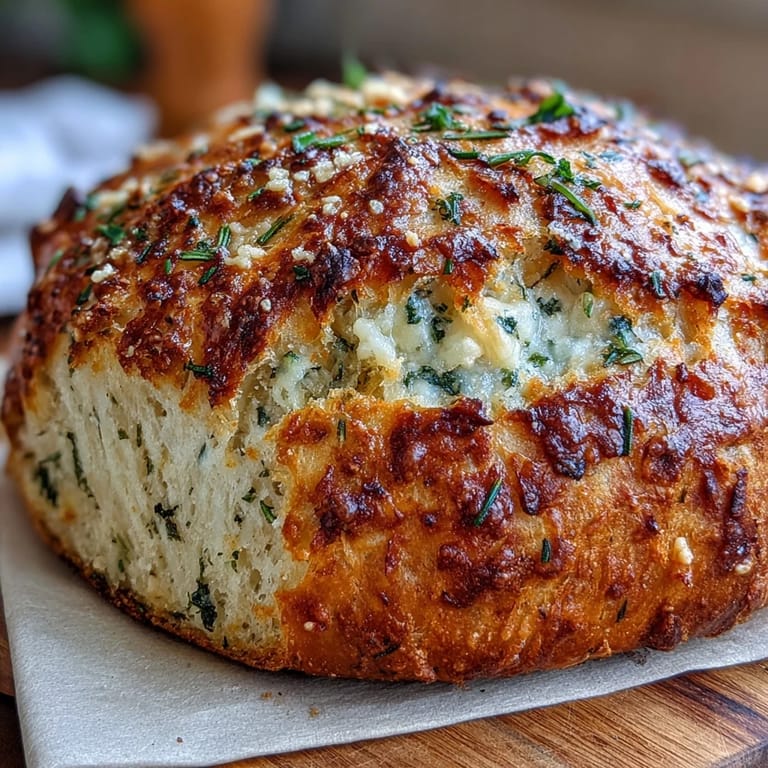
Save The first time I made this bread, my apartment smelled so incredible that my neighbor knocked on my door to ask what restaurant I had ordered from. I laughed, opened my oven to show him the Dutch oven bubbling away, and we ended up splitting the still-warm loaf right there on my kitchen counter with some butter I softened in the microwave.
I brought a loaf to a potluck last winter, and honestly, I was a little embarrassed about how simple it was to make. But then I watched three people literally scrape the Parmesan-garlic crumbs off the cutting board with their fingers, and someone asked for the recipe three times before the night ended.
Ingredients
- All-purpose flour: Bread flour would work too, but I love how the slightly lower protein content keeps this loaf tender rather than chewy
- Salt: Dont skimp here since salt balances the sweetness of the long fermentation and enhances the Parmesans savory punch
- Granulated sugar: Just enough to feed the yeast without making the bread taste sweet
- Active dry yeast: Standard instant yeast works perfectly fine if thats what you have in the pantry
- Warm water: Use the wrist test like your grandmother probably did if it feels comfortably warm to your skin, its around 110 degrees
- Olive oil: Extra virgin adds a lovely fruity undertone that plays beautifully with the garlic
- Freshly grated Parmesan cheese: I beg you to grate it yourself because the pre-grated stuff just doesnt melt into the crumb the same way
- Garlic: Fresh-minced gives little pockets of intense flavor, but you could use roasted garlic for a sweeter, milder vibe
- Fresh rosemary or parsley: Completely optional, but that herbal brightness cuts through all that rich cheese
Tired of Takeout? 🥡
Get 10 meals you can make faster than delivery arrives. Seriously.
One email. No spam. Unsubscribe anytime.
Instructions
- Wake up the yeast:
- Stir the yeast into warm water and let it sit until you see a layer of foam on top, about 5 minutes, which tells you the yeast is alive and ready to work.
- Mix the foundation:
- Whisk the flour, salt, and sugar together in a large bowl, then pour in the yeast mixture along with the olive oil.
- Bring it together:
- Stir with a wooden spoon just until everything comes into a shaggy, sticky dough, and remember that this dough is supposed to feel tacky.
- Add the good stuff:
- Fold in the Parmesan, garlic, and herbs until they are evenly distributed throughout the dough.
- Let it work its magic:
- Cover the bowl and leave it alone somewhere warm for 12 to 18 hours, letting time transform that simple mixture into something extraordinary.
- Shape with intention:
- Turn the bubbly dough onto a floured surface, gently fold the edges toward the center to create tension, and shape it into a round loaf.
- Preheat properly:
- Place the dough on parchment paper to rest for 30 minutes while your oven and Dutch oven heat to 450 degrees.
- Give it room to grow:
- Use a sharp knife to cut a shallow slash across the top of the loaf, which helps the bread expand beautifully in the oven.
- Create the steam:
- Carefully lift the parchment and dough into the screaming hot Dutch oven, cover with the lid, and bake for 30 minutes.
- Reveal the glory:
- Remove the lid and let the bread bake for another 15 minutes until the crust turns deep golden brown and the loaf sounds hollow when you tap the bottom.
- Practice patience:
- Let the bread cool on a wire rack for at least 30 minutes because slicing into hot bread will make the texture gummy.
 Save
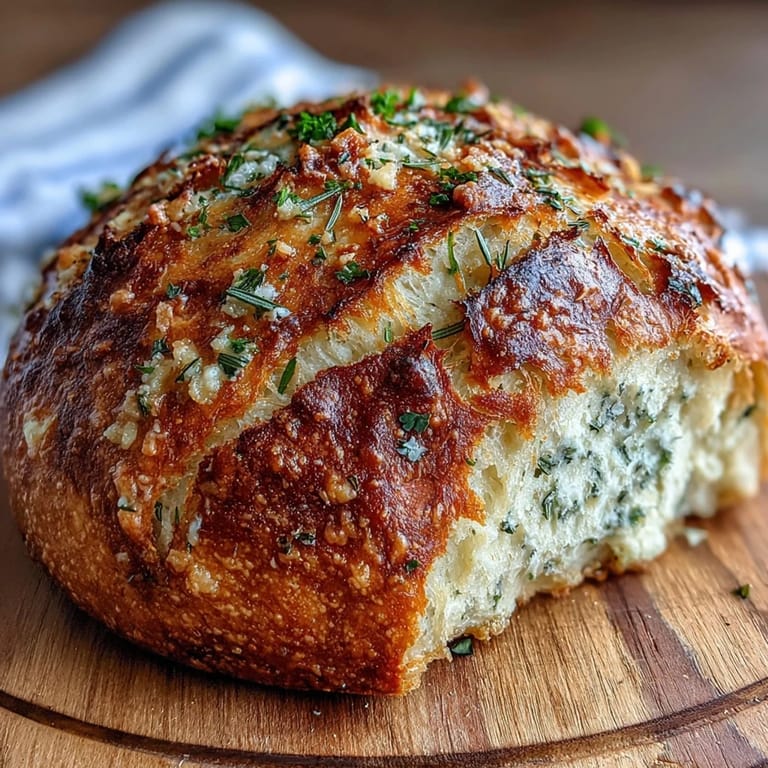
Save My sister called me at 11 pm on a Tuesday, sounding stressed and needing to talk, so I told her to come over. I pulled the bread out of the oven, we sat on the floor with butter and knives, and somehow carbs and conversation fixed everything that night.
Mastering The Overnight Rise
The long fermentation is not just about convenience because it breaks down flour proteins for better digestion and develops those complex fermented flavors that you cannot achieve with a quick rise. I have accidentally let dough rise for 24 hours before, and while it gets a bit tangier, it still produces an incredible loaf.
Choosing The Right Cheese
While Parmesan is the classic choice, I have experimented with aged Asiago for a sharper bite and even Gruyère for that nutty sweetness that takes this bread in a completely different direction. Just remember that harder, aged cheeses grate better and distribute more evenly through the dough than soft varieties.
Serving Suggestions
This bread demands to be eaten within 24 hours because that is when the crust is at its crispest and the interior is at its tender best. I love toasting leftovers and rubbing them with raw garlic for an instant bruschetta, or cubing day old bread and tossing with olive oil for croutons that will transform any soup.
- Slice it thick and grill with butter for the most incredible garlic bread you have ever tasted
- Use it as the base for a strata or bread pudding that will make you weep with joy
- Freeze extra loaves wrapped tightly in foil and refresh them in a 350 degree oven for 10 minutes
 Save
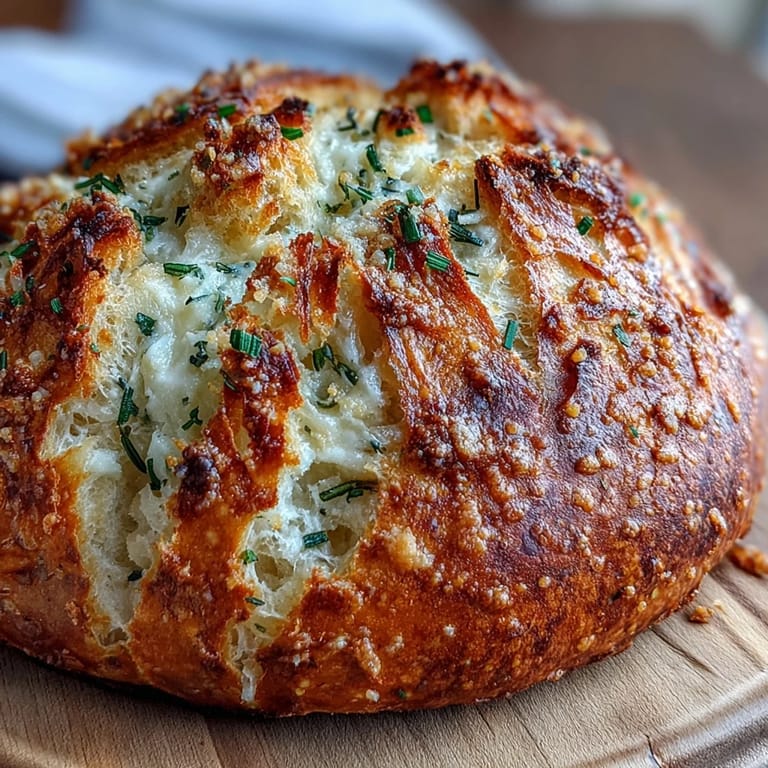
Save There is something deeply satisfying about pulling a golden, fragrant loaf from your own oven, knowing that patience and simple ingredients created something this extraordinary.
Recipe FAQs
- → Why does this bread require such a long rising time?
The extended 12–18 hour fermentation allows natural enzymes to break down flour proteins, creating better flavor development, improved texture, and that signature airy crumb structure typical of artisan European loaves.
- → Can I skip the Dutch oven and bake this differently?
A Dutch oven creates steam essential for crust formation. Without one, place a metal pan on the bottom rack and add ice cubes when baking, or use a heavy pizza stone with a large metal bowl inverted over the loaf.
- → Is the sticky dough normal, or should I add more flour?
Sticky dough is intentional and crucial for achieving a light, airy crumb. Avoid adding excess flour—this would create a dense, heavy loaf. The dough will become more manageable during the shaping process.
- → Can I use dried herbs instead of fresh?
Yes, substitute 1 teaspoon dried rosemary or parsley for the fresh version. Add dried herbs directly to the dry ingredients before mixing to ensure even distribution throughout the loaf.
- → How do I know when the bread is fully baked?
The crust should be deep golden brown, and the bottom should sound hollow when tapped. An instant thermometer inserted into the center should read 190–200°F (88–93°C) for fully baked bread.
- → Can I freeze this bread for later?
Yes, wrap completely cooled slices in plastic wrap and freeze for up to 3 months. Thaw at room temperature or refresh in a 350°F oven for 5–10 minutes to restore crust texture.