 Save
Save There's something about guava that transports me instantly—one bite of this cheesecake and I'm back in my aunt's kitchen on a humid afternoon, watching her fold marmalade into cream cheese with the kind of patience I didn't have as a kid. She'd let me taste the filling before it went into the oven, and the tartness would make my face scrunch up while she laughed. Years later, I finally understood why she insisted on that tropical swirl: it's the perfect counterpoint to all that creamy richness, like sunshine breaking through clouds.
I made this for my best friend's birthday last summer, and she took one bite then just closed her eyes like she was thinking through every flavor. The whole table went quiet for a second, which is how you know a dessert is doing its job. She asked for the recipe before she even finished her slice, and I realized that moment—when food becomes a memory someone wants to recreate—is exactly why I love cooking.
Ingredients
- Maria cookies: These are lighter and more delicate than digestive biscuits, creating a crust that crumbles beautifully rather than sitting heavy on your tongue.
- Unsalted butter: It matters here because you're going to taste the butter binding everything together—salted butter would throw off the balance with all that sweetness.
- Cream cheese: Let it soften completely at room temperature, or you'll spend twenty minutes beating it and it still won't be smooth; I learned this the hard way.
- Sour cream: This is your secret weapon for that subtle tang that makes people pause and ask what's different about it.
- Eggs: Room temperature eggs incorporate more smoothly and create a finer texture, no weird lumps hiding in your filling.
- Guava marmalade: The quality of this ingredient truly matters—a good marmalade has whole fruit pieces, not just sugar syrup.
- Lime zest: Optional but it whispers in the background and makes the whole thing feel sophisticated.
Tired of Takeout? 🥡
Get 10 meals you can make faster than delivery arrives. Seriously.
One email. No spam. Unsubscribe anytime.
Instructions
- Set your stage:
- Preheat to 160°C and line your springform pan with parchment paper, letting it come up the sides slightly. This temperature is lower than you'd expect, but it's what keeps your cheesecake from cracking like a dried riverbed.
- Build the base:
- Pulse your Maria cookies until they look like fine sand—not powder, you want texture. Mix with melted butter and sugar until it feels like wet beach sand, then press it firmly into the pan and bake for 10 minutes. The slight toasting matters; it prevents a soggy bottom.
- Make the magic:
- Beat softened cream cheese and sugar until it's genuinely smooth and creamy, not just mixed. Add sour cream slowly while mixing, then introduce eggs one at a time, beating gently after each addition. This gentleness prevents incorporating too much air, which causes cracks.
- Add the tropical twist:
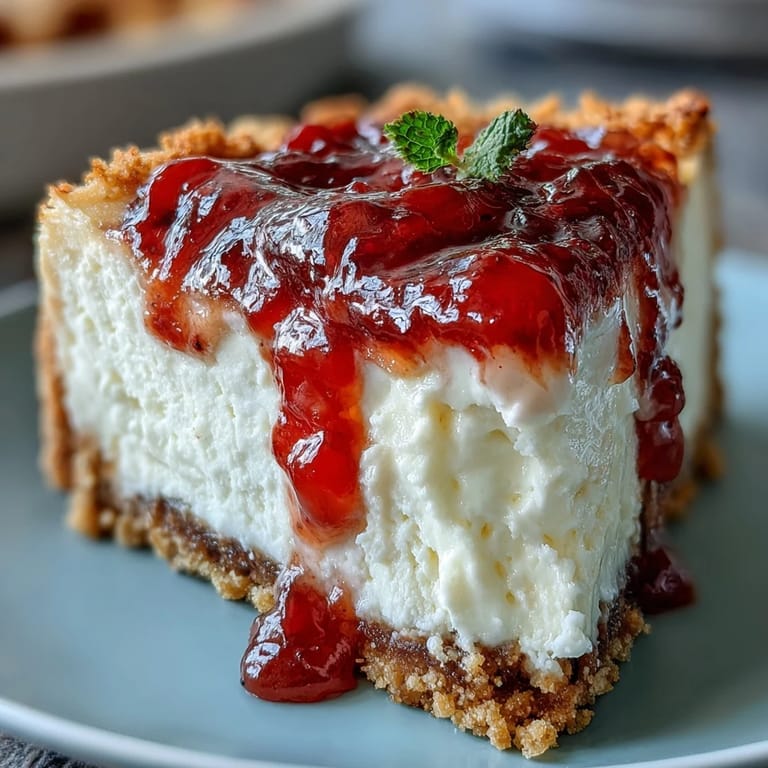
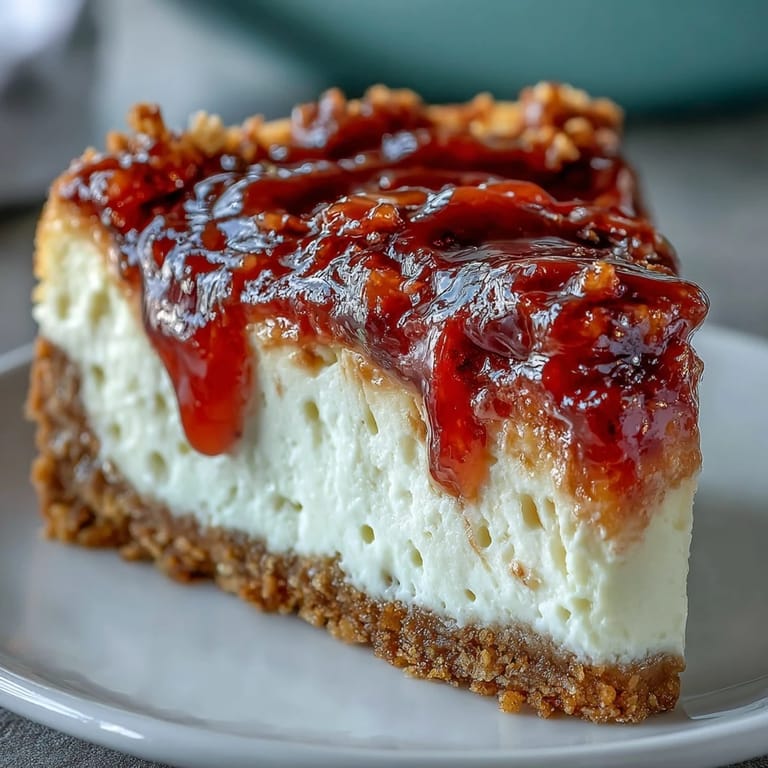
- Stir in vanilla and lime zest if you're using it, then pour the filling over your cooled crust. Warm your guava marmalade slightly with a splash of water until it's pourable but not runny, then drop it in irregular spoonfuls across the top and swirl gently with a knife or skewer for that beautiful marbled effect.
- Bake with intention:
- Bake for 50-55 minutes—you're looking for set edges while the very center still jiggles slightly, like it's breathing. Crack the oven door and let it cool inside for a full hour; this slow temperature drop is what prevents the dreaded cracks from forming.
- The hardest part:
- Refrigerate for at least 3 hours, though overnight is better. I know it's torture, but this resting time sets the structure and lets all the flavors settle into each other.
 Save
Save My sister brought this to a potluck last month, and someone actually asked if she'd made it professionally. She just smiled and said, 'My sister taught me,' which made my whole week. That's when food stops being about technique and becomes about connection.
The Guava Question
If you can't find guava marmalade, don't panic—I've used guava paste (which you mash smooth with a little water) and honestly, the texture is slightly different but equally beautiful. The key is heating it gently first so it's spreadable rather than trying to swirl a cold, stiff paste that just breaks apart. Some people use fresh guava puree, which gives you a brighter flavor but less structural integrity in the swirl—it's more about what you have access to and what mood you're in.
Slicing Secrets
The moment before you slice is actually important—dip your knife in hot water, wipe it, and repeat for each cut. This keeps the cheesecake from dragging and tearing, and honestly, it makes you feel a bit fancy doing it. A long, thin-bladed knife works better than a short chunky one; there's less surface area dragging through the creamy filling.
Serving and Pairing
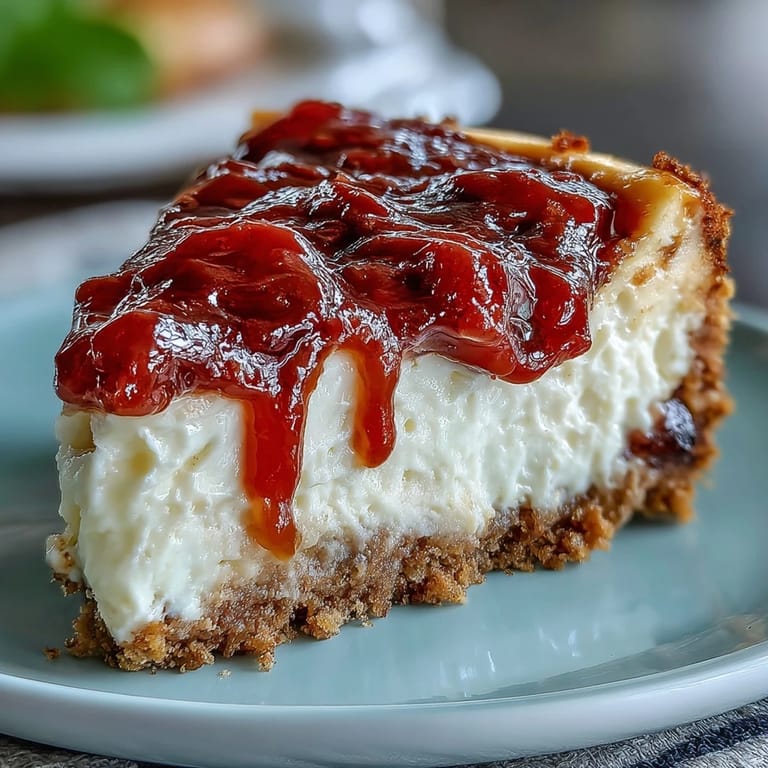
This cheesecake wants to be served cold but not freezing—let it sit out for 10 minutes before slicing if your kitchen is very cold. A glass of Moscato is exactly right, the slight sweetness echoing the guava, but I've also served it with sparkling rosé for a brunch crowd and everyone looked happy. Fresh guava slices on top make it look intentional and gorgeous, or a scattered handful of fresh mint if guava is impossible to find.
- Let leftovers come to room temperature slightly before eating them—cold cheesecake tastes dense, but room temperature lets all the flavors sing.
- This keeps beautifully for three days in the fridge, covered loosely so it doesn't absorb random flavors.
- You can make it two days ahead, which is actually perfect for planning a dinner party without day-of stress.
 Save
Save This cheesecake has become my go-to when I need to prove that I care—it's the kind of dessert that makes people feel celebrated. Make it once and you'll understand why my aunt guarded her version so carefully.
Recipe FAQs
- → How do I achieve the perfect marble effect with the guava swirl?
Drop spoonfuls of warmed guava marmalade over the cheesecake batter, then use a knife or skewer to gently swirl through the filling. Make figure-eight or circular motions without over-mixing—you want distinct ribbons of guava running through the creamy base for that beautiful marbled appearance.
- → Can I use fresh guava instead of marmalade?
Yes! Purée fresh guava flesh and cook it down with a bit of sugar until it reaches a thick, spreadable consistency similar to marmalade. Strain out any seeds if desired. You may need to reduce it longer than store-bought marmalade to achieve the proper texture for swirling.
- → Why does my cheesecake crack, and how do I prevent it?
Cracking typically occurs from overbaking or rapid temperature changes. To prevent this, bake until edges are set but the center still jiggles slightly—don't wait until it's completely firm. The cooling technique of cracking the oven door and letting it rest for an hour helps gradually reduce temperature, minimizing structural stress on the filling.
- → How long should I chill the cheesecake before serving?
Refrigerate for at least 3 hours, but overnight chilling yields the best results. This allows the cheesecake to fully set, develop its velvety texture, and become easier to slice cleanly. The extended chilling time also lets the guava flavor permeate throughout the cream cheese filling for more balanced taste in every bite.
- → What can I substitute for Maria cookies in the crust?
Graham crackers make an excellent alternative, providing similar sweetness and crunch. Digestive biscuits work well too, though they're slightly less sweet. For a more tropical variation, try vanilla wafers or even butter shortbread cookies. Each option creates a slightly different flavor profile but maintains the necessary buttery, crumbly foundation.
- → How do I know when the cheesecake is done baking?
The cheesecake is ready when the edges appear set and slightly puffy while the center still has a gentle jiggle, similar to firm Jell-O. The center should not be liquid or wavy, but it shouldn't be completely firm either. Remember that residual heat continues cooking the filling as it cools, so removing it while slightly underbaked ensures perfect texture after chilling.