 Save
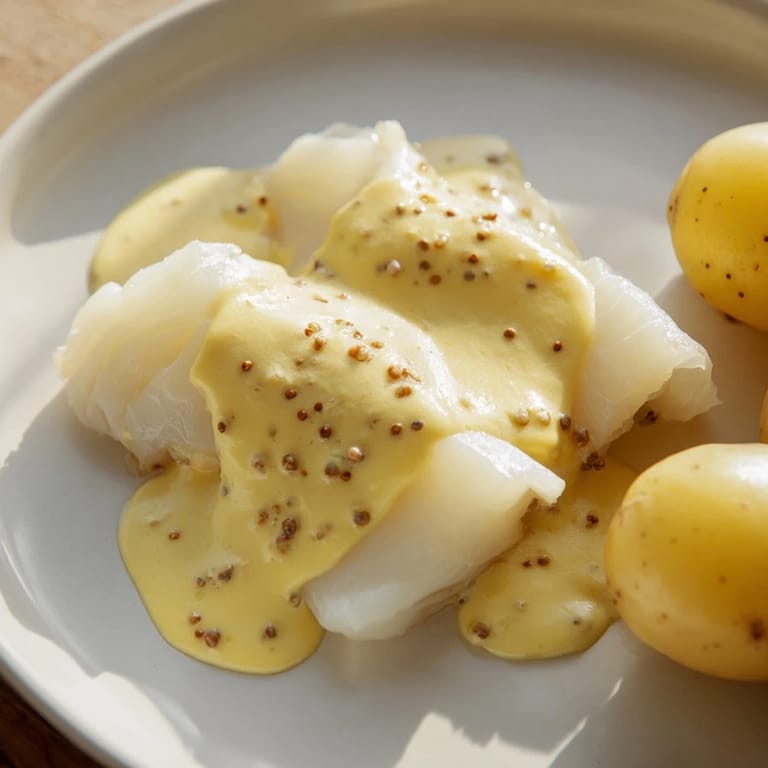
Save My grandmother kept a small wooden chest in her pantry, and inside it lived packages of dried cod that arrived every November from a cousin in Bergen. I didn't understand lutefisk until I was old enough to help her prepare it, watching her patient ritual of daily water changes over nearly a week, the fish slowly transforming from brittle planks into something tender and mild. That first bite beside her kitchen table, the flaky fish meeting the tangy mustard sauce, made me realize why she'd guard those packages like treasure. Now when I make it, I'm not just cooking a meal—I'm keeping a conversation alive with her, one careful soak at a time.
The year I made lutefisk for friends who'd never heard of it was a turning point; they arrived nervous, left asking for the recipe. There's something about serving a dish this old, this honest, that opens conversations—suddenly everyone's sharing their own family food stories, their own reasons for keeping traditions alive.
Ingredients
- Dried cod (1 kg): This is the soul of the dish—buy from a Nordic specialty shop or online retailer, never the musty stuff gathering dust on warehouse shelves.
- Cold water: Change it daily during soaking; stale water makes the fish taste off, and daily care shows respect for the ingredient.
- Coarse salt (1 tbsp): A final salt rest after soaking draws out remaining moisture and seasons the fish gently from within.
- Unsalted butter (2 tbsp): Keep it cool and fresh; warm, old butter makes the sauce taste greasy instead of silky.
- All-purpose flour (2 tbsp): Whisk it into the roux carefully to avoid lumps that'll ruin the sauce's texture.
- Whole milk (300 ml): Whole milk creates the richness you want; skim milk will taste thin and disappointing.
- Dijon mustard (2 tbsp) and whole-grain mustard (1 tbsp): The two together give you complexity—one smooth, one grainy, both tangy without overpowering.
- Sugar (1 tsp): Just enough to soften the mustard's edge and let the creaminess come through.
- Boiled potatoes and crispbread: These aren't sides; they're partners in the eating experience, offering texture against the soft fish.
Tired of Takeout? 🥡
Get 10 meals you can make faster than delivery arrives. Seriously.
One email. No spam. Unsubscribe anytime.
Instructions
- Start the soak:
- Rinse the dried cod under cold water until the water runs clear, breaking apart any stuck-together pieces gently with your fingers. Submerge everything in a large container of fresh cold water, making sure the fish is covered by at least two inches—it will swell as it softens, and you don't want any pieces surfacing.
- Keep the rhythm:
- Every morning and evening for five to six days, pour out the old water and replace it with fresh cold water; this daily exchange is what actually transforms the fish from stiff and salty into tender and mild. Mark it on your calendar so you don't lose track—missing a day or two won't ruin it, but the consistency matters.
- Final prep before baking:
- After the last rinse, lay the fish on clean towels and sprinkle it evenly with coarse salt; let it sit undisturbed for thirty minutes to draw out excess moisture. Rinse away the salt under cold water, pat the fish completely dry with fresh towels, and arrange the pieces in a baking dish in a single layer.
- Bake gently:
- Cover the baking dish tightly with foil and slide it into a 200°C (390°F) oven; the foil keeps the heat gentle and even. After about twenty-five to thirty minutes, the fish will be opaque all the way through and will flake easily when you press it with a fork—don't overcook, or it becomes mushy.
- Build the sauce:
- Melt butter in a saucepan over medium heat, then whisk in flour smoothly, cooking for one full minute while stirring constantly to cook out the raw flour taste. Slowly pour in the milk while whisking without stopping, creating a smooth base rather than a lumpy one.
- Simmer and season:
- Let the sauce bubble gently for three to four minutes, stirring occasionally, until it thickens enough to coat the back of a spoon. Remove from heat and stir in both mustards along with sugar, salt, and white pepper; taste and adjust so the mustard flavor is present but not harsh, the sauce creamy but not bland.
- Plate and serve:
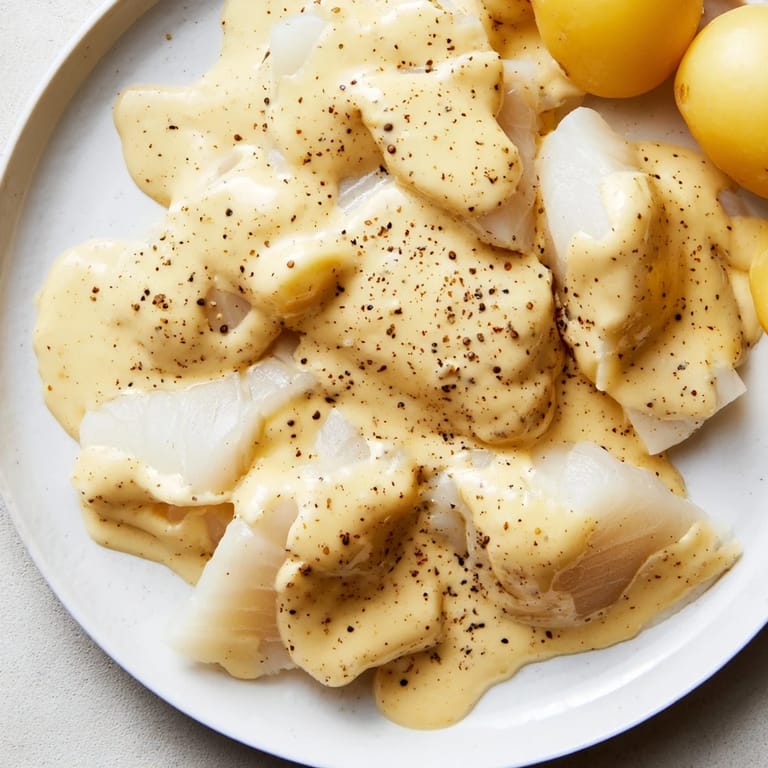
- Place hot fish on warm plates alongside boiled potatoes and crispbread or flatbread, then spoon the warm mustard sauce generously over everything. A small handful of fresh parsley scattered on top adds color and a subtle herb note.
 Save
Save One December afternoon, my friend's teenage daughter tasted lutefisk for the first time and her eyes went wide—not from disgust, but from surprise at how gentle it was. She asked why it wasn't more famous, and honestly, I think it's because the story of preparation is as important as the taste; you can't rush lutefisk, and you can't fake reverence for something that takes a week to make. That slowness, that commitment, is the real ingredient.
The Five-Day Ritual
The soaking period isn't a chore if you reframe it as something meditative—each daily water change is a small moment of care, a reason to open the fridge and remember what you're making. Some people find it rhythmic and calming; others use it as an excuse to plan the meal, imagine who'll sit at the table, think about why this tradition matters to their family. The fish softens in the dark coolness of the refrigerator while you go about your ordinary week.
Pairing and Tradition
Lutefisk appears on Norwegian tables during Christmas and New Year, often alongside green peas sautéed with bacon bits, or a curl of cold butter melting into the warmth of the fish. In Norway, it's served with aquavit—a caraway-scented spirit meant to be knocked back in small shots between bites. If aquavit isn't available, a crisp pilsner or lager does the same job, cutting through richness and making you reach for another forkful of fish.
Making It Your Own
The foundation of this dish is so old and so solid that playing with it feels almost irreverent, but small shifts are welcome: some families use hot mustard instead of Dijon, others skip the whole-grain variety and double down on sharp; some add a pinch of fresh dill to the sauce or finish the fish under the broiler for two minutes to crisp the edges slightly. The recipe is sturdy enough to hold your own hands in it.
- For a gluten-free version, swap the wheat flour for cornstarch or rice flour in the sauce; both thicken just as well and won't change the taste.
- Make the mustard sauce while the fish is still baking so everything comes together hot and immediate.
- Boil your potatoes in salted water just before you pull the fish from the oven—timing makes the whole meal taste better when everything is warm at the same moment.
 Save
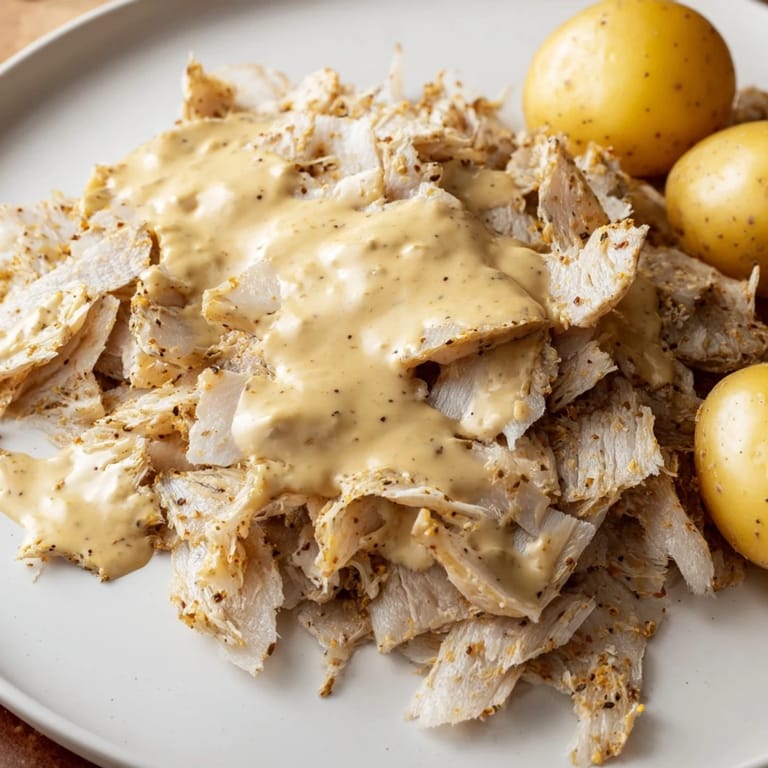
Save Lutefisk taught me that cooking isn't always about convenience or speed; sometimes the deepest satisfaction comes from tending something patiently through each day, trusting that time and care will deliver something worth the wait. If you sit down to this meal, you're honoring both the fish and the person you're cooking it for.
Recipe FAQs
- → How long should the dried cod soak before cooking?
The dried cod needs to soak in cold water for 5 to 6 days, with daily water changes, to rehydrate and soften properly.
- → What is the best way to bake lutefisk to maintain its texture?
Cover the lutefisk with foil and bake at 200°C (390°F) for 25 to 30 minutes until opaque and flaky, ensuring gentle heat preserves moisture.
- → How is the mustard sauce prepared to avoid lumps?
Melt butter and whisk in flour before gradually adding milk while continually whisking, creating a smooth, thickened sauce without lumps.
- → Can this dish be adapted for gluten-free diets?
Yes, substitute all-purpose flour with gluten-free flour for the mustard sauce to accommodate gluten-free preferences.
- → What traditional sides complement this preparation?
Boiled potatoes and crispbread or flatbread are commonly served alongside, adding texture and balance to the dish.