 Save
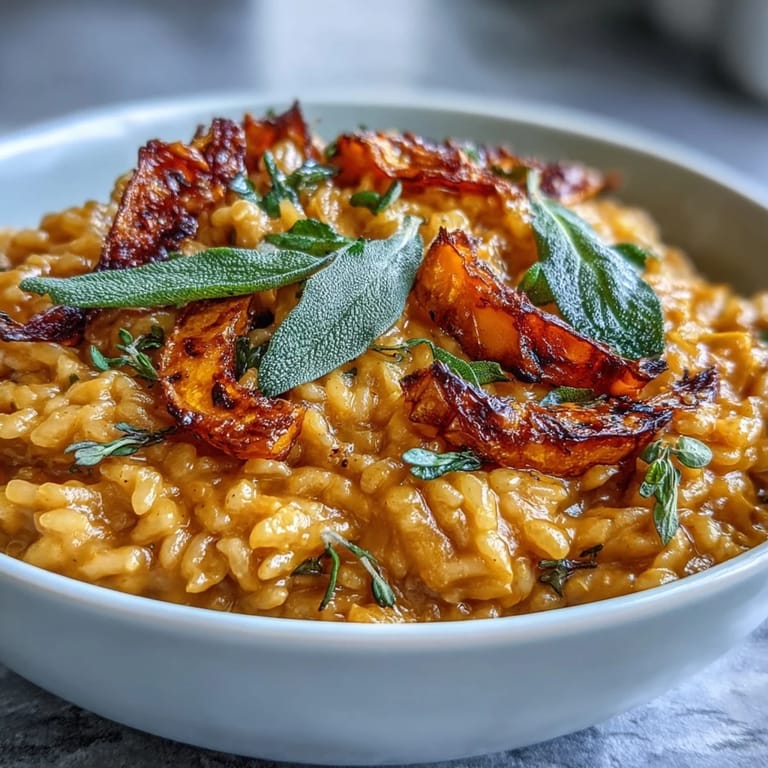
Save The smell of roasted pumpkin and sage hit me the moment I opened the oven, and I knew autumn had officially arrived in my kitchen. I'd been nervous about making risotto without butter or cheese, convinced it would taste flat or boring. But that first creamy, nutmeg-laced spoonful proved me completely wrong. The crispy sage on top added a salty crunch that made every bite feel special. It became my go-to whenever I wanted something warm and impressive without spending hours at the stove.
I made this for a small dinner party last October, half-worried my non-vegan friends would miss the parmesan. They didn't even notice it was missing. One friend scraped her bowl clean and asked if I'd started taking cooking classes. I laughed and told her the secret was just patience and a good ladle rhythm. That night, this risotto stopped being just a recipe and became my quiet proof that plant-based food can steal the show.
Ingredients
- Pumpkin (600 g, peeled and diced): Roasting it first concentrates the sweetness and gives you those caramelized edges that add depth to every spoonful.
- Yellow onion (1 medium, finely chopped): The base of all good risotto, it melts into the background but builds the savory foundation you can't skip.
- Garlic (2 cloves, minced): Just a minute in the pan is enough to release its fragrance without overpowering the delicate pumpkin.
- Arborio rice (300 g): The short, starchy grains are what create that signature creaminess as they slowly release their starch into the broth.
- Vegetable broth (1.2 liters, kept warm): Keeping it warm is the trick I learned after one too many batches turned out gummy from cold liquid shocking the rice.
- Dry white wine (120 ml, optional): It adds a bright acidity that cuts through the richness, but you can skip it and just use more broth if you prefer.
- Olive oil (3 tbsp, divided): Used for roasting, sautéing, and frying the sage, it ties every layer of flavor together.
- Fresh sage leaves (15 to 20): Frying them transforms sage from soft and herbal to crispy and almost nutty, a textural contrast that makes the dish.
- Nutmeg (½ tsp, freshly grated): Just a hint warms up the pumpkin and makes the whole bowl feel cozy without tasting like dessert.
- Nutritional yeast (2 tbsp, optional): This is my cheat for that cheesy, umami flavor vegans often miss in risotto.
- Lemon zest (½ lemon, optional): A small grating at the end brightens everything and keeps the dish from feeling too heavy.
- Salt and black pepper: Season at every stage so the flavors build instead of tasting flat at the end.
Tired of Takeout? 🥡
Get 10 meals you can make faster than delivery arrives. Seriously.
One email. No spam. Unsubscribe anytime.
Instructions
- Roast the pumpkin:
- Preheat your oven to 200°C (390°F) and spread the diced pumpkin on a baking tray. Drizzle with 1 tablespoon of olive oil, season with salt and pepper, and roast for 20 to 25 minutes until the edges turn golden and the flesh is tender enough to pierce easily with a fork.
- Start the base:
- Heat 1 tablespoon of olive oil in a large, deep skillet over medium heat. Add the chopped onion and cook for 3 to 4 minutes until it turns translucent, then stir in the garlic and cook for just 1 minute more until fragrant.
- Toast the rice:
- Add the arborio rice to the pan and stir it around for about 2 minutes, coating each grain in the oil and letting it lightly toast. This step helps the rice hold its shape and absorb the liquid more evenly.
- Deglaze with wine:
- Pour in the white wine if you're using it, and stir continuously until the liquid is almost completely absorbed. The wine adds brightness, but if you skip it, just move straight to adding the broth.
- Add broth gradually:
- Begin ladling in the warm vegetable broth, one scoop at a time, stirring frequently and letting the rice absorb each addition before adding more. Continue this rhythm for about 18 to 20 minutes until the rice is creamy and al dente, with just a slight bite in the center.
- Fry the sage:
- While the rice cooks, heat the remaining tablespoon of olive oil in a small skillet over medium-high heat. Fry the sage leaves for 30 to 60 seconds until they crisp up and darken slightly, then transfer them to a paper towel to drain.
- Fold in the pumpkin:
- Once the rice is nearly done, gently fold in the roasted pumpkin, the grated nutmeg, and the nutritional yeast if you're using it. Taste and adjust the seasoning with more salt and pepper as needed.
- Serve:
- Spoon the risotto into bowls while it's still hot, and top each serving with a few crispy sage leaves and a sprinkle of lemon zest if you like. Serve immediately for the best creamy texture.
 Save
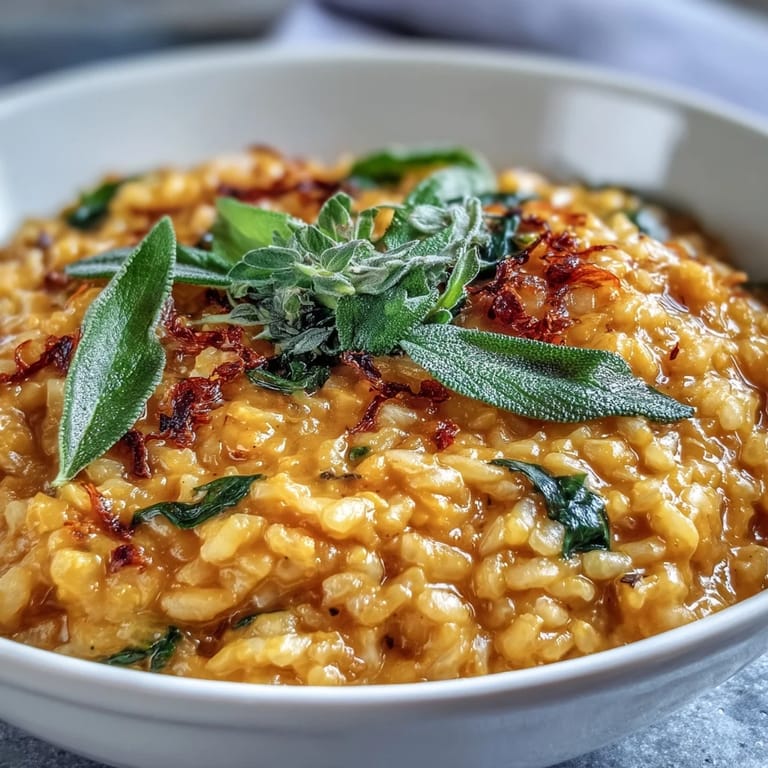
Save There was this one chilly evening when I served this risotto to my sister, who'd just had a long day. She sat at my kitchen counter, quiet at first, then halfway through her bowl she looked up and said it tasted like a hug. I didn't know what else to say except that's exactly what I was going for. Food like this doesn't need to be complicated to feel like love.
How to Get the Creamiest Texture
The secret to risotto that feels indulgent without cream or cheese is all about coaxing the starch out of the rice. Stirring frequently while adding warm broth a little at a time lets the rice release its natural creaminess gradually. I used to rush this step and end up with something more like rice soup. Now I treat it like a meditation, standing at the stove with a wooden spoon and a glass of wine, just stirring and watching the magic happen. The moment it starts to look glossy and thick, you know you're there.
Substitutions That Actually Work
If you can't find pumpkin or just prefer something else, butternut squash works beautifully and roasts in about the same amount of time. I've also used sweet potato in a pinch, though it makes the dish a little sweeter and changes the color to a deeper orange. For the wine, vegetable broth with a squeeze of lemon juice gives you that same brightness without the alcohol. And if you're not into nutritional yeast, a spoonful of miso stirred in at the end adds a similar savory depth that tricks your brain into thinking there's cheese involved.
Storage and Reheating Tips
Risotto is always best fresh, but leftovers can be brought back to life with a little care. Store it in an airtight container in the fridge for up to three days. When you reheat it, add a splash of vegetable broth or water and warm it gently on the stove over low heat, stirring constantly until it loosens up again. The microwave works in a pinch, but it tends to dry the rice out, so add extra liquid and cover the bowl. The crispy sage won't stay crispy once stored, so I always fry fresh leaves right before serving leftovers.
- Reheat on the stovetop with a little extra broth for the creamiest results.
- Crispy sage is best made fresh each time, it only takes a minute.
- Don't freeze risotto, the texture gets grainy and loses that silky feel when thawed.
 Save
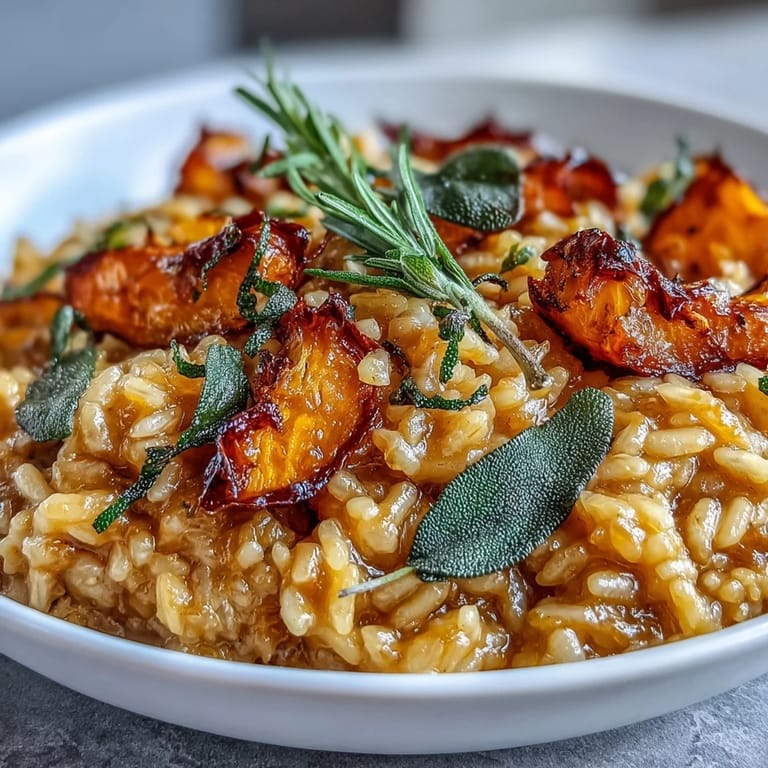
Save This risotto has become my favorite way to welcome fall, and I hope it does the same for you. There's something about stirring a pot slowly, watching it transform, that makes the whole process feel like its own kind of comfort.
Recipe FAQs
- → Can I use butternut squash instead of pumpkin?
Yes, butternut squash works perfectly as a substitute. Dice and roast it the same way as pumpkin for similar sweetness and texture.
- → How do I achieve the creamiest texture?
Stir frequently while adding broth gradually, and blend half the roasted pumpkin before folding it in. This creates extra silkiness without dairy.
- → What can I use instead of white wine?
Simply use an extra ladleful of vegetable broth. The wine adds acidity, so you can also add a squeeze of lemon juice for brightness.
- → How do I prevent the sage from burning?
Fry sage leaves in medium-high heat for only 30-60 seconds. They should turn crispy quickly. Remove immediately and drain on paper towels.
- → Can I make this ahead of time?
Risotto is best served fresh, but you can roast the pumpkin ahead. Reheat gently with extra broth to restore creaminess if needed.
- → What type of rice should I use?
Arborio rice is essential for authentic risotto. Its high starch content creates the signature creamy texture. Carnaroli or vialone nano also work well.